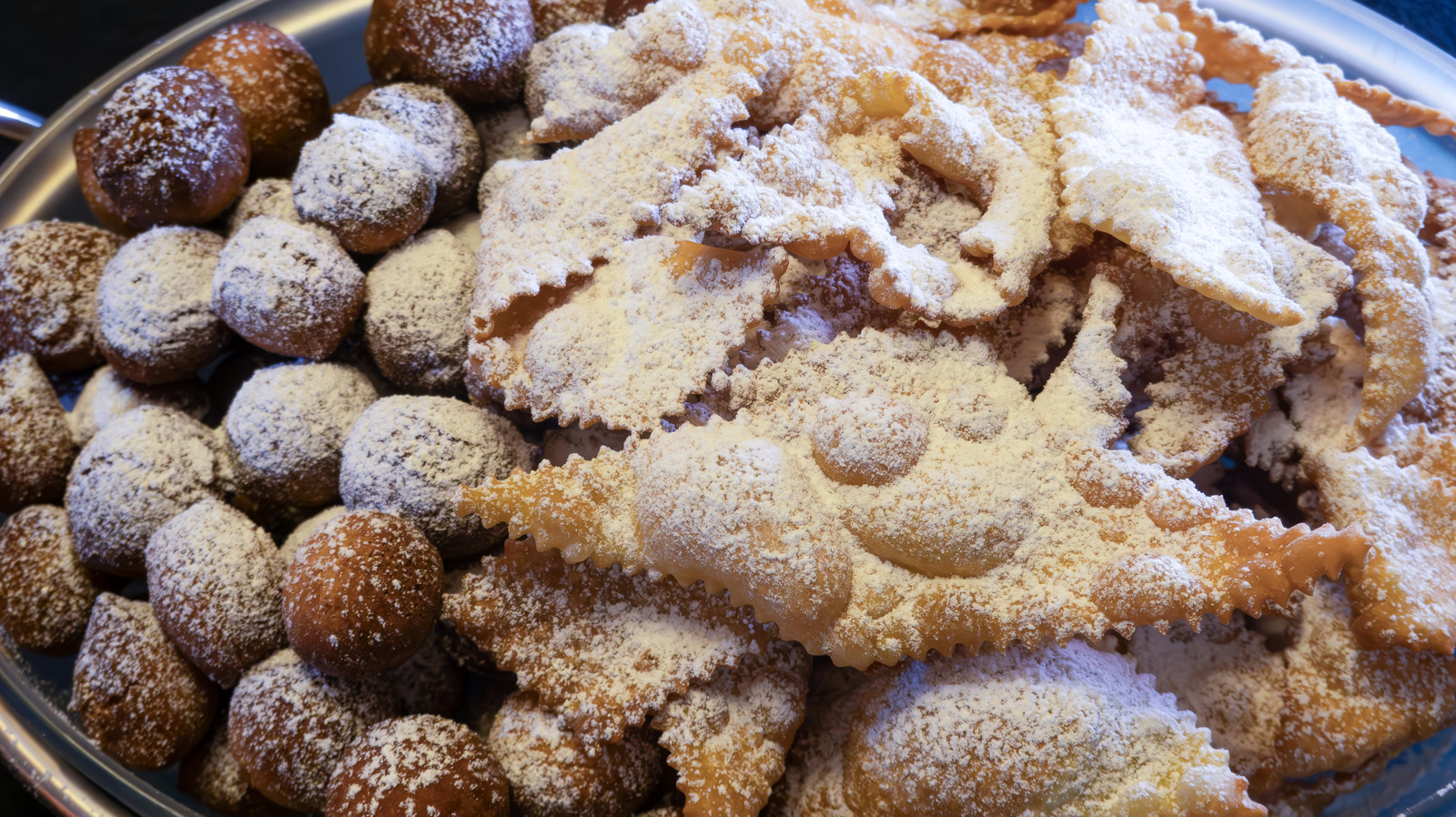
"Castagnole dough is typically made with a mixture of flour, sugar, butter, eggs, yeast, and some sort of Italian liquor, like grappa or anisette. Their flavor may also be enhanced by a citrus zest or vanilla. Once it comes together, the dough is rolled into little Munchkin-like balls; the Carnevale favorite is actually named after the Italian word for chestnuts, castagne, due to its petite chestnut size."
"Castagnole are originally from the central and northern regions of Italy, but you should be able to find them all over the peninsula during Carnevale season. If you're lucky, you might come across a bakery that specializes in filled castagnole. Among the most popular fillings are sweetened ricotta and crema pasticcera (Italian pastry cream), but you might even find them filled with the ultra-popular pistachio cream."
Castagnole are small, sugar-coated fried dough balls traditionally prepared during Carnevale across Italy. Dough combines flour, sugar, butter, eggs, yeast and often an Italian liquor such as grappa or anisette, with citrus zest or vanilla for added flavor. The dough is rolled into chestnut-sized balls, fried until golden and slightly crispy, then tossed in sugar while warm. Some pasticcerie sell filled versions with sweetened ricotta, crema pasticcera, or pistachio cream; plain castagnole remain popular. Castagnole originate in central and northern Italy but appear throughout the peninsula during Carnevale season.
Read at Tasting Table
Unable to calculate read time
Collection
[
|
...
]