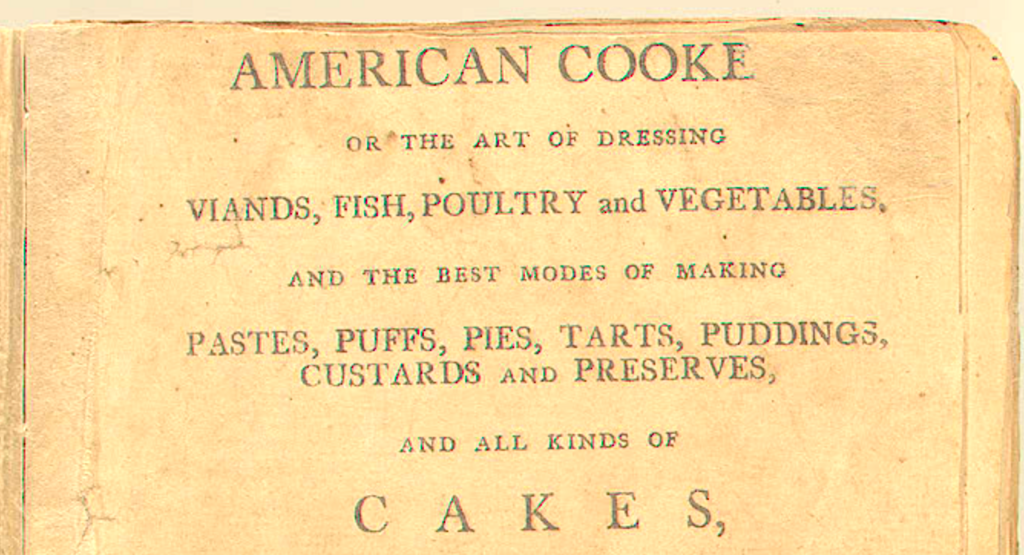
"Slen­der as it is, there's no short­age of meaty mate­r­i­al: Mod­ern chefs may find some of the first Amer­i­can cook­book's meth­ods and mea­sure­ments take some get­ting used to. We like to cook, but we're not sure we pos­sess the where­with­al to tack­le a Crook­neck or Win­ter Squash Pud­ding. We've nev­er been called upon to "per­fume" our "whipt cream" with "musk or amber gum tied in a rag." And we wouldn't know a whortle­ber­ry if it bit us in the whit­pot."
"The book's full title is an indi­cation of its mys­te­ri­ous author's ambi­tions for the new country's culi­nary future: Amer­i­can Cook­ery, or the art of dress­ing viands, fish, poul­try, and veg­eta­bles, and the best modes of mak­ing pastes, puffs, pies, tarts, pud­dings, cus­tards, and pre­serves, and all kinds of cakes, from the impe­r­i­al plum to plain cake: Adapt­ed to this coun­try, and all grades of life."
First published in 1796 and running 47 pages, American Cookery compiles recipes for dressing viands, fish, poultry, vegetables, and making pastes, puffs, pies, tarts, puddings, custards, preserves, and cakes. Many methods and measurements reflect late-18th-century practice and require adjustment by modern cooks. Recipes include Crookneck and Winter Squash Pudding and directions that call for perfuming whipped cream with musk or amber gum. The work references ingredients unfamiliar to contemporary cooks, such as whortleberry. The full title declares adaptation to this country and all grades of life, signaling an ambition to shape a national culinary identity.
Read at Open Culture
Unable to calculate read time
Collection
[
|
...
]