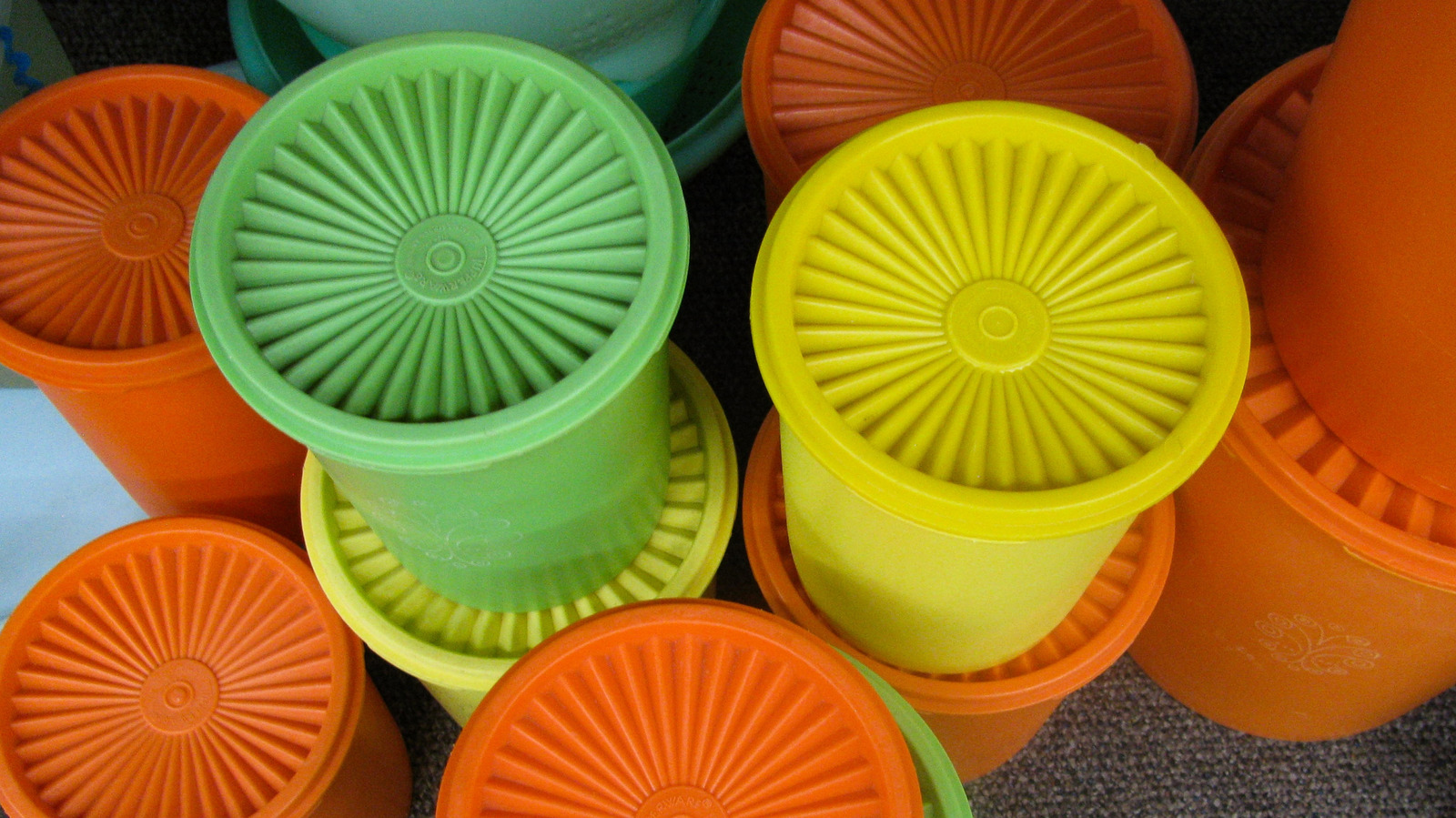
"With the boomer generation being born between 1946 and 1964, and Tupperware's popularity peaking around the 1950s and 1960s, it's no wonder that this generation grew up loving the innovative food storage. Tupperware's Servalier line got its start around the late 1960s and flourished into the 1980s, a prime time for growing boomers to invest in what are now considered collector's items. These vintage favorites are still well-loved by boomers and other generations to this day."
"There were a few features that set the Servalier line apart from the rest of Tupperware's offerings, giving consumers an even easier and stylish method of food storage. One of the most notable aspects of the design of the line were the genius sunburst-style lids, which included a central button that allowed users to effortlessly seal the airtight container with a single press. In addition, these containers were designed to be stackable when filled and closed or nested when empty."
"Though Tupperware's popularity has waned over the years, particularly due to consumers looking for alternatives to plastic products, this is still one of the vintage kitchen brands that is the ultimate thrift store find. Minding concerns regarding BPAs and other harmful chemicals found in older Tupperware and similar products, you can still find modern options to fulfill the boomer-bolstered desire for vintage food storage."
Tupperware's Servalier line originated in the late 1960s and flourished into the 1980s, becoming a favorite among baby boomers. The line featured sunburst-style lids with a central button for one-press airtight sealing, bowls that could stack when closed and nest when empty, and tapered handles for easier carrying. Vintage Servalier pieces remain sought after in thrift stores and online resale markets. Concerns about BPAs and other chemicals affect the desirability of older plastic pieces. Tupperware stopped using BPAs in manufacturing in March 2010, and modern alternatives exist that replicate the vintage aesthetic without the same chemical risks.
Read at Tasting Table
Unable to calculate read time
Collection
[
|
...
]