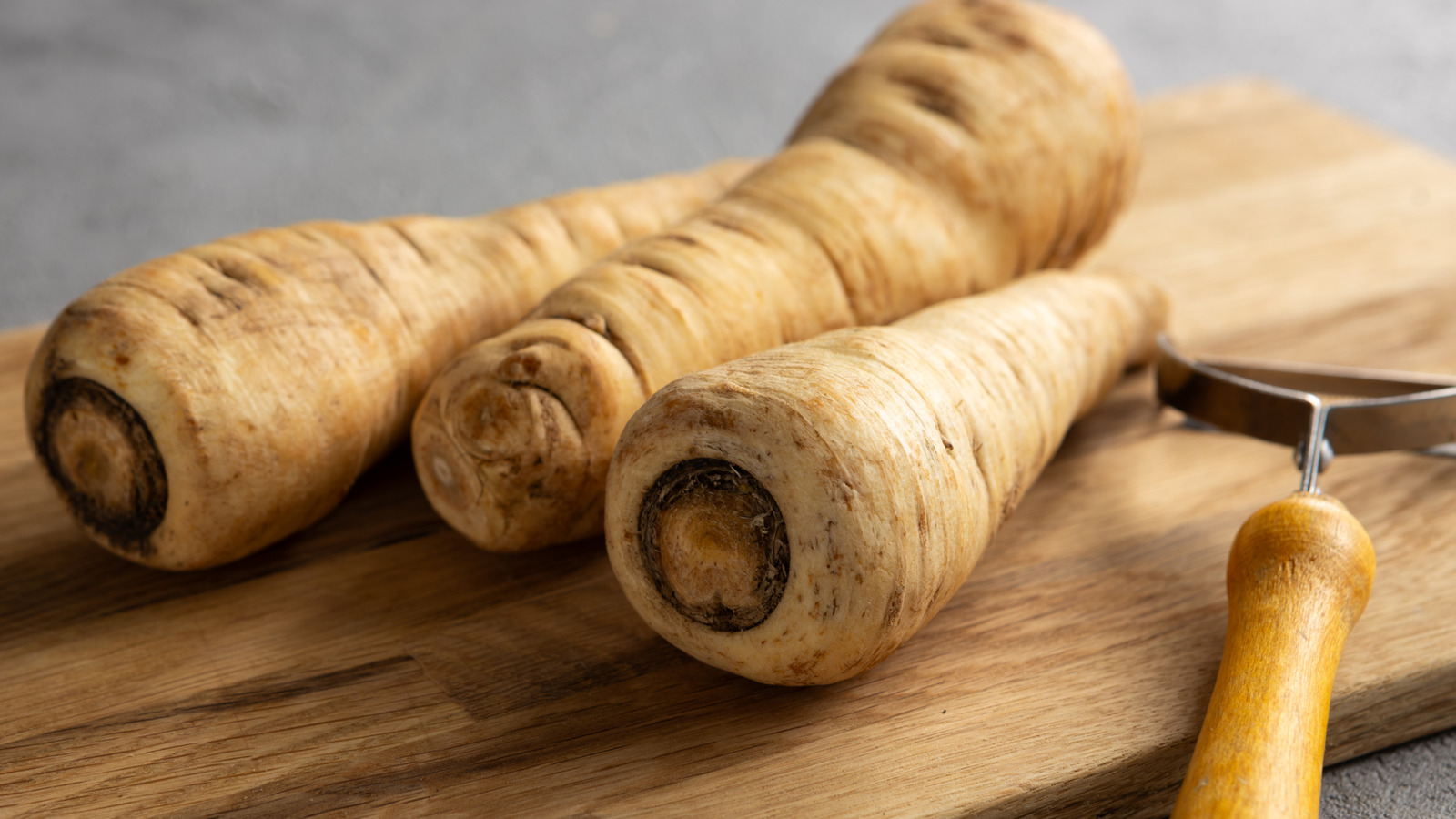
"Parsnips' signature sweet, nutty flavor comes from their cold-weather cultivation. That subterranean freeze is what converts the roots' starches into sugars as the veggie grows underground. This is also why spring-harvested parsnips tend to be sweetest, although parsnips can be harvested during the fall and winter months, too. Fall- and winter-harvested parsnips feature a firmer texture and earthier, subtly bitter tasting profile."
"For starters, the crop is challenging and time-consuming (think over six months) to cultivate. Parsnips' prolonged growing period puts the veggie at a higher risk of quality issues like rot and animal or insect interference. Meanwhile, growers are tasked with prolonged crop maintenance like weed pulling and keeping pests away. Assuming those parsnips hold up underground, growers either have to wait for the ground to thaw to harvest the vegetable, or else hack into cold, hard, frozen soil."
Parsnips are long, pale-root vegetables related to carrots, fennel, and celery that develop a sweet, nutty flavor through cold-weather cultivation. Freezing temperatures convert root starches to sugars, producing especially sweet spring-harvested parsnips, while fall and winter harvests yield firmer, earthier, slightly bitter roots. The crop requires a prolonged growing period—often over six months—raising risks of rot, pest and animal damage, and increased maintenance like weed pulling. Harvesting can require breaking frozen ground, and parsnips are easy to overcook into an unpleasantly mushy texture. Parsnips were historically common but declined as potatoes became more dominant; they are now being reconsidered as an underutilized vegetable.
Read at Tasting Table
Unable to calculate read time
Collection
[
|
...
]