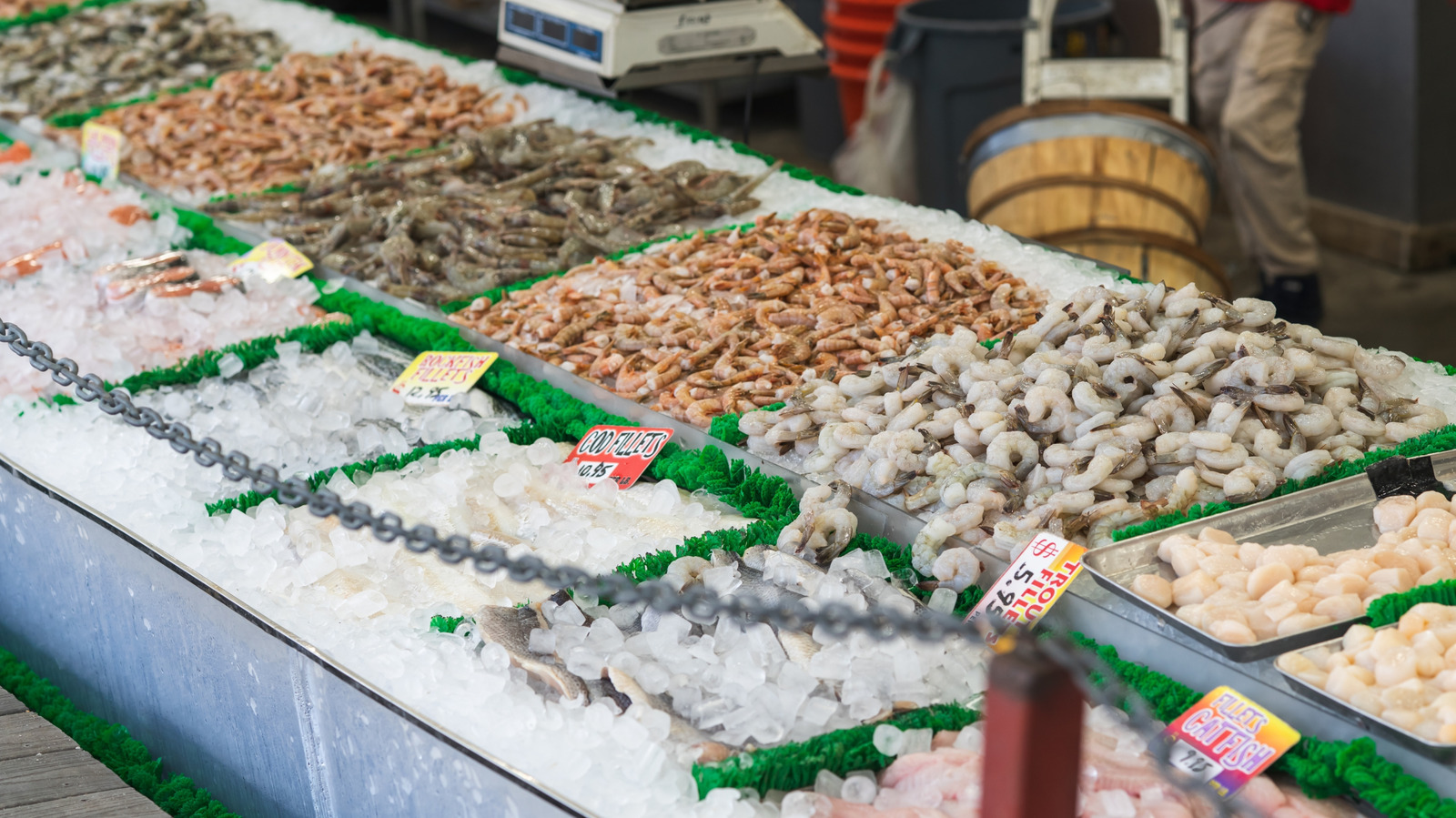
"Knowing what additives to look for can keep you from eating chemicals you might be sensitive to, and it can even save you money. Take phosphates in scallops for instance. "'Wet' or 'juiced' scallops are a racket," Will Plamondon, director of wholesale operations at Chicago's The Fish Guy, told us. "They've been soaked in phosphates to retain water, so you're paying $25 a pound for tap water." We'll get more into phosphates in a bit."
"Keep in mind that some seafood labels may be incomplete, or even falsified. Mislabeling is unfortunately widespread in the seafood industry. Shopping with a reputable fishmonger is one of your best defenses against seafood fraud as is checking the label for an Aquaculture Stewardship Council, Marine Stewardship Council, or Best Aquaculture Practices certification. It's also common for fish or shellfish to not have a complete label if they're kept on ice in a display counter."
Smell, color, suspicious price, unsanitary displays, and missing meaningful certification signal poor seafood quality. Labels can list additives that affect health and cost, such as phosphates used in scallops to retain water. 'Wet' or 'juiced' scallops may have added water that raises price without adding value. Mislabeling and incomplete or falsified labels are common, especially for items kept on ice, so buying from a reputable fishmonger and checking for Aquaculture Stewardship Council, Marine Stewardship Council, or Best Aquaculture Practices certification helps avoid fraud. Methods for adding water include needle injection, tumbling, and glazing.
Read at Tasting Table
Unable to calculate read time
Collection
[
|
...
]