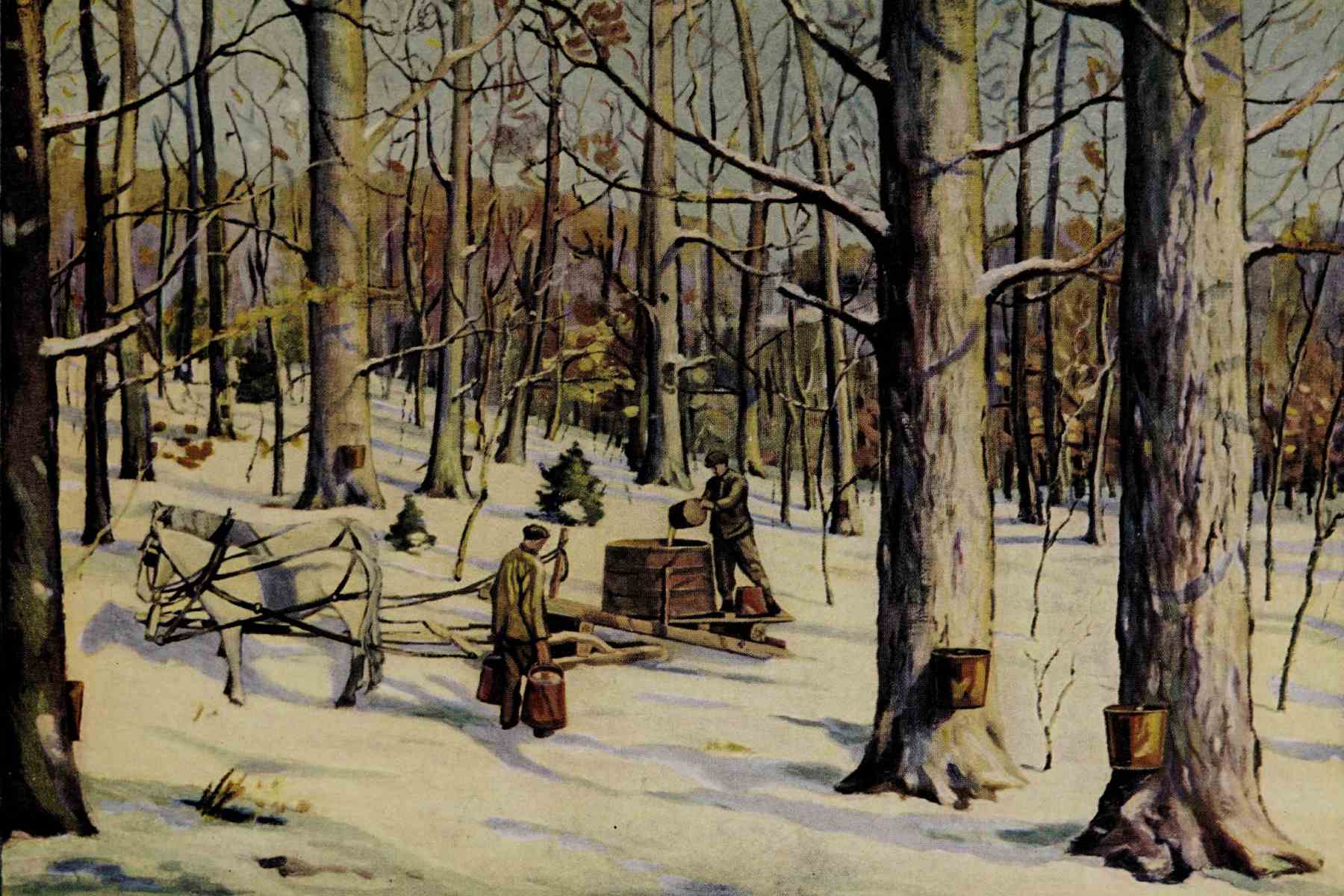
George Clinton Cary was born in 1864 on a farm in Fort Fairfield, Maine, near the New Brunswick border. He raised steers as a boy and became a traveling grocery salesman by age twenty-two, moving goods by horse and buggy across Maine, Vermont, and New Hampshire. In spring 1886 a forced overnight stop in Craftsbury left him accepting 1,500 pounds of maple sugar as payment. A later train encounter revealed tobacco companies paid more for sugar, so he negotiated shipments of maple sugar to a Virginia tobacco firm. He packaged the sugar in wooden crates, shipped by rail, expanded his business, and built a warehouse in Saint Johnsbury in 1898.
"The legend of Cary's start in the maple business began in the spring of 1886. Cary's wagon, pulled by a team of horses, got stuck in the mud on a road in Craftsbury, northern Vermont. The overnight low would refreeze the roads, so the young salesman had to stop for the night. This unscheduled lull gave Cary lots of time to try to convince a local storekeeper to buy his wares."
"The grocer had no money but offered to place an order if Cary would take payment in maple sugar at 4.5 cents per pound. Cary agreed, and found himself with 1,500 pounds of maple sugar. On a train later that spring, Cary met a tobacco salesman and learned that tobacco companies bought Barbados cane sugar to flavour plug chewing tobacco and paid five cents per pound. Cary smelled an opportunity and finessed a deal to ship the maple sugar to a Virginia tobacco company."
Read at The Walrus
Unable to calculate read time
Collection
[
|
...
]