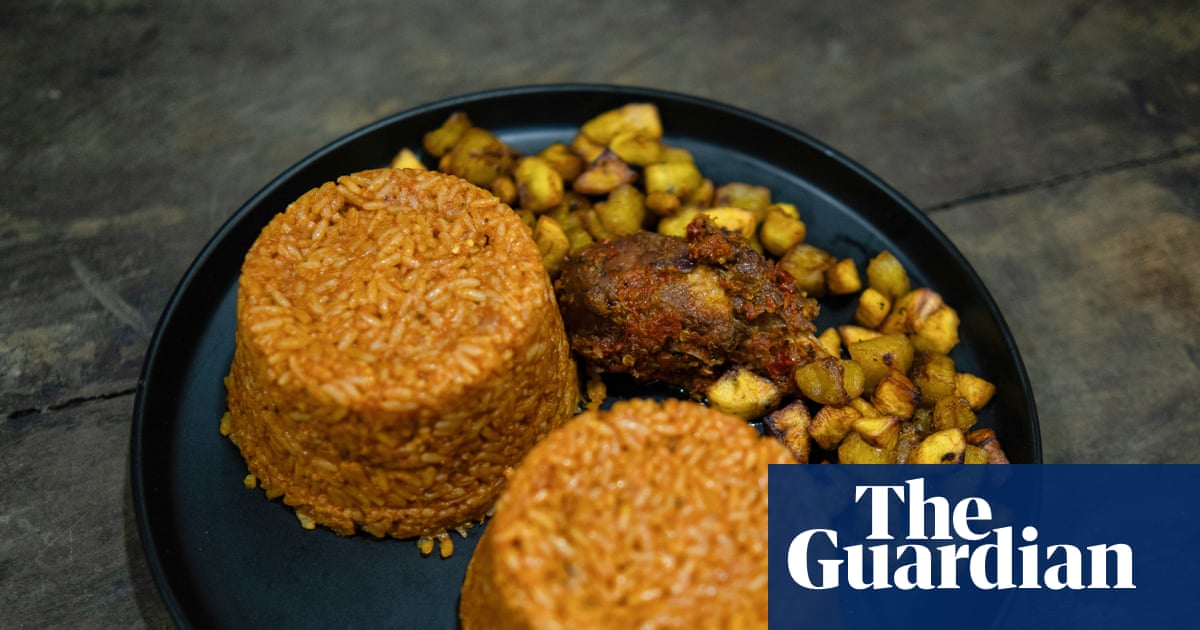
"In Lagos, the holiday season is well under way. For weeks, the roads have been jammed with traffic, concerts headlined by Afrobeats superstars are drawing crowds, and choice spots are filled with residents, returnees and tourists looking to indulge in the month-long enjoyment of Detty December. But the spotlight is on the contents of kitchen pots as much as it is on those shuffling to the trendy Oblee dance steps in clubs and street parties."
"Jollof rice is beloved across West Africa with each country, and each family, having its own ways of preparing it. In Nigeria, it is made with a base of tomato puree, peppers, onions, broth, margarine, curry and thyme, bayleaf and ginger, among other essentials, which is slow-cooked and stirred until the flavours coalesce before rice, often long grain, is introduced to the mix. It is often served with fried plantain and a protein of choice such as turkey, chicken or beef."
Lagos experiences a bustling holiday season with heavy traffic, sold-out concerts by Afrobeats stars, and crowded venues as residents, returnees and tourists celebrate Detty December. Many people are as focused on the contents of kitchen pots as on dance steps and street parties. Olawunmi George and her family of four will celebrate Christmas with jollof rice and chicken, but the family last ate jollof in August and has eaten cheaper staples since. The cost of living crisis has made the dish expensive. Nigerian jollof typically uses tomato puree, peppers, onions, broth, margarine, curry, thyme, bayleaf and ginger, slow-cooked before adding rice, and is commonly served with fried plantain and protein. The cost of preparing a pot for a family of five rose to 26,656 naira from 21,300 naira.
Read at www.theguardian.com
Unable to calculate read time
Collection
[
|
...
]