"As she describes this carefully managed procedure, Keller notes that it is already becoming a "lost art." New technologies were expediting even the simplest tasks. Electricity, preprepared ingredients, and advancements in home appliances had transformed household labor. A modern housewife could now call the grocer to place an order, because more households were installing telephones."
"Keller understood that the changes to domestic work revealed something larger about the economy and people's broader anxieties outside the home. In 1918, a writer credited as Mrs. A. Burnett-Smith described a British food system strained by wartime scarcity."
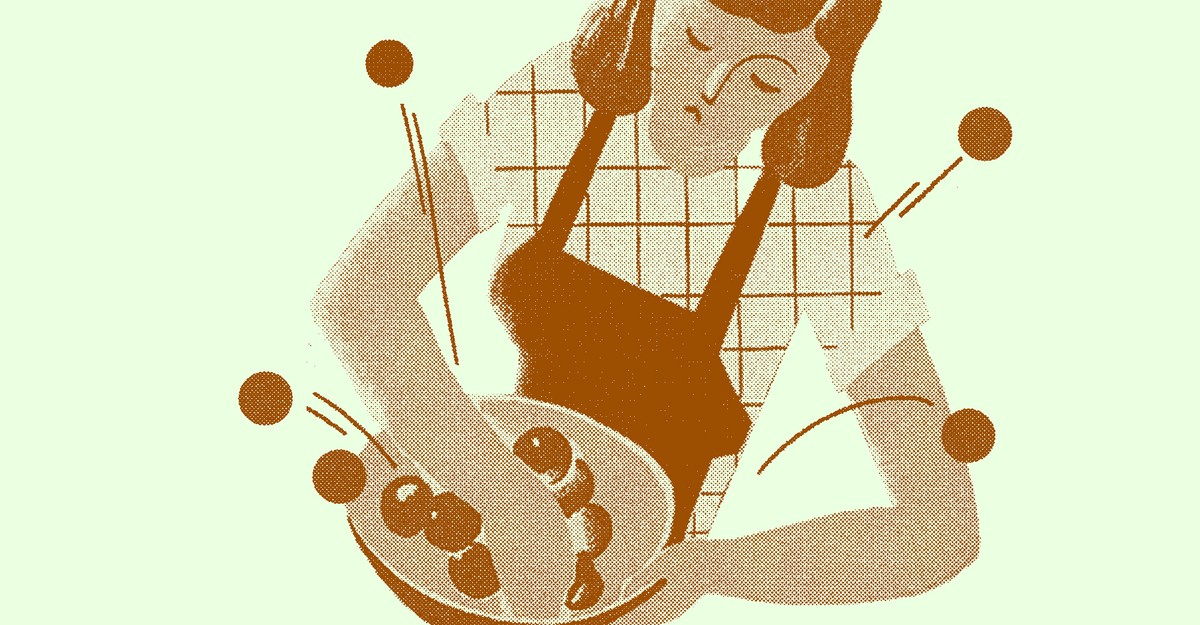
Dinner preparation has persistently challenged modern life despite promises of convenience. An entire industry of meal-prep companies, delivery apps, and frozen foods addresses the nightly question of what to cook. Historical writing by women managing household kitchens reveals how dinner reflects shifting societal concerns. Helen Keller's 1932 Atlantic essay described Christmas fruitcake preparation as an intricate ritual becoming a lost art due to technological advancement. Electricity, pre-prepared ingredients, and home appliances transformed household labor, allowing housewives to telephone grocers for orders. Keller recognized that changes to domestic work signaled larger economic transformations and broader anxieties. Historical accounts, including wartime food scarcity descriptions, demonstrate how dinner planning consistently mirrors external pressures on society.
#domestic-labor-history #technology-and-household-work #dinner-planning #economic-anxiety #womens-domestic-roles
Read at The Atlantic
Unable to calculate read time
Collection
[
|
...
]