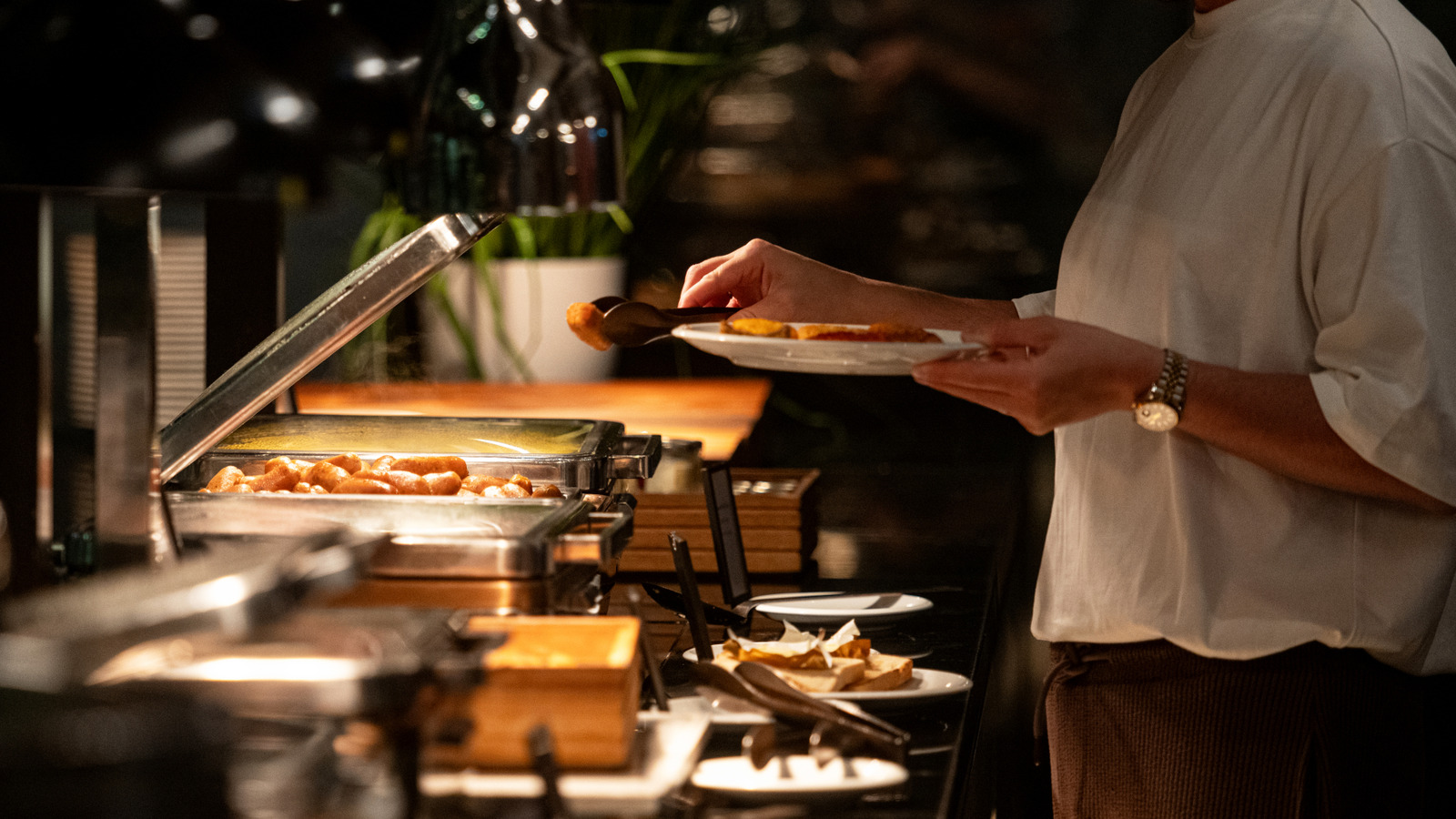
"but sometimes the best thing you can do for the soul is eat thousands of calories of homestyle cooking. That's the kind of food the Pennsylvania Dutch are known for, and they've been thriving in the Keystone State for over 300 years. "Hearty" and "heavy" are two words that come to mind when describing the cuisine of the Pennsylvania Dutch, the broad term for the German diaspora in Pennsylvania that includes Amish and Mennonite communities. There's no shortage of bread, gravy, starch, or dessert here."
"These buffets are concentrated primarily in Lancaster County, the tourist capital of all things Pennsylvania Dutch and home to hundreds of restaurants, farmers' markets, gift shops, and roadside attractions. While the food served at these buffets is largely authentic, this format is not really an inherent part of traditional PA Dutch cuisine. Instead, it emerged in the mid-20th century as a strategic way to market the region to outsiders, eager to taste "a little bit of everything" that Amish country had to offer."
Pennsylvania Dutch cuisine centers on hearty, homestyle dishes with abundant bread, gravy, starches, and desserts rooted in the German diaspora that includes Amish and Mennonite communities. Massive buffet-style restaurants present the full breadth of this cuisine across southern and central Pennsylvania, with a major concentration in Lancaster County. The buffet format developed in the mid-20th century as a marketing strategy to let visitors sample many dishes, while the food itself remains largely authentic. Lancaster represents the most commercialized presentation of Amish-country food; quieter, authentic options exist in places like the Juniata River Valley and Lebanon County. Shady Maple Smorgasbord is noted as the largest buffet in the United States.
Read at Tasting Table
Unable to calculate read time
Collection
[
|
...
]