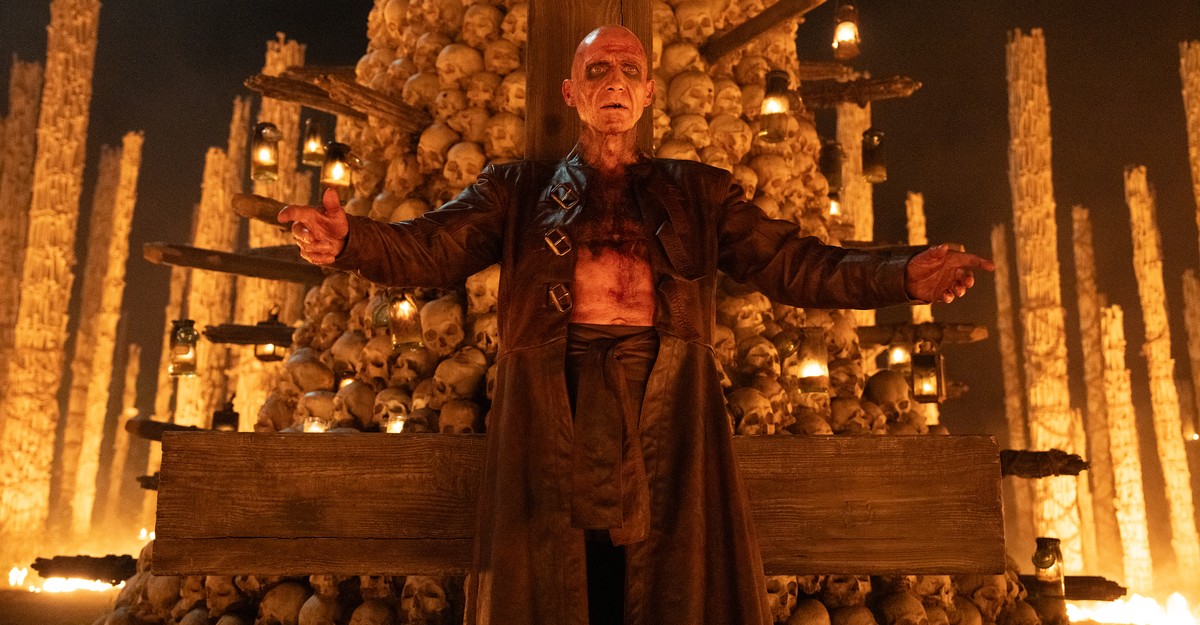
"It's the oldest, creakiest trope in the zombie-movie storybook: You know who's scarier than decaying, flesh-eating monsters? The people they're chasing! Every legendary entry in the genre, be it Night of the Living Dead or the never-ending Walking Dead franchise, has dug into this concept at some point. After all, it's just as terrifying to imagine how the survivors of societal collapse might behave toward one another as it is to envision them beheading the undead."
"With the first film in the series, released in 2002, the director Danny Boyle offered an aesthetic twist on the zombie film: Instead of the archetypal shuffle, these decomposing villains, dubbed "the infected," had the power to dash around at top speed. But 28 Days Later 's final act still felt familiar, as the film's human protagonists confronted a unit of soldiers who had decided, in the grimmest ways possible, to take the law into their own hands."
The 28 Days Later saga reinvented zombie conventions by replacing the shambling undead with fast, violent infected and mixing visceral action with social collapse. The original film combined that aesthetic twist with a grim portrait of human cruelty when soldiers seized power. The later sequel imagined a quarantined Britain where survivors clustered in tiny communities or scavenged the overgrown island for resources. The newest installment, 28 Years Later: The Bone Temple, finds a new angle by offering reasons for hope rather than simply portraying survivors as threats to one another. The prior sequel concluded on a cliff-hanger that left the young protagonist Spike leaving his village.
Read at The Atlantic
Unable to calculate read time
Collection
[
|
...
]