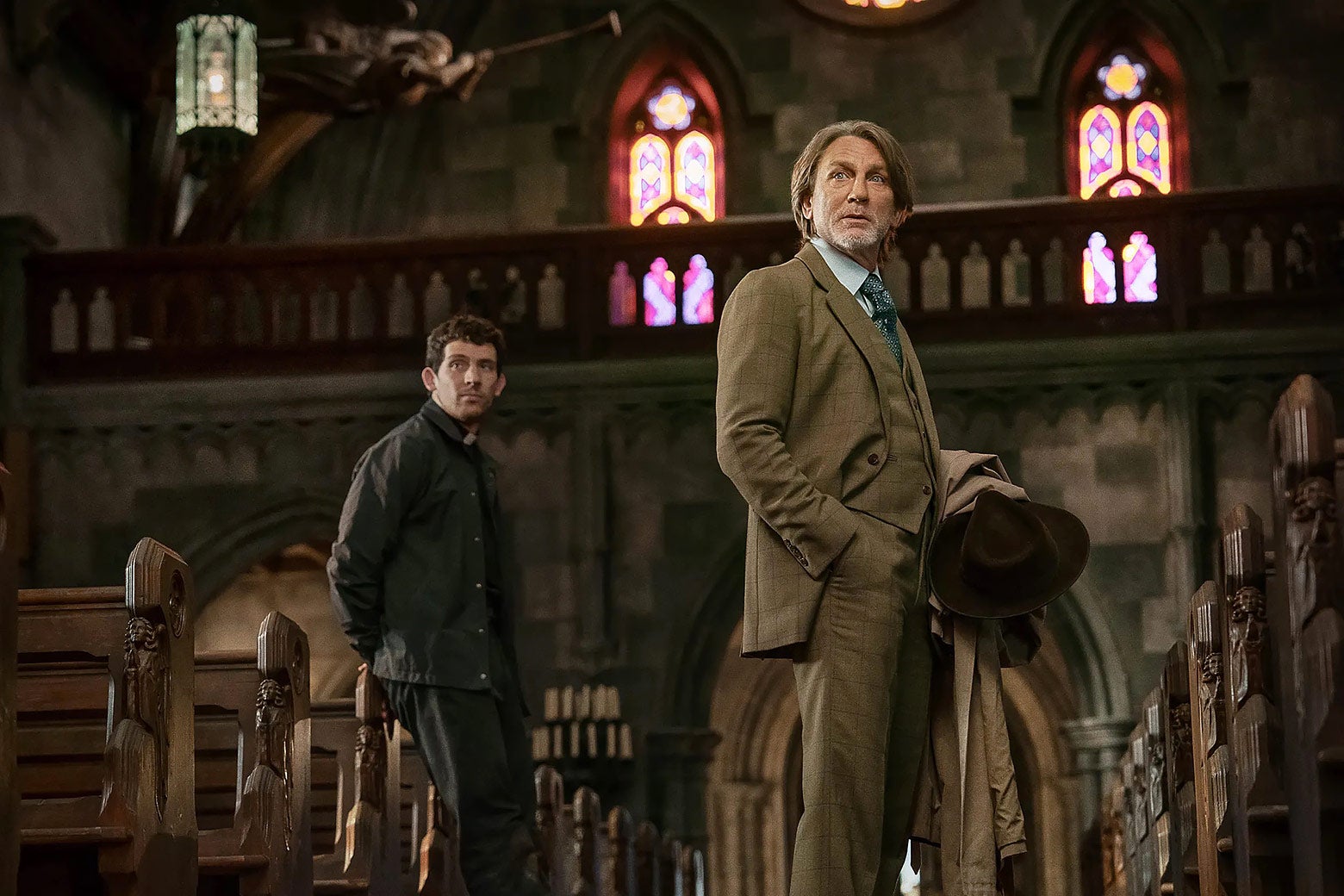
"What sets writer-directorRian Johnson'sfilms apart from other franchises on the current movie landscape isn't just their ingeniously twisty scripts and A-list-packed casts, it's their distinctive take on the possibilities of serial filmmaking. As with the Agatha Christie or Arthur Conan Doyle mysteries that are among Johnson's primary inspirations, each installment starts the Knives Out universe anew: The full cast of characters turns over, with the exception of Daniel Craig's courtly private eye Benoit Blanc, and the locations and even the tone radically shift."
"The third entry in the series, Wake Up Dead Man, which begins streaming on Netflix on Friday, takes a turn into darker, more Gothic territory. Johnson uses the movie's setting-a Catholic parish in a small upstate New York town-to pose serious questions about morality and faith that somehow fit perfectly into a popular entertainment packed with goofy jump scares and dirty jokes."
Rian Johnson treats the Knives Out films like Christie- or Doyle-style mysteries that reset each installment, replacing the full cast except for Benoit Blanc and shifting locations and tone. The reset allows exploration of his beliefs and ideas. The 2019 film embedded a Trump-era class analysis into a locked-room whodunit about a wealthy family trying to cheat an immigrant nurse out of an inheritance. Glass Onion satirized tech-era figures with suspects drawn from contemporary headlines. Wake Up Dead Man moves into darker Gothic territory, using a small upstate Catholic parish to pose questions about morality and faith. Father Jud Duplenticy is reassigned as assistant pastor for absolution after a fistfight.
Read at Slate Magazine
Unable to calculate read time
Collection
[
|
...
]