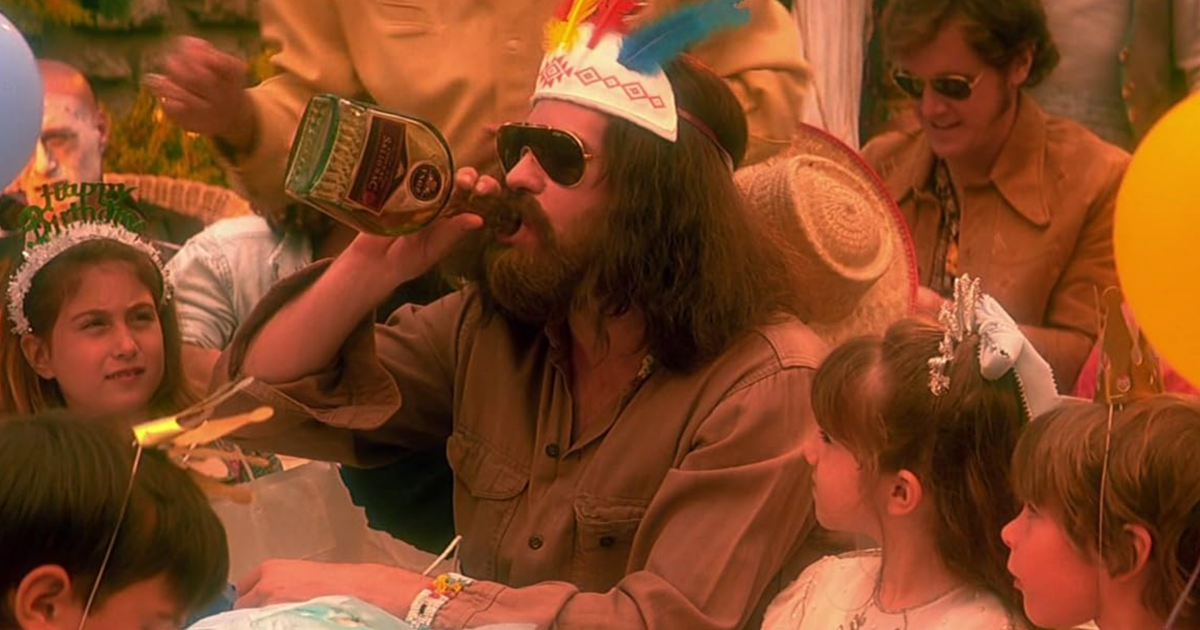
"Stone's attempts to portray singer Jim Morrison as a tripped-out divine figure able to see through the bullshit of the 1960s still feel misguided and childish - the hedonistic rock god as ubercool truth teller, yawn. The movie contains some of the director's worst cliches, but it's also often so personal it hurts. You walk away from it somehow knowing less about Jim Morrison and more about Oliver Stone, and maybe that's the point."
"JFK's wild-eyed journey into conspiracy might not hold water as history, but as a portrait of personal disillusionment made by a man who was both physically and psychologically wounded by the 1960s, it's a masterpiece. The Doors plays as the flipside of that. The figure of Morrison that it presents - never sober, never grounded, never sane, never really there - is perhaps the only way to process the era."
"Val Kilmer's performance as this trickster poet forever thumbing his nose at reality embodies the movie's tensions. It's an uncanny recreation of Morrison, and a great showcase for the actor's hammiest impulses. Kilmer was often hard to take seriously as a lead, but as a supporting actor, he was one of the best we'll ever have, a born scene-stealer."
Oliver Stone's The Doors (1991) is a paradoxical film that simultaneously repels and seduces viewers through its portrayal of Jim Morrison as a divine, truth-telling figure. While the film contains Stone's characteristic clichés and misguided attempts to celebrate hedonistic rock culture, it remains deeply personal and affecting. The movie functions as a companion to Stone's JFK, released the same year, both exploring the director's disillusionment with the 1960s. Rather than providing historical accuracy about Morrison, The Doors serves as a portrait of Stone's own psychological wounds from the era. Val Kilmer's performance as Morrison embodies the film's central tensions, delivering an uncanny recreation that showcases both his acting prowess and his tendency toward theatrical excess.
#oliver-stone-filmmaking #jim-morrison-biography #1960s-cultural-disillusionment #val-kilmer-performance #film-criticism-and-analysis
Read at Vulture
Unable to calculate read time
Collection
[
|
...
]