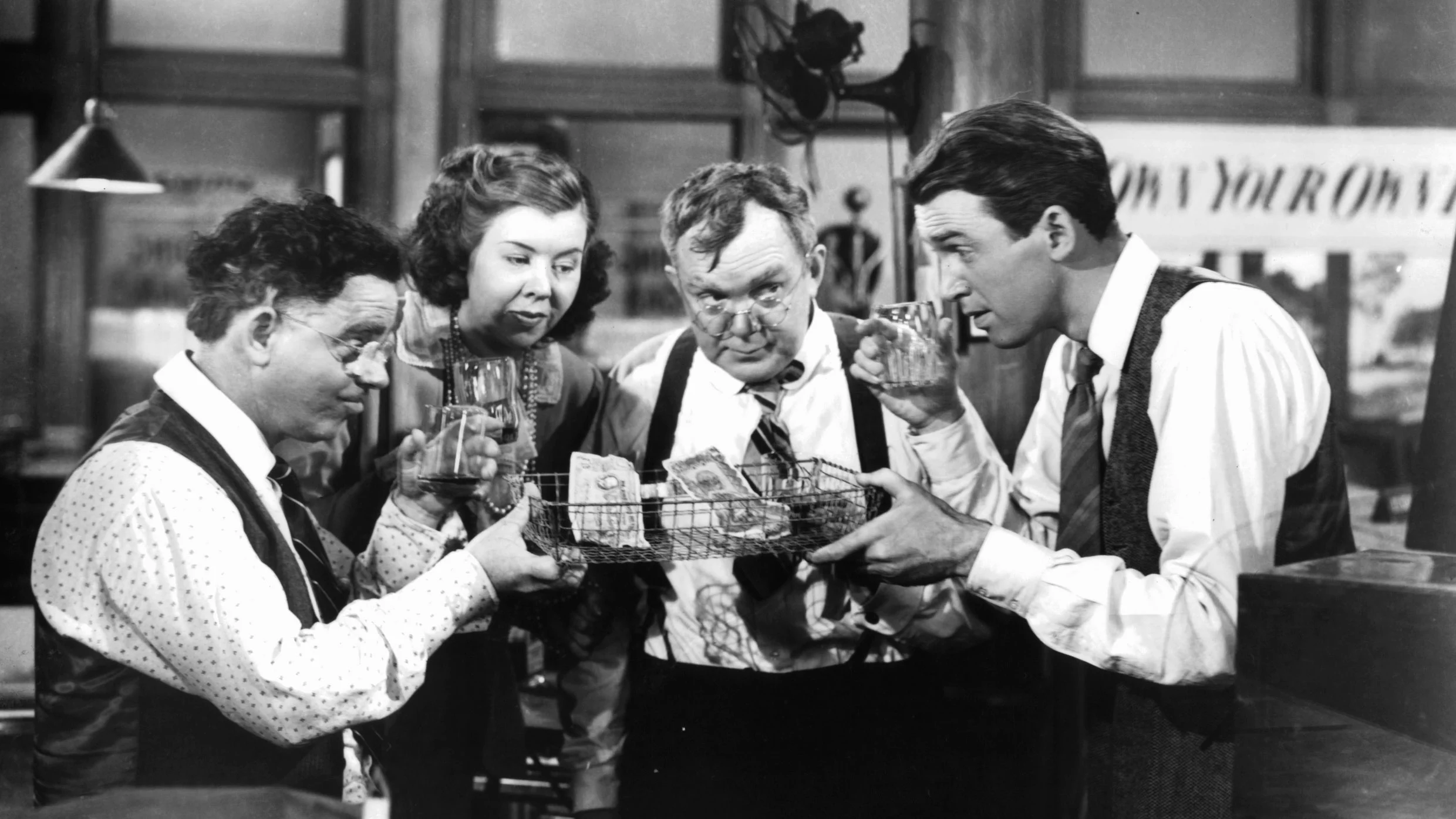
George Bailey's response to a bank run demonstrates that deposited funds are lent into the community as mortgages and loans rather than kept in a safe. Depositors' money finances neighbors' homes and businesses, creating reciprocal obligations that bind a town's economy. Forcing foreclosures would transfer losses onto local families and undermine communal stability. The bank-run scene clarifies how banking intermediation supports local growth and why panic withdrawals threaten that system. Rewatching the film provides a relatable framework for understanding modern financial fragility, community investment, and the social importance of mutual trust in sustaining local economic resilience.
"You're thinking of this place all wrong, as if I had the money back in a safe. The money's not here. Well, your money's in Joe's house-that's right next to yours-and in the Kennedy house and Mrs. Maitland's house and 100 others. You're lending them the money to build, and then they're going to pay it back to you as best they can. Now, what are you going to do, foreclose on them?"
"Rewatching George Bailey regain his hope can offer us a modern blueprint for handling these timeless economic woes. Invest in each other As a small child, I was fascinated by the bank run scene that occurs just as George (Jimmy Stewart) and his wife Mary (Donna Reed) are leaving town for their honeymoon. The citizens of Bedford Falls get spooked that George's Building & Loan may fail, and so they show up to withdraw their money."
Read at Fast Company
Unable to calculate read time
Collection
[
|
...
]