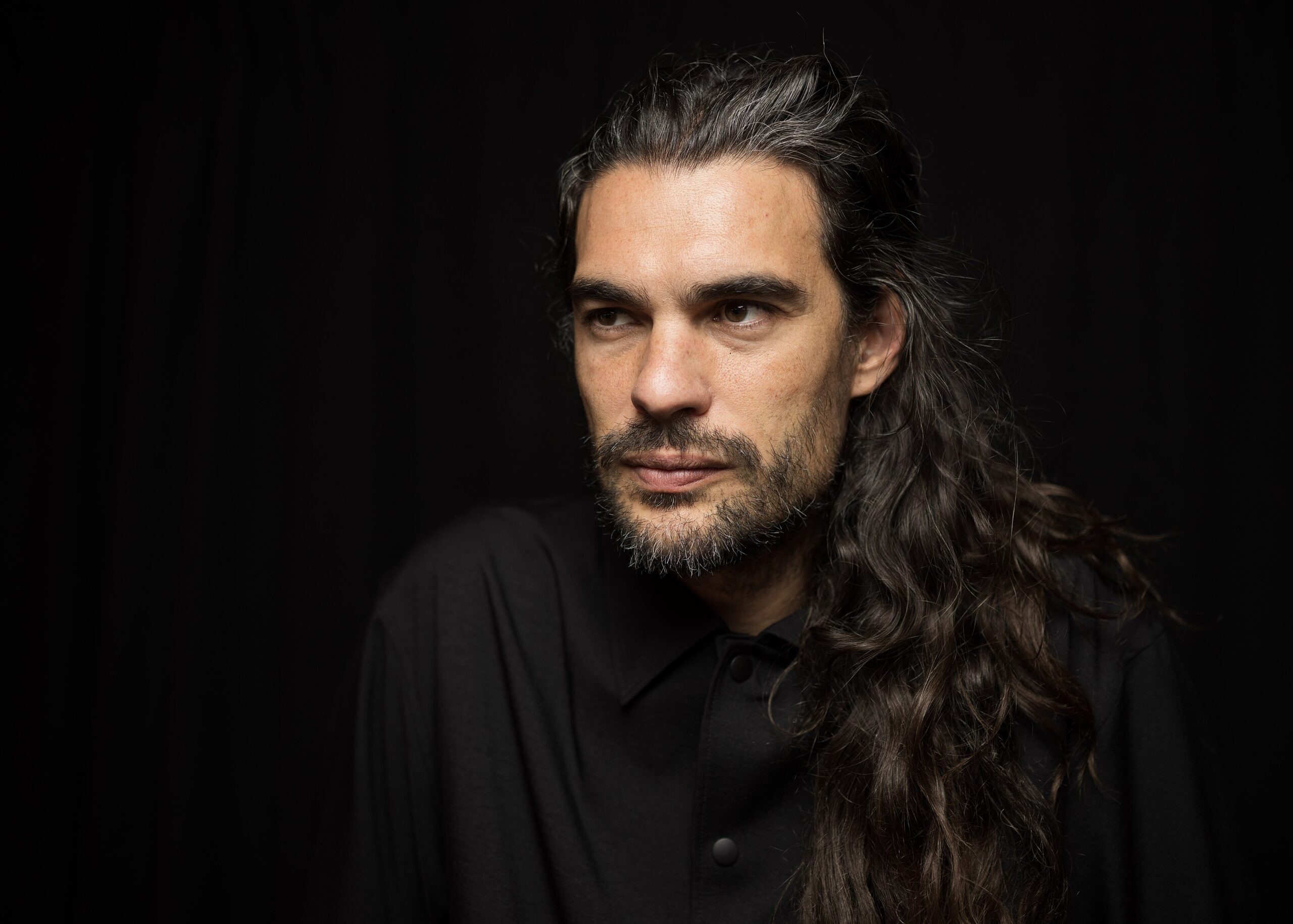
"Winner of the Jury Prize at the 78th Cannes Film Festival last year and nominated for Best International Feature and Best Sound at the 98th Academy Awards last month, Laxe's latest feature, Sirât (opening Fri/20), ominously begins with an epigram from Arabic scripture. It reads: "The Sirât bridge connects paradise and hell. Whoever ventures across must know its path is narrower than a strand of hair and sharper than a sword.""
"Taken from Islamic eschatology, sirât-or "path"-evokes the metaphysical journey that the film's protagonist, Luis, embarks on as he and his son arrive at a free party movement-esque rave in the scorched southern Moroccan desert in search of his missing daughter. The father-son duo traverses the sleepless affairs in the barren, blazing wilderness, accompanied by a motley crew of misfit ravers and a pulsating techno soundtrack by David "Kangding Ray" Letellier."
"Drawing on transcendental cinema influences like Bresson, Kiarostami, and Tarkovsky as well as Laxe's own practices in Islamic Sufism and Gestalt psychotherapy, Sirât successfully adapts esoteric concepts for a popular audience-while resisting the current tidal wave of "Netflix-ified" didactic filmmaking. Laxe, a lasting believer in the inherent power of movies, says "We're in a time when (corporations) have a strong influence on cinema. But we have to remember the specific, genuine tools that cinema has to evoke things, to shake the spectator, to transform them.""
Sirât opens with an Arabic epigram invoking the Sirât bridge from Islamic eschatology, framing a metaphysical passage between paradise and hell. The film follows Luis and his son as they arrive at a free-party-style rave in southern Morocco to search for a missing daughter. The narrative unfolds across a scorched desert populated by misfit ravers and driven by a pulsating techno score by David "Kangding Ray" Letellier. The film blends influences from Bresson, Kiarostami, and Tarkovsky with Sufi practice and Gestalt psychotherapy to render esoteric concepts accessible. The atmosphere is raw, jagged, and deliberately resists didactic, corporatized filmmaking.
Read at 48 hills
Unable to calculate read time
Collection
[
|
...
]