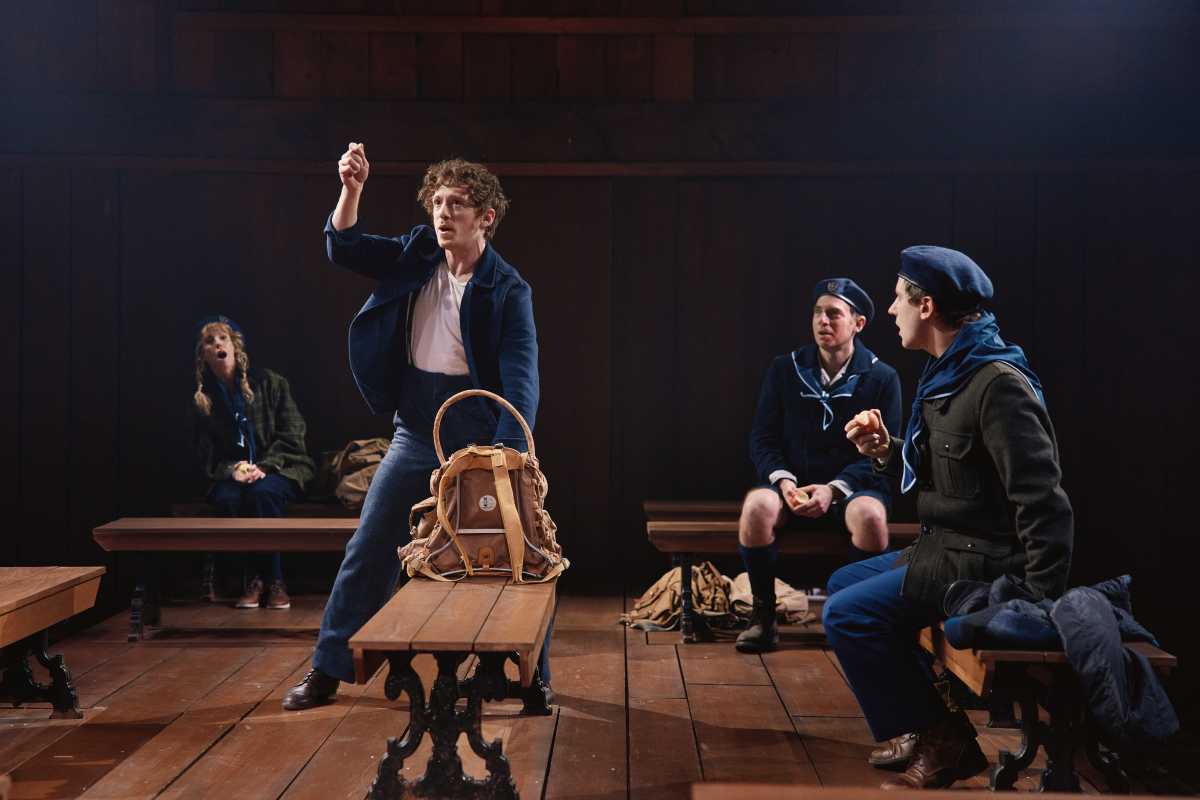
"Running approximately 100 minutes without intermission, the play unfolds largely inside a cramped train compartment a setting that turns CSC's intimate space into a pressure chamber. The staging is spare but evocative. Lighting and shadow compress the space, heightening the sense of confinement, while the grind of wheels and hiss of brakes pulse beneath the action. Danger never feels distant."
"From the outset, the tone is somber. The four children traveling with Marcel are using false names. Marcel himself is no seasoned resistance fighter. He has been pushed into escorting the children by his cousin, who is supposed to meet them along the route and assume responsibility. When that cousin never arrives, Marcel is left alone to decide whether to continue or turn back. Scenes aboard the train are interwoven with flashbacks to Marcel's father in their butcher shop."
"And yet, within that sustained sadness, Marcel insists on joy. In one chilling exchange, a Nazi officer conducting an inspection calmly identifies himself as a French citizen performing his duty. Marcel expresses surprise he assumed the man was German. The moment lands with quiet force. Persecution depends not only on invaders but also on neighbors willing to enforce it. Marcel performs to steady the children and to steady himself."
Marcel on the Train depicts a 20-year-old Marcel Marceau escorting four children across Nazi-occupied France with forged identity papers and no military training. The action largely takes place inside a cramped train compartment, where spare staging, focused lighting, and sound design intensify the sense of confinement and danger. The children use false names and Marcel's cousin fails to appear, forcing Marcel to decide whether to continue. Flashbacks to a butcher shop and glimpses of the children's futures suggest that escape does not erase trauma. Marcel uses mime, physical improvisation, and joy to steady the children in the face of persecution.
Read at www.amny.com
Unable to calculate read time
Collection
[
|
...
]