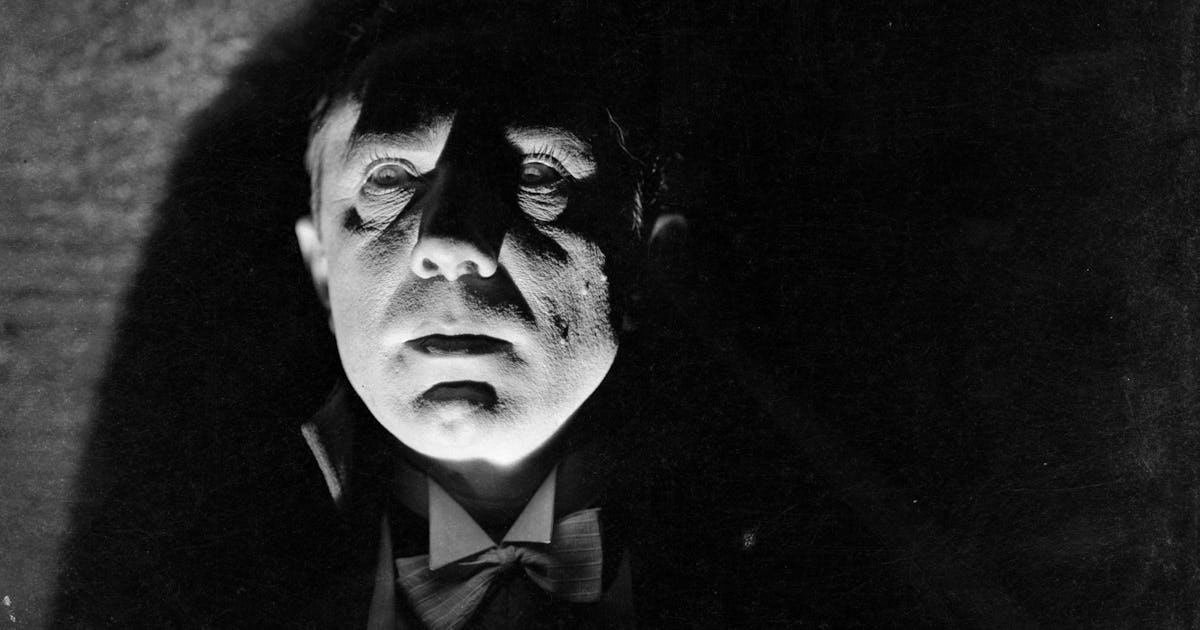
"On Valentine's Day in 1931, the hottest date was easily the just-released Universal Studios movie, . Starring Bela Lugosi in the titular role, Dracula recontextualized the literary character for modern audiences, redefined the notion of the vampire as an anti-hero, and, along with Frankenstein in the autumn of the same year, firmly established what we think of as "Universal Monsters" forever. But Dracula did all of that with one cinematic hand tied behind its back."
"Despite its impressive scope and budget for its time, Dracula did not have an original film score in 1931, meaning that when it was released, only the opening titles contained music, and that music wasn't even composed for the film. (It was a selection from Swan Lake, which the 1932 version of The Mummy later reused as well.) So, despite being the first "talkie" motion picture adaptation of the 1897 Bram Stoker novel, Dracula lacks a musical score."
On Valentine's Day 1931 Universal released Dracula starring Bela Lugosi, which recontextualized the literary Count as a suave, charismatic anti-hero and helped define the enduring Universal Monsters aesthetic alongside Frankenstein. The film premiered without an original score; only the opening titles carried music, a selection from Swan Lake later reused by The Mummy (1932). Dracula represents a populist cinematic adaptation derived from the 1924 stage play by Hamilton Deane and John L. Balderston, with Garrett Fort adapting that play for Tod Browning's 1931 screenplay. Critics and fans compare the film with the 1922 Nosferatu, noting tonal and stylistic differences.
Read at Inverse
Unable to calculate read time
Collection
[
|
...
]