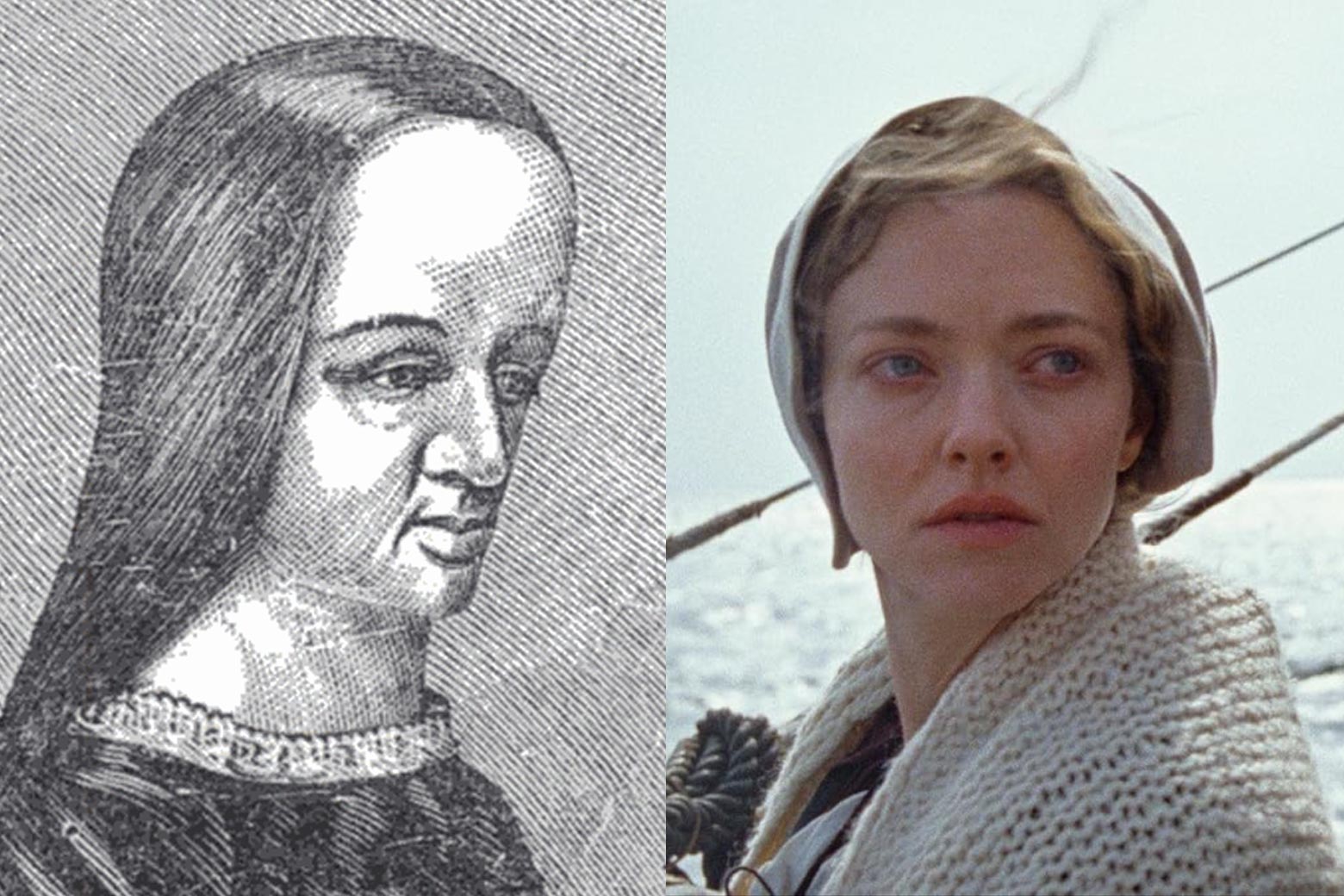
"TTOAL is more of a docudrama, with dramatized scenes linked together by narration that conveys the factual context (leading it to sometimes resemble an illustrated lecture). The songs are adaptations (by composer Daniel Blumberg) of Shaker hymns that are used to express not so much the feelings of individual characters as to re-create the communal mystical experience of Shaker worship, which is based on movement and song."
"the beautiful buildings-the barns and meeting houses of surviving Shaker villages that exemplify the tradition's guiding values of simplicity, utility, and working with nature-threaten to steal the show. Interiors aficionados may find themselves distracted by the lovely handcrafted chairs, chests, and tables (the Shaker communities were renowned for their woodworking), but the Shakers themselves would no doubt be disconcerted to discover their legacy lies more in kitchen design than in the network of egalitarian, pacifist utopias they were hoping to establish across the United States."
The Testament of Ann Lee functions as a docudrama rather than a conventional musical, linking dramatized scenes with narration and using adapted Shaker hymns to evoke communal mystical worship. Daniel Blumberg's adaptations emphasize collective movement and song over individual character emotions. Surviving Shaker barns, meetinghouses, and handcrafted furniture exemplify values of simplicity, utility, and working with nature and often draw attention. The Shaker goal of creating egalitarian, pacifist utopias contrasts with a legacy remembered more for woodworking and kitchen design. Early America contained a quilt of Protestant sects ranging from patriarchal conservatives to proto–feminist socialists, with Puritans in Massachusetts and Quakers in Pennsylvania.
Read at Slate Magazine
Unable to calculate read time
Collection
[
|
...
]