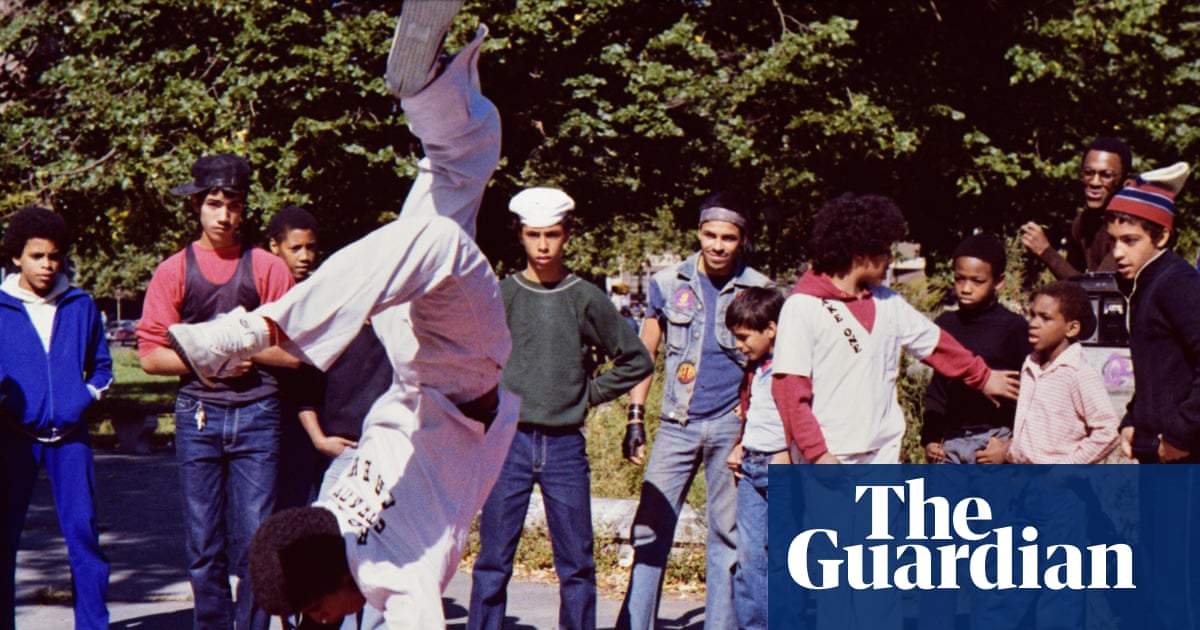
"I was part of the New York graffiti artists the Fabulous 5, who were primarily known for painting whole subway cars on the Lexington Avenue line. Lee Quinones was the group's Michelangelo. I'd been running with Jean-Michel Basquiat and wanted to take graffiti art into art spaces. I thought that an underground independent film could tell our story in the way we wanted."
"Charlie said: Fred, you can do it! So I became an actor, basing Phade, the club promoter, on Phase 2. Charlie insisted we make our own music. I knew Blondie's Chris Stein and Debbie Harry because they'd bought art from me as well as Jean-Michel, so Charlie, Chris and I hooked up to do the score. Everybody said that Patti Astor, who plays Virginia the reporter, looked like Debbie Harry, and Blondie let us use their song Pretty Baby for Virginia's big entrance."
A member of the Fabulous 5 painted whole subway cars on the Lexington Avenue line and worked with Lee Quinones. The film combined graffiti, breakdancing, and rap with a narrative documentary feel, featuring real rappers and graffiti artists portraying characters such as Zoro and Phade. Phase 2 inspired the Phade character but preferred anonymity, leading the filmmaker to act as a club promoter. Charlie Ahearn directed and encouraged original music made with Chris Stein and Debbie Harry, who contributed Blondie's "Pretty Baby." The film edited long live performances to fit cinematic pacing while preserving their meaning and preserved an underground Bronx, Queens, and Brooklyn culture.
Read at www.theguardian.com
Unable to calculate read time
Collection
[
|
...
]