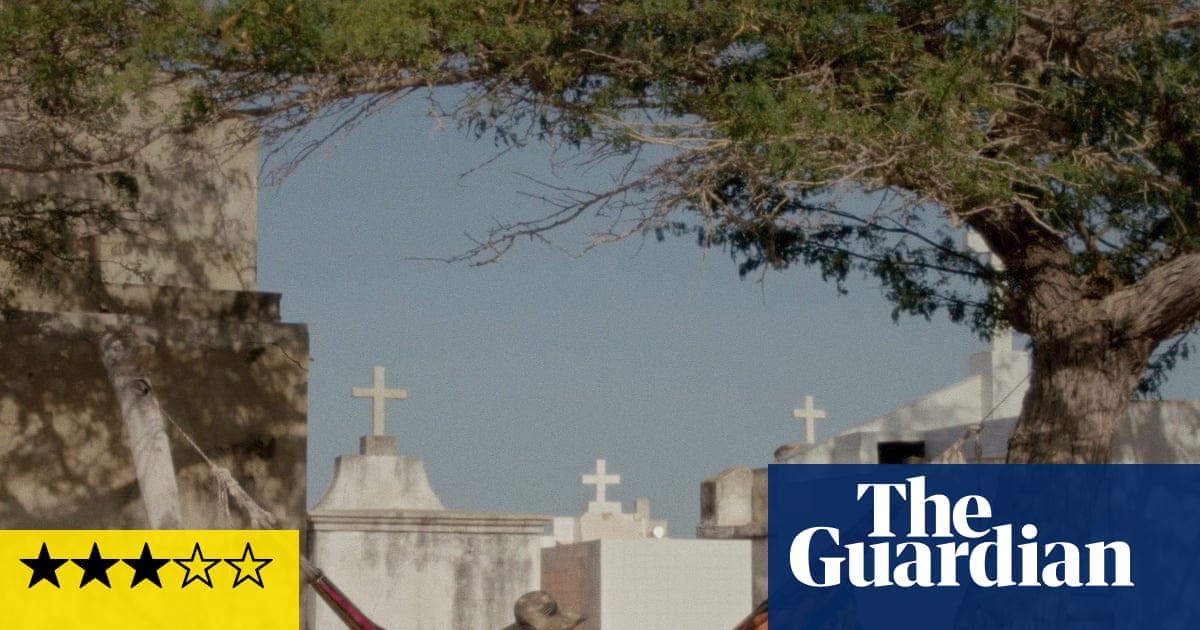
"Now in his 90s, the older man muses on the inevitability of death, all while looking back on his painful upbringing as a Wayuu Indigenous person. His voiceover, laid over the sight of lush forest and babbling brooks, recalls a cruel separation from his mother and his ancestral land, forced by Catholic invaders. This sense of fracture resonates throughout the family lineage. Jacanamijoy too speaks of his feelings of loss caused by generational trauma."
"Against such emotional and geographical disconnects, the film looks to dreams and even the afterlife as a possible space for reconciliation and healing. Jose Agustin's mother has long passed, yet he often sees her in his nocturnal reveries, filled with all-consuming longing. The film's sensorial soundscape, which builds a symphony out of natural sounds, further enhancing this metaphysical atmosphere. It is as if the presence of Jose Agustin's mother, along with the souls of other Indigenous people, are embedded on the land itself,"
Set among the rugged terrain of La Guajira, Colombia, the film centers on Jose Agustin, a Wayuu elder in his 90s who reflects on mortality and a painful childhood separated from his mother and ancestral land by Catholic invaders. Generational trauma and familial fracture surface through memory and voiceover layered over forest imagery and natural soundscapes. Dreams and visions of the afterlife become possible spaces for reconciliation, where the elder frequently sees his deceased mother. Closeups of care rituals—bathing, candle lighting, tomb preparation—depict communal support. The work presents Indigenous cultural survival as an act of resistance, asserting ancestral presence on the land and beyond.
Read at www.theguardian.com
Unable to calculate read time
Collection
[
|
...
]