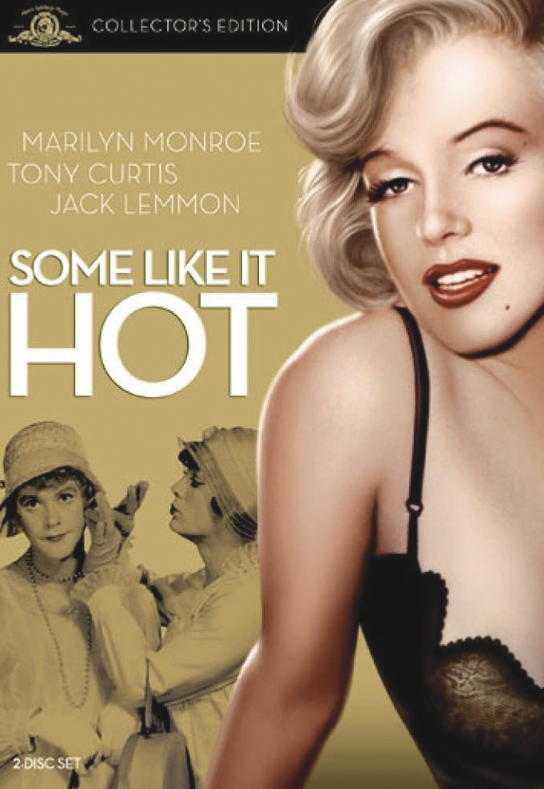
A presidential sex scandal erupts shortly before a U.S. election, and a presidential advisor chooses distraction as the solution. A major Hollywood producer helps fabricate a war to redirect public attention. The story emphasizes how political operations and Hollywood production can merge to shape public perception. The film is presented as sharply written and bitterly funny, treating audiences as intelligent. Other films are referenced to connect screenwriting craft with cultural commentary, including Some Like It Hot and its final exchange about imperfection and identity. The conversation also links Hollywood’s existence to language and representation, including remarks about gays and lesbians and Hollywood.
"Two weeks prior to re-election, the U.S. president lands in the middle of a sex scandal. To quell the situation, a presidential advisor, played by Robert De Niro, decides distraction is the best course. A major Hollywood producer, played by Dustin Hoffman, helps him fabricate a war. Sound familiar?"
"What gets me is how the film depicts the joining together of the political world and the Hollywood world."
"Like his 2000 comedy State and Main, David Mamet is bitterly funny and treats the audience as if we are very smart. I hope everyone sees Wag the Dog; you'll be blown away."
"Yes, you're talking about when an exasperated Jack Lemmon pulls off his wig and says, "Damn it, I'm a man!" and Joe E. Brown, playing Osgood Fielding, III, says, "Well, nobody's perfect!" You know, there's a great book by Charlotte Chandler titled Nobody's Perfect about the making of the film."
Read at San Francisco Bay Times
Unable to calculate read time
Collection
[
|
...
]