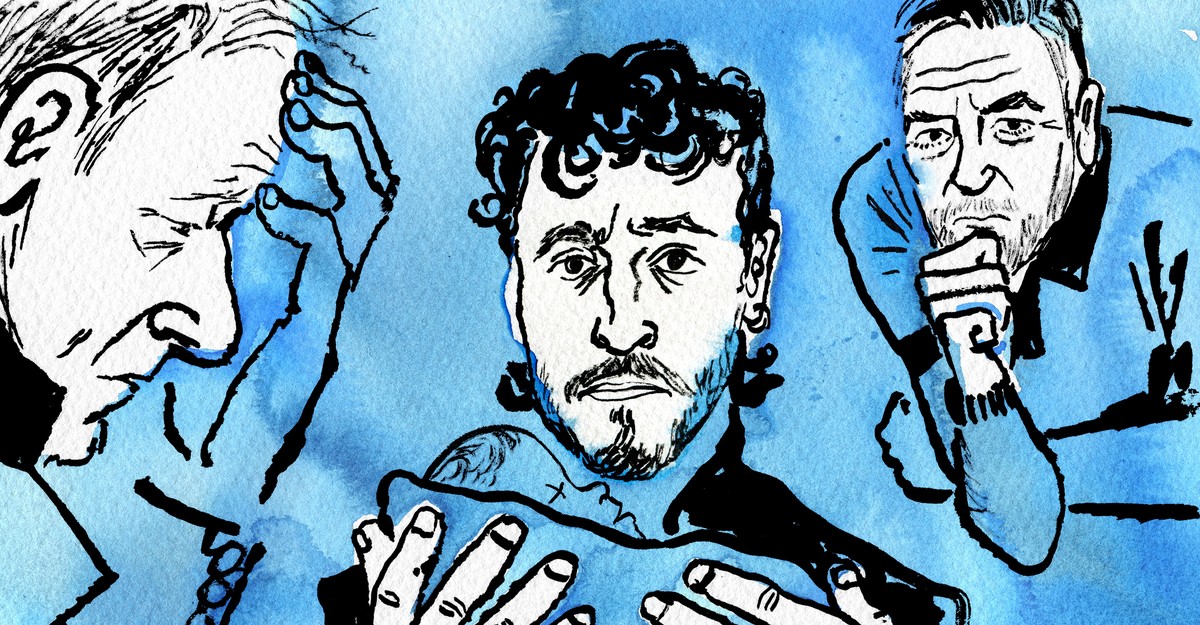
"If you went to the movies this fall, you probably met him: the Sad Art Dad. You'll have known him by his miserableness; despite the flash of the cameras and the cheers of the groundlings, he's most often found moping alone. His vocation may vary-movie star (in ), art-house director ( Sentimental Value), blockbuster Tudor playwright ()-but his problem tends to be the same. He has chosen great art over good parenting, utterly failing as a father, and he knows it. There's something delicious about his cocktail of self-pity and self-loathing, which can arouse both the viewer's repulsion and compassion."
"The distant and distracted patriarch, although abundant on-screen in 2025, is not a novel invention. Yet most movie dads are more likely to be found balancing stellar careers and model parenting ( lawyer-dad in To Kill A Mockingbird; Mob-dad in the Godfather films) than exhibiting-let alone acknowledging-their fatherly flaws. Sometimes prioritizing professional ambitions is even depicted as admirable: In Interstellar, Matthew McConaughey plays an astronaut who abandons his kids for a decades-long space mission, but only in order to save humanity."
A cinematic archetype called the Sad Art Dad appears frequently, identified by miserable demeanor and artistic vocation. These characters prioritize creative fulfillment over parenting and often admit culpability for their absences. Historically many film fathers balanced careers with effective parenting or had justifying motives for sacrifice, but the new portrayals emphasize deliberate choice of art over family. Specific examples include high-profile figures who confess that pursuing art required neglecting children. The portrayals generate mixed responses, combining viewer repulsion with compassion and making such flawed patriarchs compelling to watch.
Read at The Atlantic
Unable to calculate read time
Collection
[
|
...
]