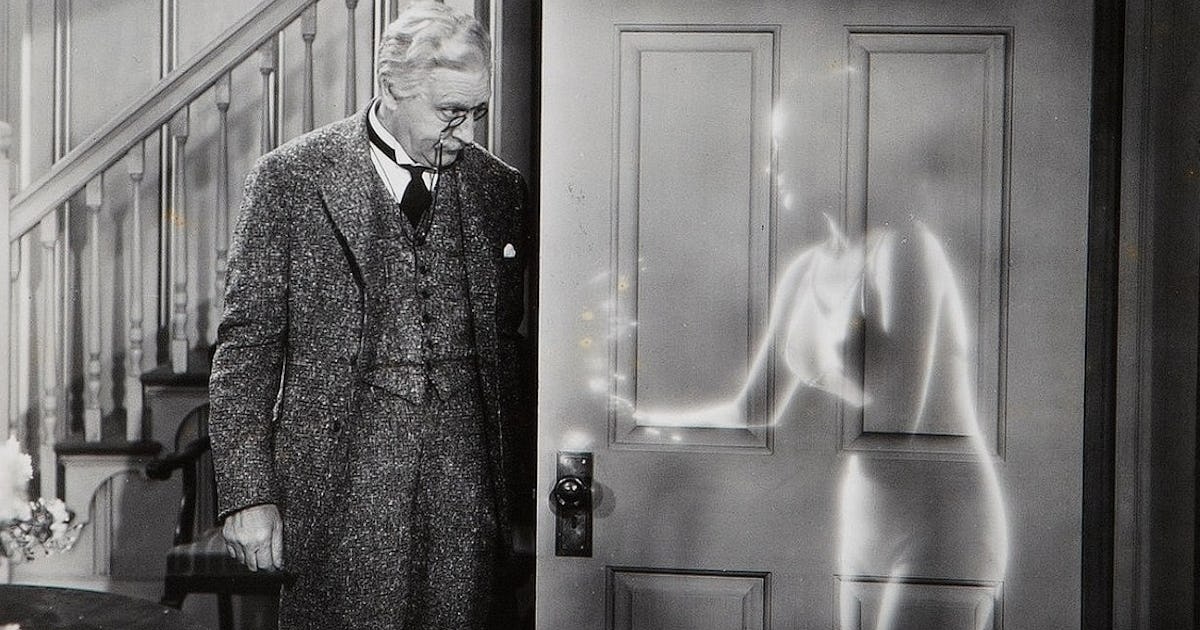
"The output of the Universal monster era, wherein the legendary studio pioneered a new age of big-screen horror, became some of the most recognizable and copied creations in movie history. Dracula, Frankenstein, the Mummy, the Wolf Man, and the Invisible Man were reinterpreted and ripped off countless times, often by Universal itself. And with the Invisible Man, the studio chose to keep the franchise running with an ahead-of-its-time gender twist."
"Directed by James Whale two years after he made Frankenstein, The Invisible Man is, like much of Universal's output, an adaptation of a novel, this one by sci-fi legend H.G. Wells. It centers on an eccentric scientist (Claude Rains), whose bandage-concealed face arouses the suspicion of his small town home. It's soon revealed that his experiments have rendered him invisible, and he has no idea how to make himself visible once more."
Horror cinema became defined by iconic Universal monsters such as Dracula, Frankenstein, the Mummy, the Wolf Man, and the Invisible Man. Universal pioneered big-screen horror and repeatedly reinterpreted those creations. The Invisible Man adapts H.G. Wells and was directed by James Whale, featuring Claude Rains as a scientist who becomes invisible after experiments and cannot reverse the condition. Groundbreaking special effects that made Rains disappear made the film a major hit. The franchise generated sequels and genre variations, including wartime adventure and Abbott and Costello crossovers, as well as a gender-swapped film, The Invisible Woman, starring Virginia Bruce.
Read at Inverse
Unable to calculate read time
Collection
[
|
...
]