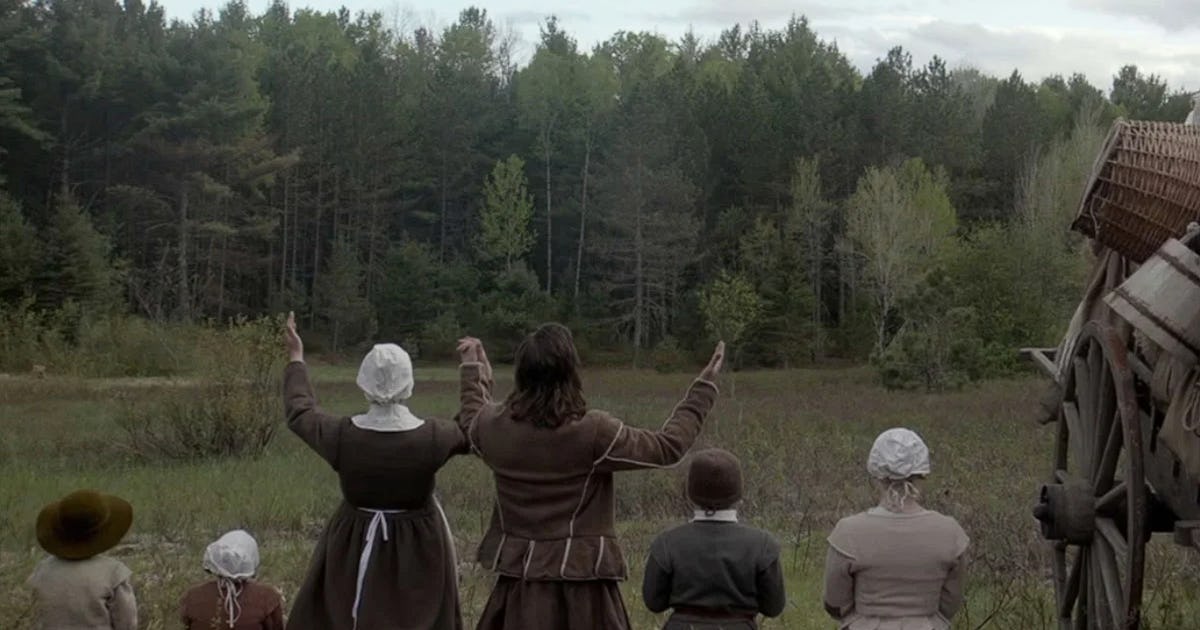
Ten years after release, The Witch catalyzed mainstream attention to folk horror and launched Robert Eggers' career. Folk horror originated in late 1960s–1970s films like Witchfinder General, The Blood on Satan's Claw, and The Wicker Man, while many British and small-company works faded into obscurity. The Witch earned over $40 million on a sub-$4 million budget, prompting major Hollywood films such as Midsommar and numerous indie and Southeast Asian entries. Archival projects like Woodlands Dark and Days Bewitched renewed interest in pagan iconography, rural settings, uncanny nature, and ancient myths. The Witch depicts a banished Puritan family subjected to a forest witch corrupting the children.
"A loosely defined category, folk horror first emerged on screen in the late 1960s and early '70s with the field's "Unholy Trinity": Witchfinder General (1968), The Blood on Satan's Claw (1971), and The Wicker Man (1973). Numerous other examples, both in literature and in theatres, appeared before and after that trio of films, but many of them - particularly those aired as British TV movies or produced by small companies - vanished into obscurity for decades."
"But Eggers' powerful directorial debut was a box office success, earning more than $40 million against a budget of under $4 million. Its success opened the floodgates for other major Hollywood releases, like Midsommar, along with a slew of indie and international (particularly Southeast Asian) releases. Archival explorations such as Kier-La Janisse's definitive documentary, Woodlands Dark and Days Bewitched, chronicled a newfound appreciation for the subgenre and its iconography of pagan beliefs, rural settings, inexplicable nature, and age-old myths."
Read at Inverse
Unable to calculate read time
Collection
[
|
...
]