"If you scroll down to the bottom of Ballerina Farm's Instagram page, all the way down, to the point where your browser starts sputtering in protest at the data usage, you can find images from more than a decade ago of America's most famous homemaker goofing around on the beach and at Disney World in clothes that are demonstrably made from polyester. There are no earthenware mixing bowls in sight, no raw-cotton milkmaid dresses, no gathered floral centerpieces or spuming jars of sourdough starter. Hannah Neeleman and her husband, Daniel, look like average beaming newlyweds, young parents fake-posing with margaritas and figuring things out."
"Today, things are quite different. The Neelemans have nine children, 10.4 million Instagram followers, and a thriving retail and e-commerce brand selling meat and frozen cinnamon rolls. Hannah cooks more than she smiles now, making sauerkraut, rolling out dough for taco shells, breastfeeding an infant in front of the stove. She wears an awful lot of gingham. You can chart the evolution of her aesthetic with her exponential increase in followers-pre-2020, she wore mostly jeans, T-shirts, and waterproof boots, grinning endearingly from atop a truckful of plastic bottles and posting muddy pictures of livestock."
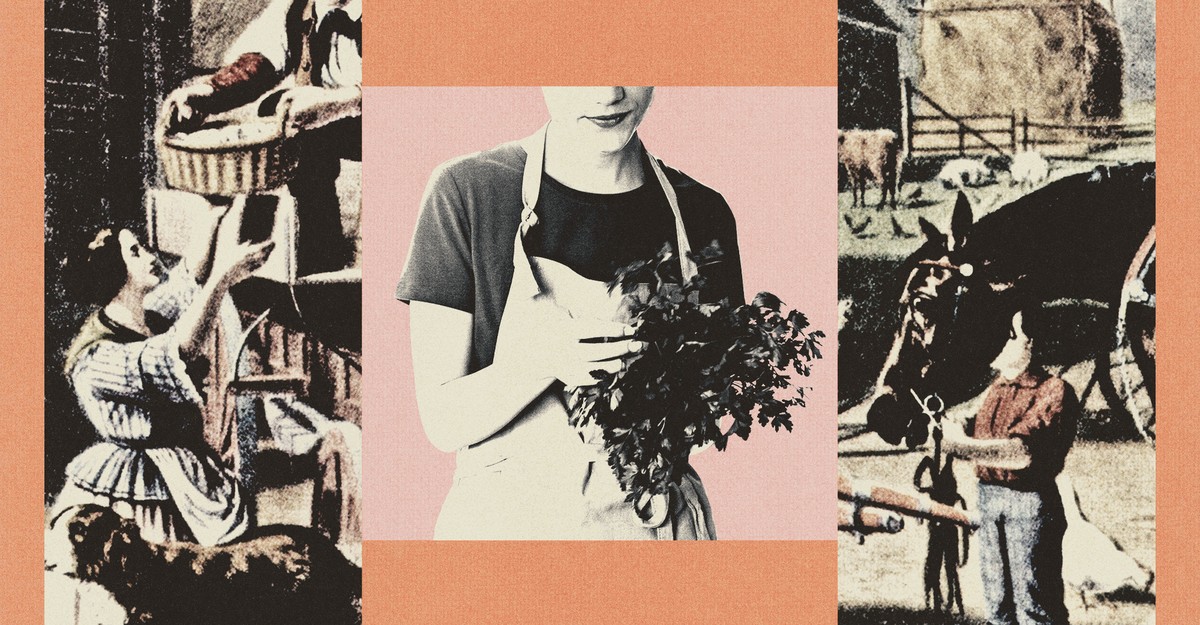
"You can't definitively argue that this turn toward an ultra-feminine, domestic-nostalgic, pacified depiction of womanhood has been driven by audience engagement. But you can deduce that it's working. Caro Claire Burke's Yesteryear, the most talked-about novel of 2026 so far, has landed in a moment that's in thrall to the tradwife: the domestic goddess who cooks everything from scratch, homeschools her sizable family, hides her state-of-the-art kitchen appliances behind Shaker cabinets, and treats her husband like a king."
"Conservatives idolize her. Feminist Substackers gleefully dissect tradwife pregnancy announcements and raw-milk misadventures. A recent King's College report that surveyed women ages 18 to 34 found that respond"
Images from early social media show a homemaker in polyester clothing and casual, youthful poses, while later posts present a larger family, high follower counts, and a retail business selling food products. Her content emphasizes cooking, baking, breastfeeding, and a gingham-heavy, ultra-feminine domestic look. The narrative connects this aesthetic evolution to growing audience success rather than proving a direct causal link. A widely discussed 2026 novel arrives during a cultural moment focused on tradwife ideals: home production, homeschooling, concealed modern appliances, and deference to husbands. Conservative admiration and feminist commentary both intensify attention, while research on young women suggests measurable engagement with these themes.
Read at The Atlantic
Unable to calculate read time
Collection
[
|
...
]