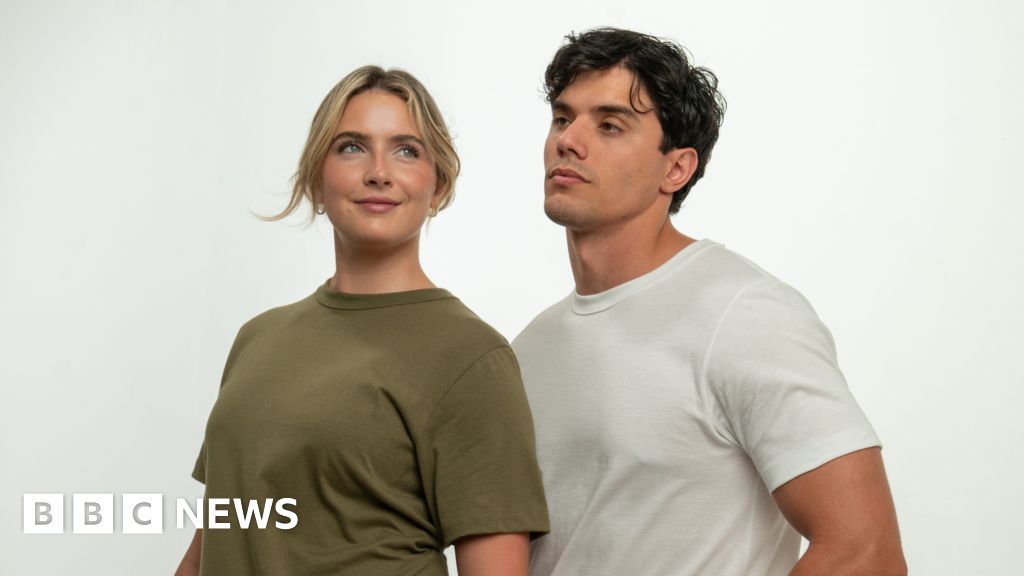
"“You have a problem if it's sewing,” says Cam Myers, founder and chief executive of California-based CreateMe, a robotics company. “You have to keep [two pieces of fabric] in alignment under motion.” His company takes another approach. Forget sewing glue the pieces of fabric together instead. “Once the adhesive is laid down, you simply line something over it and stamp.” CreateMe has designed robots that do this and the firm is already making women's underwear this way."
"Roboticists have eyed the garment manufacturing industry for decades. If machines could ever take over such work, clothes-making could come back to countries in the West, and the environmental footprint of garments might be slashed in the process. But millions of textile workers could also be out of a job. CreateMe Just a few percent of clothes sold today in the UK are made here. It's a similar story in the US."
"Myers says he has customers seeking to market garments as “made in the US”, with US-produced cotton, for example. “We can use cotton, we can use wool, we can use leather,” he says, of CreateMe's adhesive-based process. If just 10% of t-shirt manufacturing moved back to the US with the help of automation, that would be a huge industry shift, he adds."
"The adhesive CreateMe uses is thermoset, which means that ironing or washing machine temperatures aren't enough to melt it and make the clothes fall apart, insists Myers. He adds that, because these garments lack seams, they are streamlined and can also be manufactured on moulds that capture the contours of the human body."
Robotic garment production is difficult to fully automate with sewing because fabric must stay aligned under motion. CreateMe uses robots that apply adhesive to fabric, then line up another material over it and stamp to bond the pieces. The company is already producing women’s underwear this way and plans to produce t-shirts soon, with mass production potentially following next year. Robotic automation could shift clothing manufacturing back to Western countries and reduce the environmental footprint, while also risking job losses for textile workers. CreateMe’s thermoset adhesive resists melting from ironing or washing machine temperatures. Seamless garments can be streamlined and manufactured on moulds that match human body contours.
Read at www.bbc.com
Unable to calculate read time
Collection
[
|
...
]