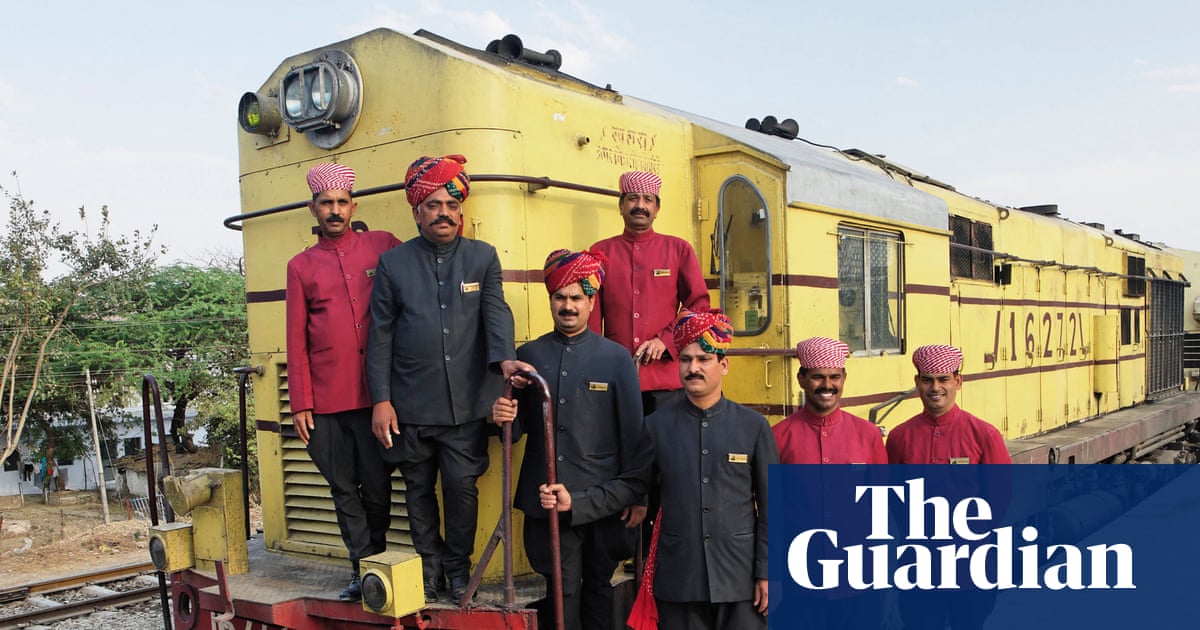
"It is one India's most ubiquitous garments, with origins in the grand Mughal courts and Rajasthani kingdoms of times past, and still widely favoured by sharply dressed grooms at wedding receptions. But this week, the distinctive high-collared bandhgala jacket known to many as the princely jacket in a nod to its royal origins found itself at the centre of a lively debate after it was denounced by the Indian railways minister as a symbol of a colonial mindset."
"In an attempt to banish such colonial hangovers, Ashwini Vaishnaw has declared that the bandhgala will be immediately removed as part of the formal uniform of Indian Railways staff. We have to get rid of all colonial mindset, Vaishnaw said. We need to find each of them and remove them, whether it's in our working style or dressing style."
"I think it's unfair to say this jacket is not part of our own history or it's the costume of another culture, Rathore said. It has developed and evolved over four centuries, going back to the Mughal courts and the Rajasthan princely states. This jacket was here before the British arrived in Calcutta and it's gone through a very fluid evolution since then."
Indian Railways minister Ashwini Vaishnaw ordered immediate removal of the bandhgala from the formal uniform, calling it a symbol of a colonial mindset and vowing to eliminate colonial hangovers. The order ignited debate over whether the high-collared bandhgala is a colonial relic or an indigenous expression of royal tailoring. The jacket entered railway uniforms in the late 19th century during the British Raj, but historical origins trace to the Mughal courts and Rajasthan princely states and a centuries-long evolution. Designer Raghavendra Rathore, a Jodhpur descendant, defended the jacket as India's refined royal tailoring. The government has pledged to free India from the legacy of British colonial rule.
Read at www.theguardian.com
Unable to calculate read time
Collection
[
|
...
]