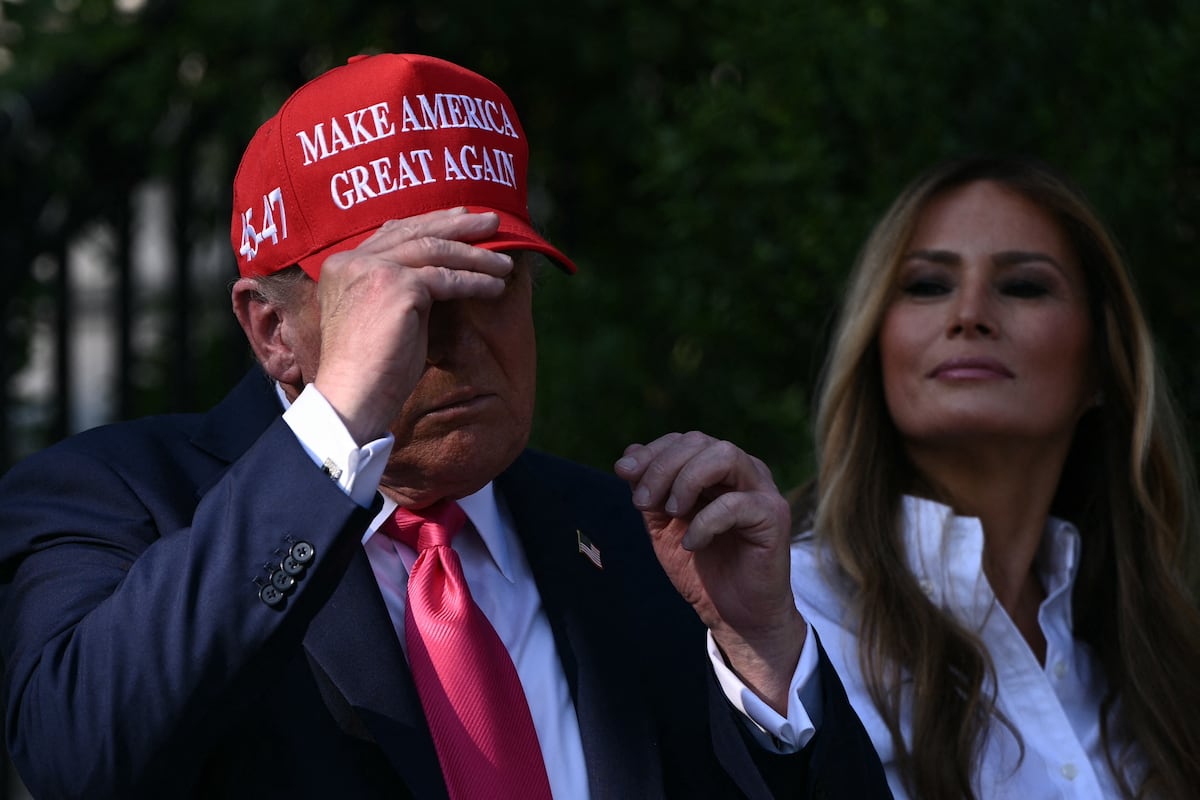
Melania Trump’s 2018 African and Egyptian visits drew criticism for clothing associated with colonial and racial stereotypes, including a pith helmet and a Panama hat. She responded by urging attention toward her actions, such as visiting schools and engaging local culture, rather than her attire. The events illustrate how clothing operates as political language. Fashion and Politics: The Appearances of Power traces the relationship between dress codes and political practice from ancient empires to contemporary U.S. attitudes. It links authority and dominion to visible staging, arguing that power constructs images before issuing laws, with the clothed body serving as a primary medium for legitimacy.
"In 2018, Melania Trump traveled to several African countries including Kenya and Egypt to smooth things over after her husband's remarks the previous year. It was rumored that Donald Trump considered them to be in a shithole region. During her visit, the First Lady faced heavy criticism while on safari for wearing a pith helmet, an item inextricably linked to the stereotypical image of an African traveler, but also reminiscent of the clothing worn by European explorers and colonial soldiers of the late 19th and early 20th centuries."
"In Egypt, while admiring the pyramids, she opted for a Panama hat. This didn't fare any better. She was accused of implying white supremacy with her attire. Melania Trump told the media that they should focus more on what she did visiting schools, engaging with the local culture and not on what she wore. The anecdote, though recent, serves to encapsulate the theme of the new essay by Spanish professor and journalist Ana Velasco Molpeceres."
"Fashion has been the most despised and persecuted political language [] Also the most explicit and admired. [] Legitimacy needs staging. Power, before dictating laws, constructs images. And the first of these is the clothed body, she states on the first page. The essay embarks on a detailed recapitulation spanning millennia, from the Persian Empire (550-330 BC) to the attitudes found in the current U.S. administration."
"Wherever a civilization established its ranks of authority and dominion, fashion was part of them. Special attention"
Read at english.elpais.com
Unable to calculate read time
Collection
[
|
...
]