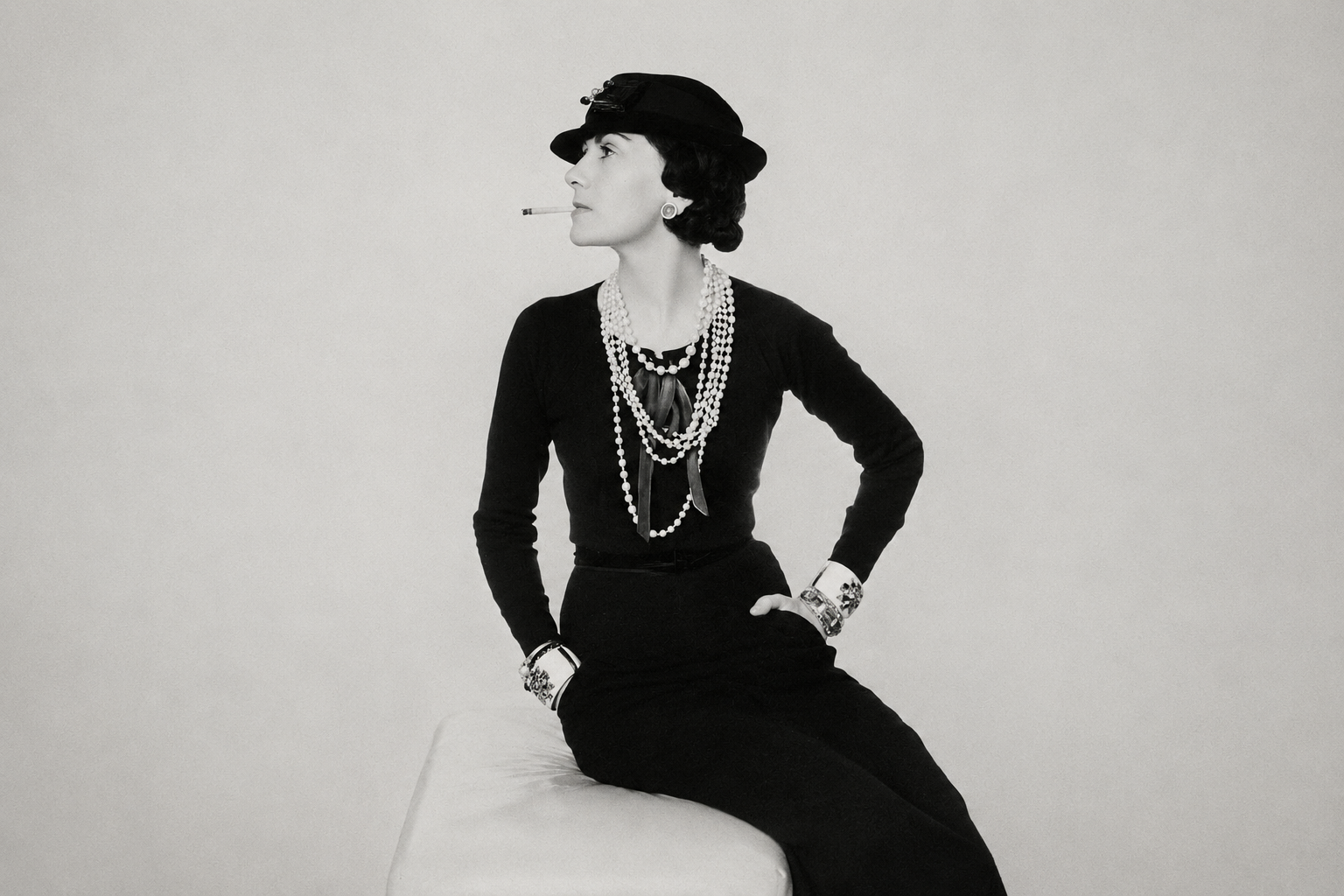
"In 1926, Coco Chanel published a short, simple black dress in American Vogue . Calf-length, straight-cut, and decorated only with a few diagonal lines, Vogue dubbed it 'Chanel's Ford'. The implication was clear: the LBD would be democratic, practical, and accessible to women across social classes - 'a sort of uniform for all women of taste,' as the magazine put it. Few fashion predictions have proved quite so prophetic."
"Black clothing, of course, long predates Chanel. From ancient Egypt to parts of Asia, black has historically symbolized both life and death; meanwhile, in the Western imagination, Christianity's influence cemented the color's moral binary: black associated with evil and sin, white with purity and virtue."
"But, as Georgina Ripley writes in Little Black Dress: A Radical Fashion , it was Queen Victoria who popularized black's association with mourning after the death of Prince Albert. At the same time, advances in synthetic dyes made black clothing cheaper to produce on a mass scale."
The little black dress has been reinvented for a century alongside culture, femininity, and fashion. Chanel’s founder is credited with creating the look, with a 1926 publication of a simple black dress in American Vogue described as calf-length, straight-cut, and minimally decorated. The dress was framed as democratic, practical, and accessible across social classes. Black clothing predates Chanel, carrying meanings shaped by history and religion, including associations with life and death and moral binaries in Western culture. Queen Victoria popularized black mourning after Prince Albert’s death, while synthetic dyes made black easier and cheaper to produce. As black became more common, distinctions emerged between elite “rich black” and “respectable” black worn by lower classes.
Read at Elite Traveler
Unable to calculate read time
Collection
[
|
...
]