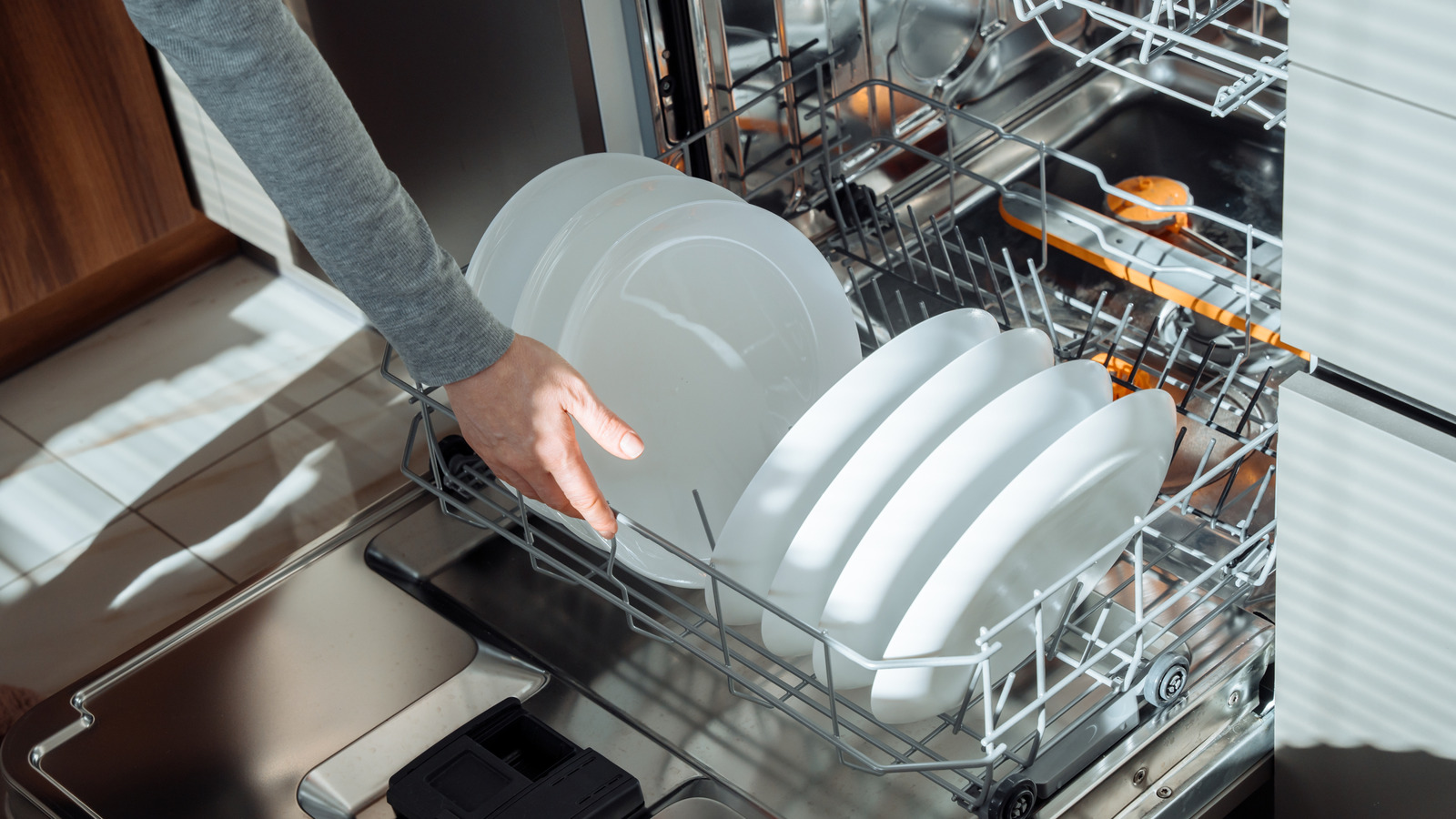
"When you run your dishwasher through its dry cycle, it's aggravating to open the door and find small ponds on top of your cups. The whole point of a dishwasher is to cut down on your own chore time, right? You don't want to now be taking the time to hand-dry every cup."
"It's all about tilting the top rack. Many dishwashers feature adjustable top racks, and if you create even a slight angle, water will simply slide off the tops - or bottoms, technically - instead of pooling there. This is one of the best hacks for effortless efficiency with your dishwasher."
"The appliance will do its job, water won't pool, and you can reasonably expect everything in your dishwasher post-dry cycle to be ready to place back into your cabinets or on shelves. There are a few other helpful tips to aid in this, though, which are especially key if your dishwasher rack isn't adjustable."
"One of the biggest mistakes you're making with your dishwasher is trying to immediately unload it the second the dry cycle ends. Procrastinators, it's your time to shine. You actually benefit from opening"
Cup puddles can appear when the dishwasher dry cycle ends, leaving small ponds on top of cups. Tilting the adjustable top rack creates an angle so water slides off cup surfaces instead of pooling. This improves the chance of getting clean, dry dishes ready to return to cabinets or shelves. If the rack cannot be angled, other loading and unloading habits can still reduce pooling. One key approach is to avoid unloading immediately when the dry cycle finishes, since waiting after the cycle can help dishes dry more effectively. Additional techniques can further improve results for cups, glasses, and bowls.
Read at Tasting Table
Unable to calculate read time
Collection
[
|
...
]