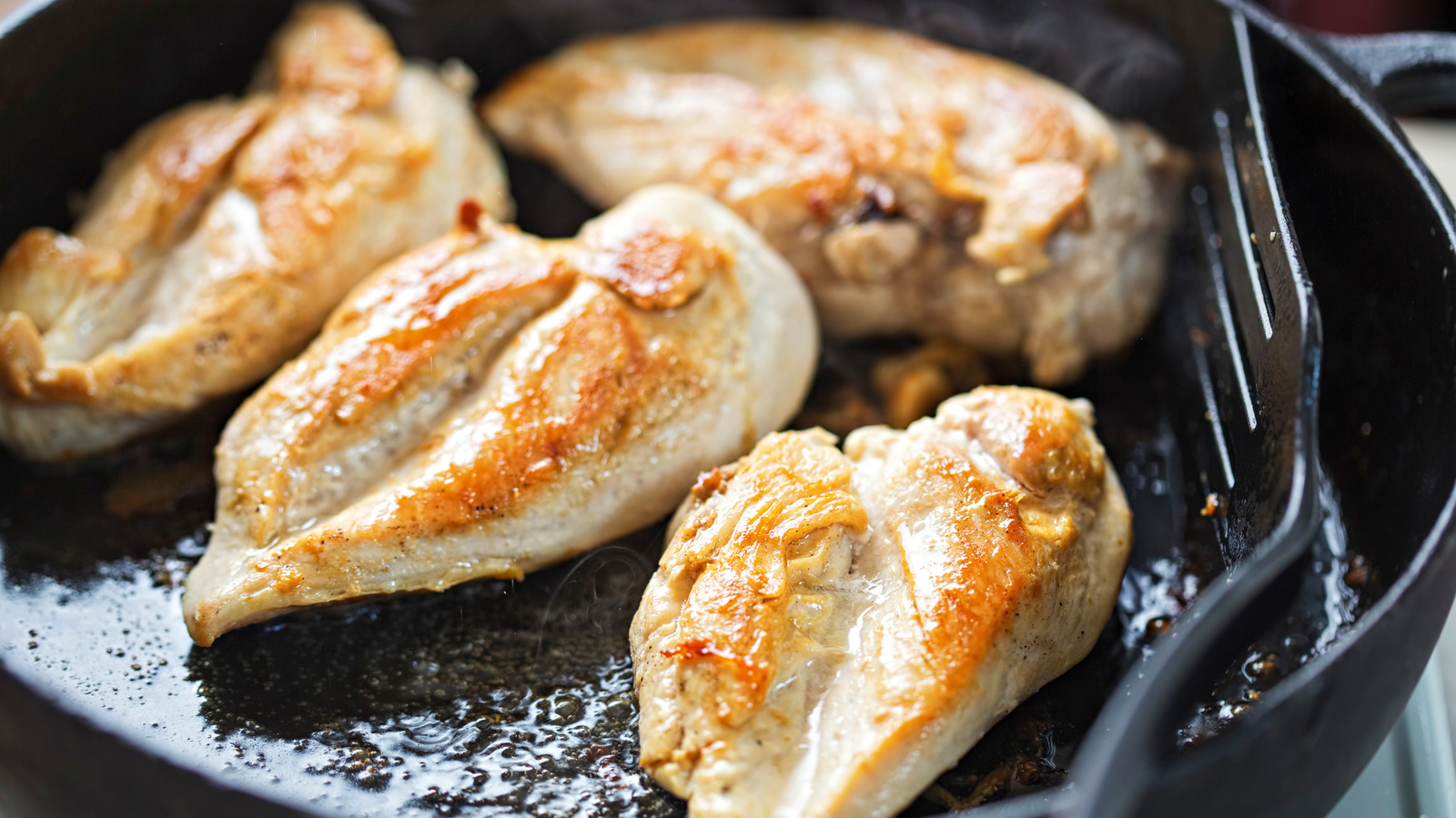
"Retaining moisture is the key objective of cooking chicken, and adding some additional water to the pan helps us get a head start. First, sear the chicken on both sides as you normally would, and once you're happy with the color of the sear, pour about a cup of water into the pan. The exact amount will depend on the thickness of your chicken - you don't want it to be covered or swimming around, but you do want to deglaze the pan and trap the steam."
"Cover the pan with a lid and leave it on the stove for a few more minutes before removing it from the heat and letting it rest for 10 to 15 minutes. Allowing the chicken to steam yields the juiciest stovetop results, so it's very important that you keep the lid on the pan through this whole process, not allowing any steam to escape."
"For example, being mindful of the cooking temperature - the higher the temperature, the drier the chicken. When pan-cooking poultry, opting for a medium-range temp is the best choice as it still gives you that nice sear but also cooks the bird more slowly."
Chicken is a popular affordable protein but often becomes dry during cooking because it lacks fat and loses moisture quickly, especially in the pan. The solution involves searing the chicken on both sides, then adding approximately one cup of water to deglaze the pan and create steam. Covering with a lid traps this steam, cooking the chicken gently while retaining juices. After cooking, resting the chicken for 10-15 minutes allows moisture redistribution. Additional techniques include using medium heat instead of high temperatures, which cooks chicken more slowly and prevents excessive drying. Using a meat thermometer ensures proper doneness without overcooking.
Read at Tasting Table
Unable to calculate read time
Collection
[
|
...
]