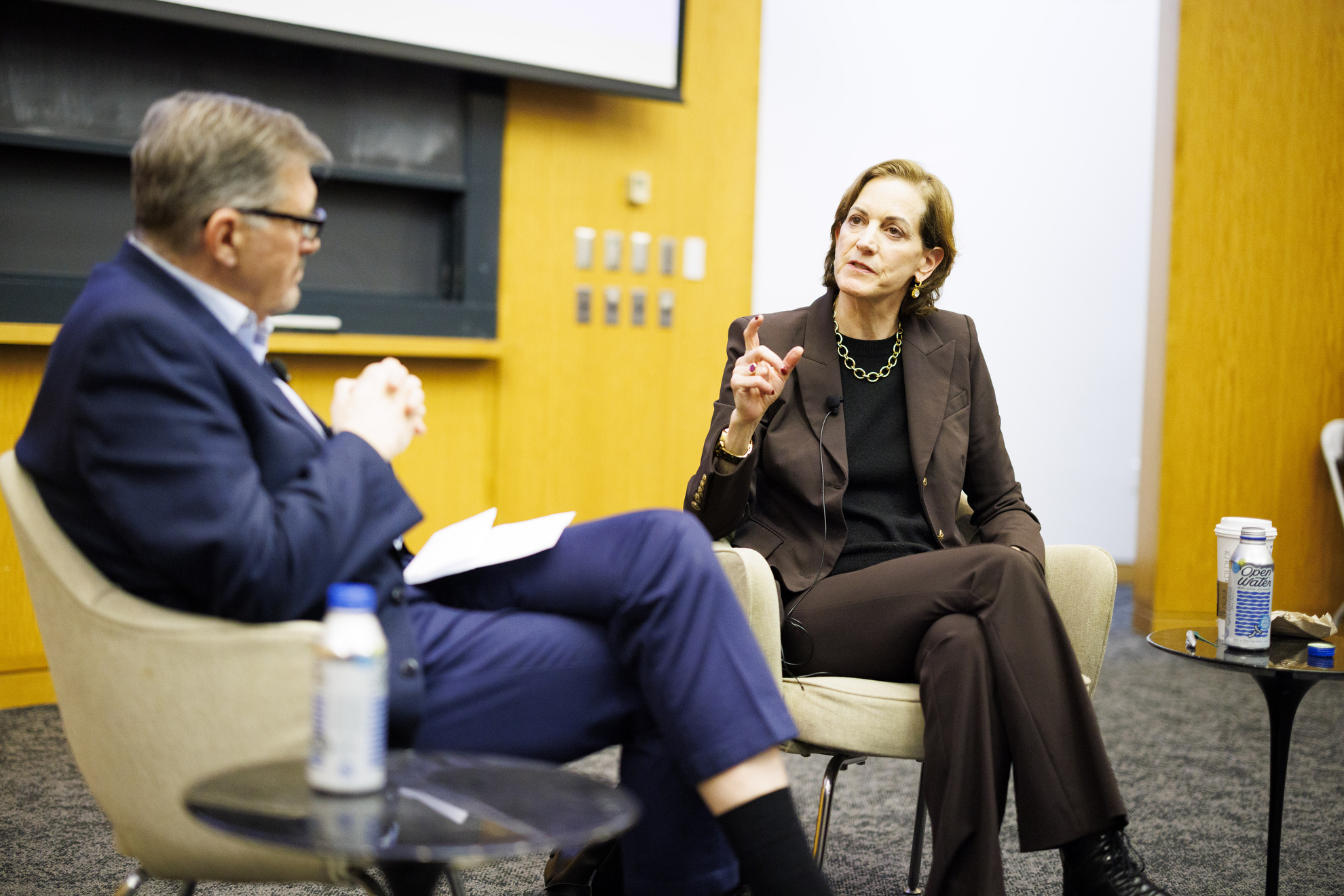
"Everyone you speak to now, not just in Europe but especially in Europe, talks about hedging: 'How do we hedge against the United States? How do we find other markets? How do we protect ourselves? We're now in a world where we have America on one side and Russia on the other, and we need to think about what our voice will be.'"
"The current global moment harkens back to the dark politics of a century ago, when ethnonationalism was on the rise. Most striking is the weakening of the rules-based world order that emerged after World War II and prevailed into the 21st century, with terms like 'liberal world order' and 'rules-based world order' being used as insults at major conferences."
As the Russia-Ukraine war continues into its fifth year, Europe faces a fundamental shift in global dynamics. The U.S. is perceived as withdrawing from its traditional role as a reliable security and trading partner, prompting European nations to develop hedging strategies and seek alternative markets and protections. The current geopolitical moment resembles early 20th-century politics characterized by ethnonationalism and the erosion of the post-World War II rules-based international order. At major conferences, the concepts of liberal and rules-based world order are being dismissed as outdated, signaling a radical transformation in global governance structures that profoundly affects Europe's strategic positioning.
#european-strategic-autonomy #russia-ukraine-war #global-order-decline #ethnonationalism #us-geopolitical-withdrawal
Read at Harvard Gazette
Unable to calculate read time
Collection
[
|
...
]