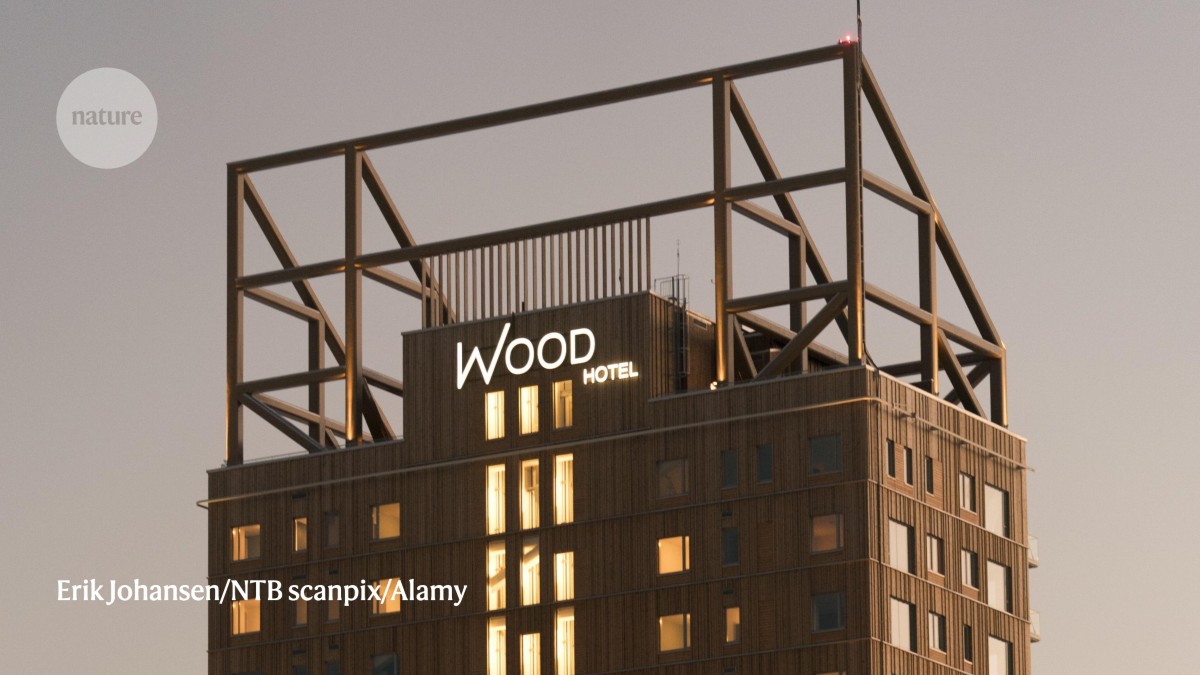
"When the first skyscraper was built in Chicago in 1885 - a modest ten storeys - people were afraid to walk under the steel-framed building, fearing it would collapse. Today, as towers made of wood go up in cities around the world, the response is a similar mixture of wonder and fear. People are concerned about the fire risk and the structural stability, but the truth is that wooden construction is healthier, both for people and for the planet."
"A building's structural elements, typically steel and concrete, are "a huge component of that carbon footprint", says Michael Green, architect and author of the 2017 book The Case for Tall Wood Buildings. "That means the most important thing we can do is change the materials we build with." Green's firm, MGA, based in Vancouver, Canada, is designing what will be the world's tallest wooden skyscraper: a 55-storey tower, the Marcus Center in Milwaukee, Wisconsin."
Early skyscrapers provoked public fear of collapse; modern wooden towers provoke a similar mixture of wonder and fear. Concerns focus on fire risk and structural stability, yet wooden construction offers health benefits for people and the planet. Buildings and construction account for nearly 40% of global greenhouse-gas emissions. Steel and concrete structural elements are a huge component of that carbon footprint, so changing construction materials is crucial. The largest emissions gains will come from numerous mid-rise buildings, while landmark timber towers push technology and demonstrate that wood can be as safe as concrete and steel. Notable projects include Milwaukee's 55-storey Marcus Center, the 25-storey Ascent and Norway's 18-storey Mjøstårnet.
Read at Nature
Unable to calculate read time
Collection
[
|
...
]