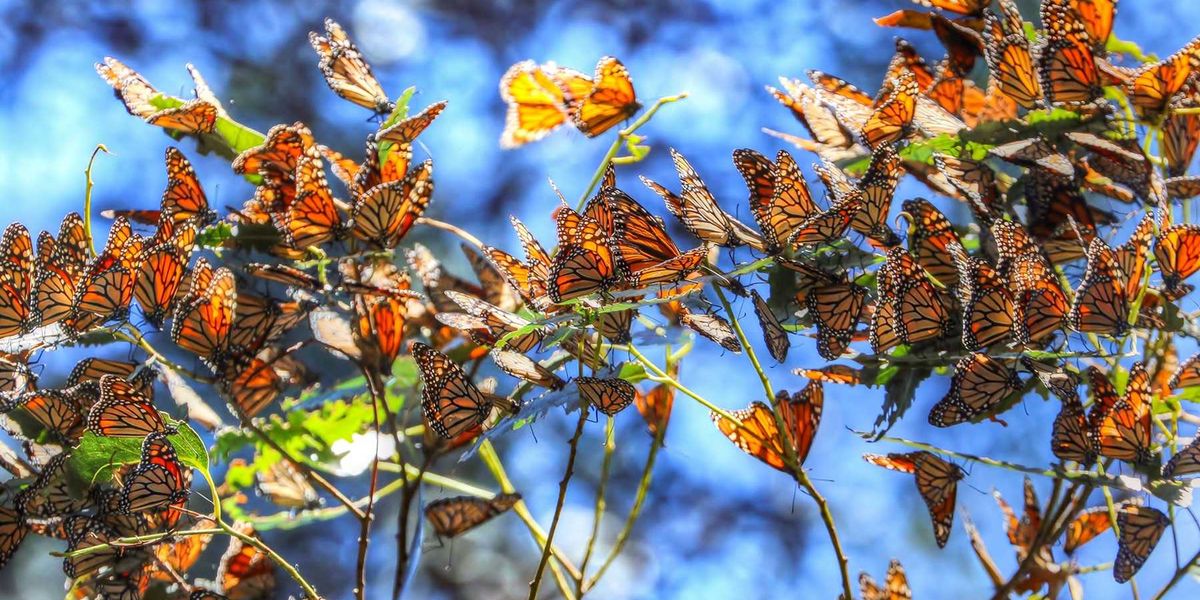
"Most monarchs live just a few weeks, but the super generation that overwinters in California lives six to nine months. For much of the year, the butterflies are solitary, but they cluster together at overwintering sites, sometimes by the thousands. Monarchs use the groves to rest, but when it's warm enough during the dayabove around 55 degrees Fahrenheitthey break out of those clusters to search for nectar."
"They'll stay in these overwintering sites until around Februaryand it's a true delight to see them. The way that they soar is so beautiful with the light filtering through their wings like stained glass, says Natalie Johnston, interpretive projects manager at the Pacific Grove Museum of Natural History. They're lovely and harmless, and they bring everybody together; they're symbols of transformation, strength, and inclusion."
North American monarchs are divided into eastern and western populations separated by the Rocky Mountains. Eastern monarchs migrate to central Mexico for the winter, while western monarchs gather in California eucalyptus, pine, and Monterey cypress groves beginning in mid- to late-October. Most monarchs live only a few weeks, but the overwintering "super generation" in California lives six to nine months. Monarchs are solitary for much of the year but cluster by the thousands at overwintering sites to rest and seek nectar when daytime temperatures rise above about 55°F. Western monarch numbers were particularly low in the 2024-2025 season due to drought and heatwaves, and populations are still recovering. The coastal clustering allows scientists to count and track monarchs, making them a bellwether for pollinator and ecosystem health.
Read at www.7x7.com
Unable to calculate read time
Collection
[
|
...
]