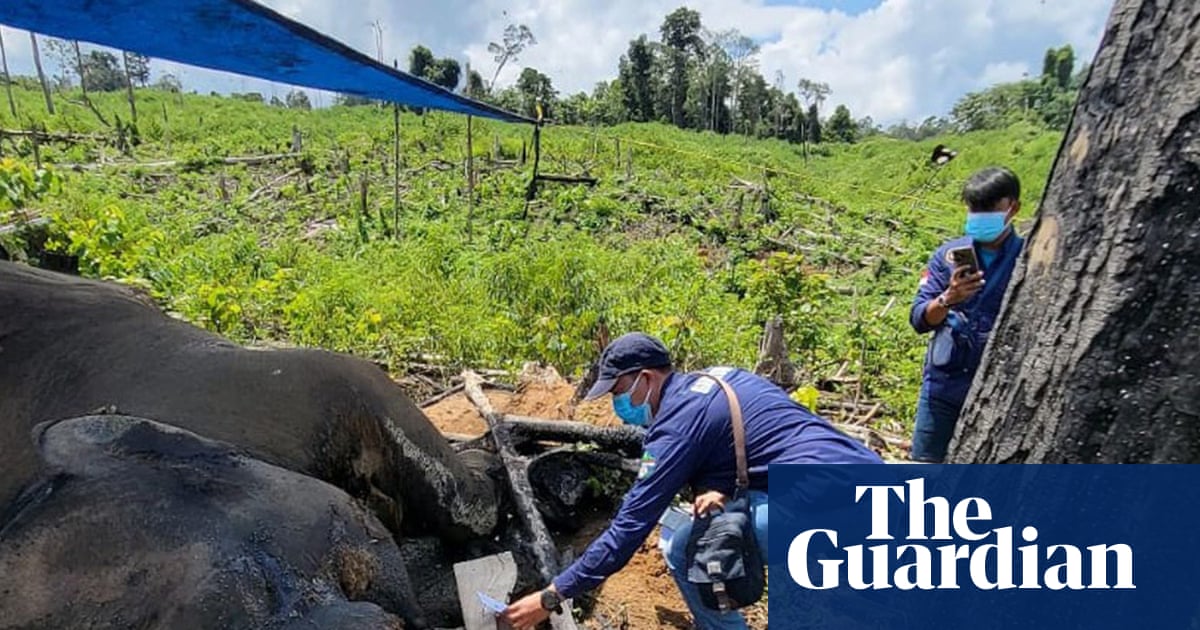
Two elephants and a tiger were found dead in Bengkulu, Indonesia, in production forest in southern Sumatra. The mother and calf lay side by side with tusks intact, and the deaths are under investigation. Conservationists say the deaths are part of a broader pattern, with an estimated seven wild elephants dying in Bengkulu since 2018. Sumatran elephants around Seblat once numbered about 100–150 individuals in 2010, but the population has fallen to fewer than 50. Poaching and deforestation linked to farming and palm oil plantations pushed the species to the IUCN critically endangered list in 2011. Habitat loss continues, including an estimated 1,585 hectares lost between January 2024 and October 2025, increasing human-elephant conflict as elephants enter farmland and settlements.
"The two elephants were found dead in the Indonesian province of Bengkulu, in an area of production forest in southern Sumatra. The mother and her calf were lying side by side with their tusks still intact. Unlikely to be poachers, the cause of their deaths and that of a tiger nearby at the end of April is still being investigated but conservationists say this is not an isolated case."
"It is estimated that seven wild elephants have died in Bengkulu since 2018. The population of Sumatran elephants (Elephas Maximus Sumatranus) around the Seblat district of Bengkulu once thrived, but poaching and deforestation of the animal's habitat, driven by farming and palm oil plantations, pushed it on to the IUCN's critically endangered list in 2011."
"According to wildlife conservationists in Bengkulu, the population has since plummeted even further. In 2010, its population was still at an average of 100-150 individuals, says Ali Akbar, director of the environmental organisation Kanopi Hijau Indonesia. Today, the total population in Seblat Landscape is not more than 50, making it very critical."
"Prof Burhanuddin Masyud, at the Bandung Technology Institute, estimates that at least 1,585 hectares (4,000 acres) of Sumatran elephants' habitat were lost between January 2024 and October 2025. What is happening in Bengkulu is not just the loss of forests, but a direct attack on the ecology, reproduction and balance of interaction between elephants and the environment. The impact will be multilayered and long-term."
#sumatran-elephants #bengkulu-wildlife-deaths #habitat-loss-and-deforestation #human-elephant-conflict #sumatran-tiger
Read at www.theguardian.com
Unable to calculate read time
Collection
[
|
...
]