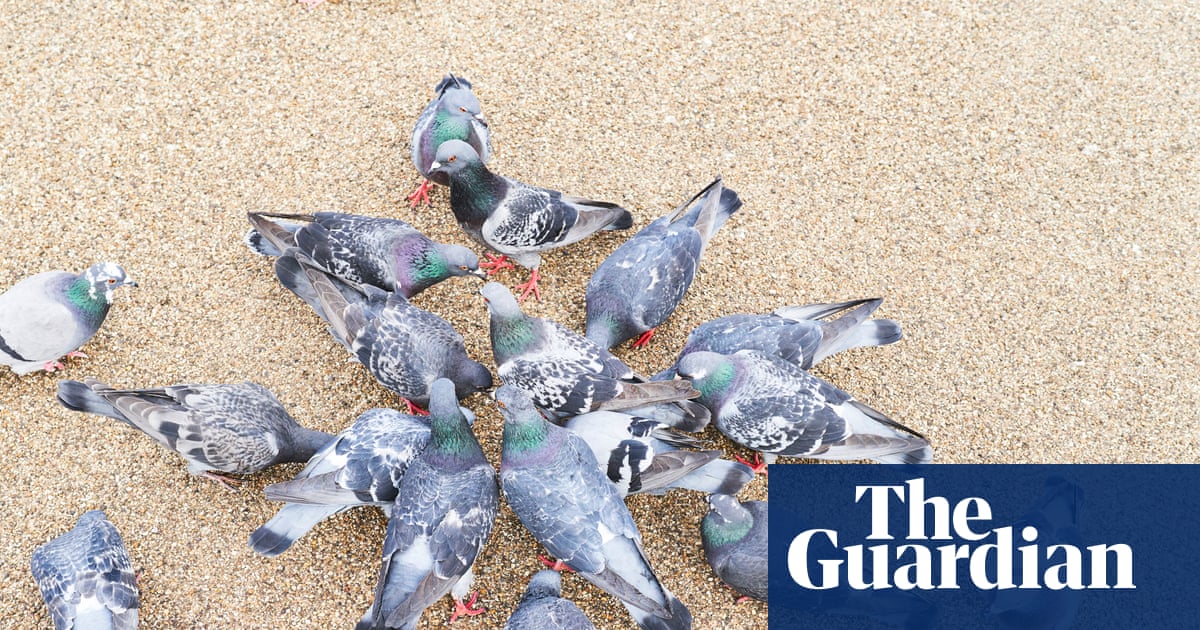
"They are the archetypical pest. I studied them as an introduced pest on crops of garden peas in Hawkes Bay, New Zealand, in the 1960s, and again for Ken Livingstone, who misguidedly ignored pigeon friends in Trafalgar Square in the 2000s. As an animal population ecologist, I asked why the pigeons' repertoire made them so successful. They're smart and mobile, flocking to each distant source of food and moving just far enough away to avoid harm when scared."
"Be it explosions, rocket-propelled nets or Harris's hawks, the number of pigeons steadfastly correlated with the amount of food provided for them and not with the supposed control measure. The disturbances merely gave them a bit of exercise as they flew round, only to settle back down for the food. When feeding was deterred sufficiently to actually lower the amount available,"
Feral pigeons function as archetypal pests, thriving as introduced crop pests and in urban squares due to intelligence and mobility. They flock to distant food sources and move just far enough to avoid harm when frightened. Deterrent measures such as explosions, rocket-propelled nets or hawks do not reduce numbers when food remains available; disturbances only cause temporary exercise before pigeons return. Substantially reducing available food is difficult amid determined feeders, and birds then relocate rather than die. Encouraging breeding in dovecotes wrongly assumes sedentary behavior and misattributes the problem to fecundity. Humane population control is achieved by stopping public feeding.
Read at www.theguardian.com
Unable to calculate read time
Collection
[
|
...
]