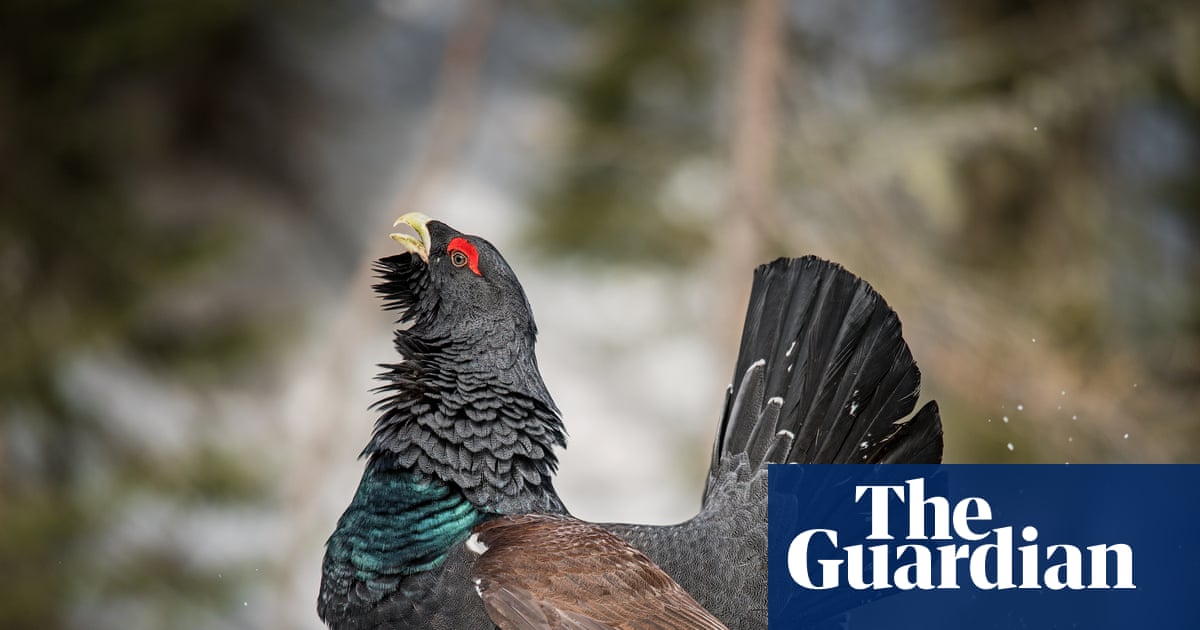
"After decades of decline, there are signs of hope for the capercaillie, one of Britain's most endangered birds. Populations of the charismatic grouse, which is found only in the Caledonian pine forests of the Scottish Highlands, have increased by 50%, from 20 males in 2020 to 30 in 2025 at RSPB Abernethy. It is a lifeline for the horse of the woods, whose numbers have plummeted to 532 in the wild, the lowest recorded levels since surveying began more than 30 years ago."
"At RSPB Abernethy, conservationists have trialled a remote-controlled mower to remove dominant heather in inaccessible terrain to allow the thriving of blaeberry, which is an important food source for capercaillie also hosting moth caterpillars that are vital protein for young chicks. The mower also creates open bare areas where chicks can stay warm after rain. Virtual fence collars on cattle have also enabled targeted forest grazing in areas where fencing would be difficult to install or could pose a collision threat to the flying capercaillie."
Capercaillie numbers at RSPB Abernethy rose 50% from 20 males in 2020 to 30 in 2025, contributing more than 20% of the 143 lekking males recorded nationally in 2025. National wild numbers stand at 532, the lowest since surveying began, down from over 20,000 in the 1970s. Declines stem from wetter springs and summers, loss of high-quality forest habitat, increased predation of eggs and chicks, collisions with deer fences, human disturbance, and low genetic diversity. Targeted measures include remote-controlled mowing to encourage blaeberry and create chick-friendly bare areas, and virtual fence collars enabling focused cattle grazing where fencing is impractical.
Read at www.theguardian.com
Unable to calculate read time
Collection
[
|
...
]