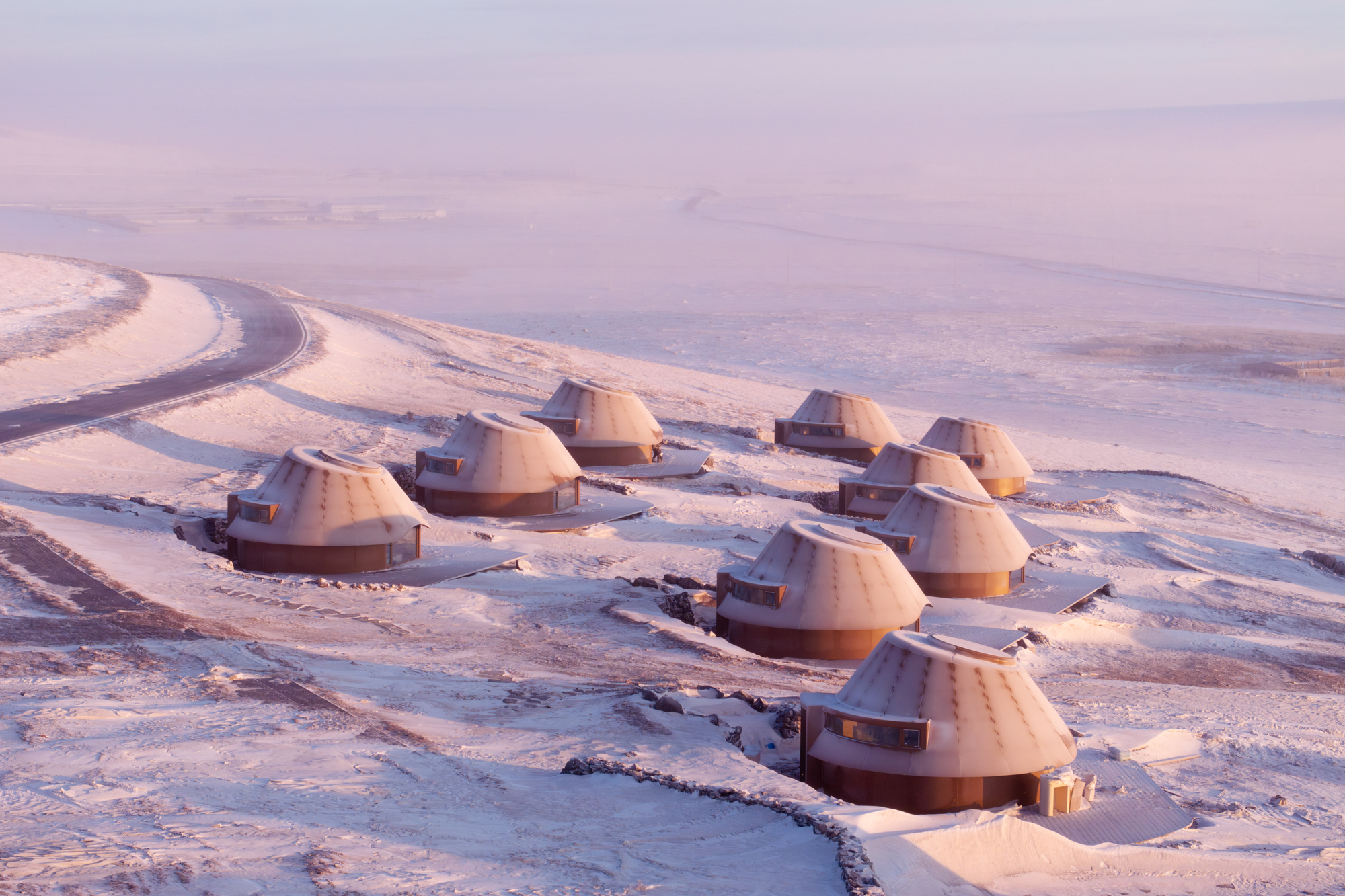
"The design team and clients observed that the southern area of this volcano, supporting only sparse herb species, contrasted sharply with the lush vegetation surrounding the volcanoes. Collaborating with geologists and local herders, the team investigated the cause. The site has undergone erosion for approximately 150,000 years. The volcanic cone slumped into nine hills, now covered in soft grassland, and blended into the steppe."
"Located southeast of the cone, the hotel site is leeward to the northwest wind, resulting in snow and sand accumulation. Harsh soil conditions make plant growth difficult. Therefore, the hotel was deliberately sited over two-meter-deep sand pits to prevent their expansion, replace them with a new ecosystem, and restore vitality. Strategies include a snow barrier wall to retain water, protect the soil, and create a better environment for planting."
The southern flank of the volcano supports only sparse herb species and contrasts with the surrounding lush vegetation. Geologists and local herders identified long-term erosion as the cause, with the site undergoing erosion for approximately 150,000 years. The volcanic cone slumped into nine hills now covered in soft grassland that blends into the steppe. The hotel site, located southeast of the cone, lies leeward to northwest winds, causing snow and sand accumulation and resulting in harsh soil conditions that hinder plant growth. The hotel was deliberately sited over two-meter-deep sand pits to halt their expansion, establish a new ecosystem, and restore vitality. A snow barrier wall will retain water, protect soil, and create improved conditions for planting.
Read at ArchDaily
Unable to calculate read time
Collection
[
|
...
]