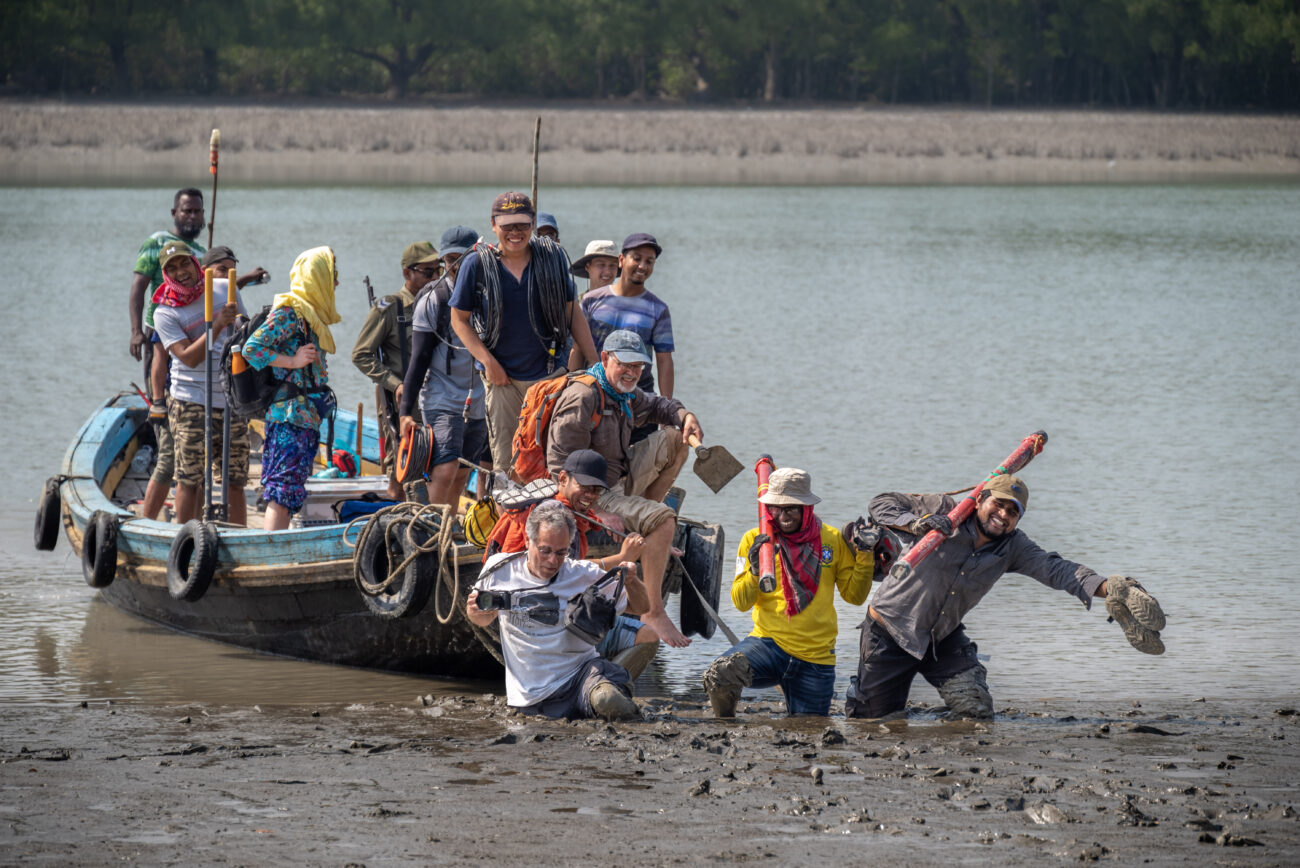
"Despite its tropical climate and floodplain location, Bangladesh-one of the world's most densely populated nations-seasonally does not have enough freshwater, especially in coastal areas. Shallow groundwater is often saline, a problem that may be exacerbated by rising sea levels. Rainfall is highly seasonal and stored rainwater often runs out by the end of the dry season. And contamination by naturally occurring arsenic deposits and other pollutants farther inland further depletes supplies of potable water, which can run desperately short during annual dry seasons."
"The researchers used a technique called deep-sensing magnetotelluric soundings to measure faint electrical currents in sediments up to a few kilometers beneath the delta. Because freshwater is less electrically conductive than saltwater, the researchers were able to map the distribution of freshwater. They identified two reservoirs: one that extends 800 meters deep and stretches about 40 kilometers along the norther"
Bangladesh faces seasonal freshwater shortages despite a tropical floodplain climate, with shallow groundwater often saline and inland supplies contaminated by arsenic and other pollutants. Rainfall is highly seasonal and stored rainwater frequently runs out by the end of the dry season, leaving many without potable water; 41 percent lack consistent safe water access. An exploration along the Pusur River used deep-sensing magnetotelluric soundings to map electrical conductivity in sediments, distinguishing freshwater from saltwater. Two deep freshwater reservoirs were identified, one extending about 800 meters deep and stretching roughly 40 kilometers, indicating large hidden potable reserves and potential wider applicability of the method.
#bangladesh-water-scarcity #deep-groundwater #magnetotelluric-sensing #coastal-freshwater-reservoirs
Read at State of the Planet
Unable to calculate read time
Collection
[
|
...
]