"She was raised in the heart of what has become known as 'Cancer Alley,' an 85-mile-stretch between Baton Rouge and New Orleans where around 200 fossil fuel and petrochemical plants are clustered along the banks of the mighty Mississippi River. The region handles around a quarter of US petrochemical production, which feeds public demand for things like chemicals, fertilizers and plastics. It earned its grim nickname from having some of the highest cancer risks in the US."
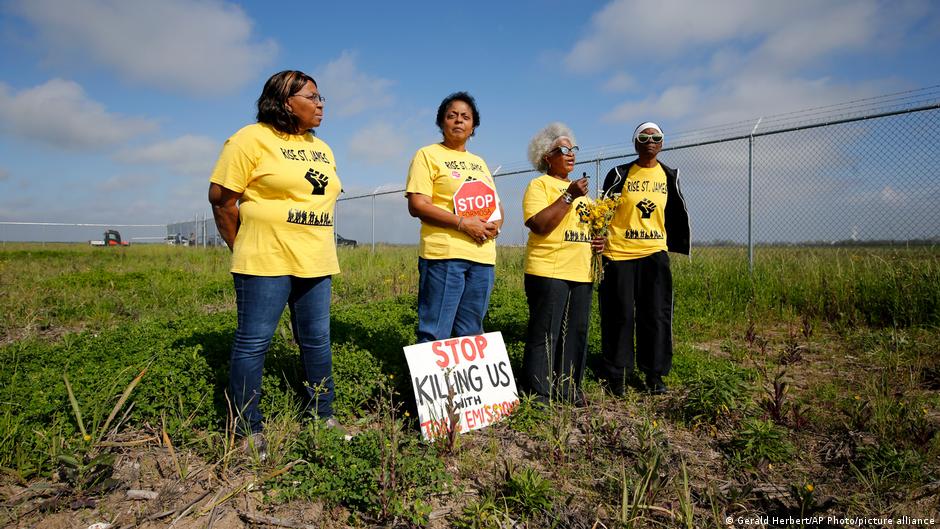
"Industrial pollution in the US's 'Cancer Alley' has been linked to a host of serious health problemsImage: Gerald Herbert/AP Photo/picture alliance For decades, 'Cancer Alley' facilities have been releasing a variety of toxic pollutants into the surrounding soil, water and air and local communities say they are paying a heavy price for the mountains of plastic the world produces. Simultaneously, the area has long ranked in the top 5% nationally for cancer risk."
Cancer Alley is an 85-mile stretch between Baton Rouge and New Orleans containing around 200 fossil fuel and petrochemical plants along the Mississippi River. The region handles about a quarter of US petrochemical production, supplying chemicals, fertilizers and plastics. Residents report pervasive odors and unusually high rates of cancer, with multiple households affected on many streets. Facilities have released toxic pollutants into soil, water and air for decades, and the area ranks in the top 5% nationally for cancer risk. Recent Johns Hopkins research indicates the cancer threat may be far higher than government estimates, and locals describe the area as a sacrifice zone amid global petrochemical expansion.
Read at www.dw.com
Unable to calculate read time
Collection
[
|
...
]