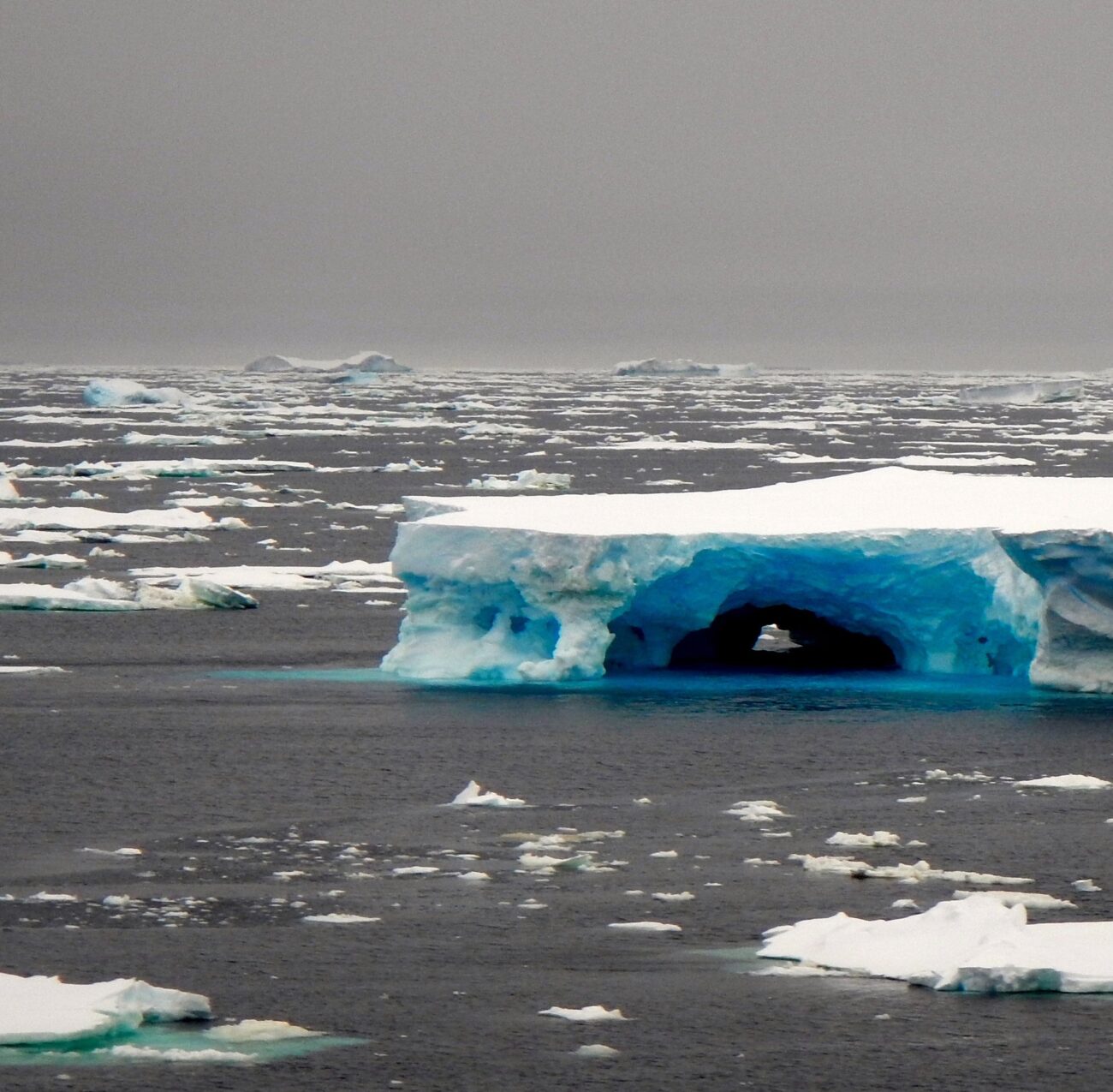
West Antarctic Ice Sheet (WAIS) retreat correlated with reduced marine algae growth in the Southern Ocean over roughly 500,000 years, producing lower regional CO₂ uptake during warm intervals. Iceberg-transported, iron-rich sediments from West Antarctica dominated iron supply during warm periods, rather than windblown dust. Those sediments contained highly weathered, less-soluble iron minerals that were not readily bioavailable to phytoplankton, so high iron delivery did not boost algae productivity. A deep sediment core from the Pacific sector shows this mismatch between iron supply and biological response. Continued WAIS shrinkage could deliver similar sediments and weaken Southern Ocean carbon uptake, creating a positive climate feedback.
"Ice-sheet retreat lined up with low algae growth over the past ~500,000 years, implying less CO₂ uptake in parts of the Southern Ocean during warm periods. The study points to iceberg-delivered, iron-rich sediments from West Antarctica during warm intervals, not windblown dust. The iron-bearing minerals in these sediments were highly weathered and not readily bioavailable to marine algae. If WAIS keeps shrinking, similar sediment delivery could weaken Southern Ocean carbon uptake, creating feedback that could amplify climate change."
"A new study in Nature Geoscience reveals that changes in the West Antarctic Ice Sheet (WAIS) closely tracked marine algae growth in the Southern Ocean over previous glacial cycles, but not in the way scientists expected. The key factor is iron-rich sediments transported by icebergs from West Antarctica. Iron acts like fertilizer for algae. But when analyzing a sediment core taken from the Pacific sector of the Southern Ocean in 2001, more than three miles below the water's surface, researchers were surprised..."
Read at State of the Planet
Unable to calculate read time
Collection
[
|
...
]