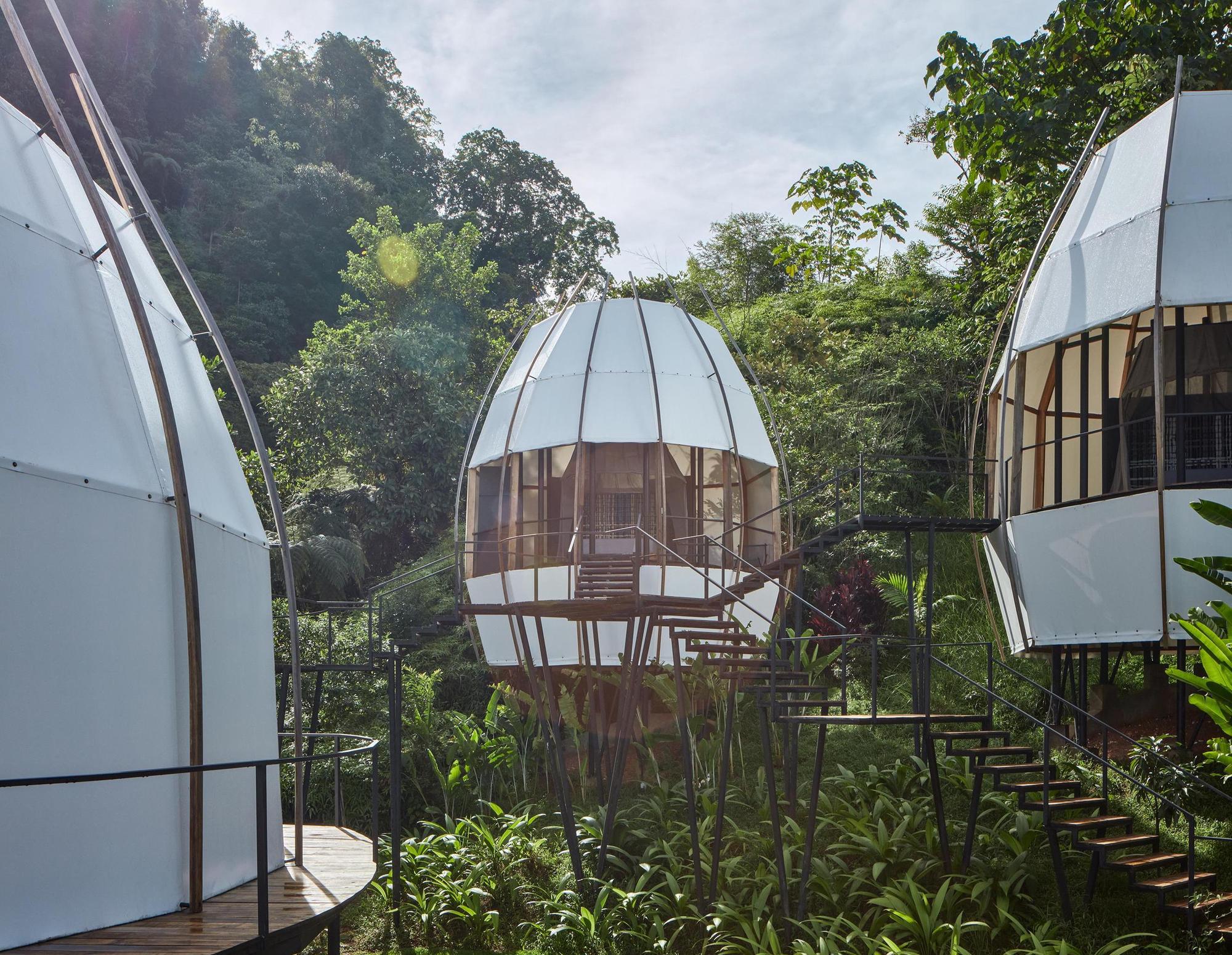
"In the coastal and jungle regions of Costa Rica, high humidity and intense solar radiation dictate an architectural strategy centered on permeability rather than enclosure. Unlike the airtight envelopes required in cold climates to retain heat, Costa Rican architecture uses the building envelope as a climatic filter to maximize air exchange. The primary mechanism for managing these thermal gradients seems to be the oversized roof overhang."
"By extending the roof plane significantly beyond the floor plate, architects create a permanent buffer of deep shade that reduces solar gain and lowers the ambient temperature before air enters the structure. This strategy, combined with permeable or non-existent walls, allows for constant airflow. This is a critical technical requirement for humidity control and the prevention of material degradation through mold and rot."
Coastal and jungle climates in Costa Rica require architectural strategies that favor permeability over enclosure due to high humidity and intense solar radiation. The building envelope functions as a climatic filter to maximize air exchange rather than to retain heat. Oversized roof overhangs create deep, permanent shade that reduces solar gain and lowers ambient temperatures before air enters occupied spaces. Permeable or absent walls allow constant cross-ventilation, which is essential for humidity control and preventing mold and rot. Programmatic layouts shift toward shaded terraces and ventilated volumes that prioritize natural cooling and uninterrupted views of the landscape.
Read at ArchDaily
Unable to calculate read time
Collection
[
|
...
]