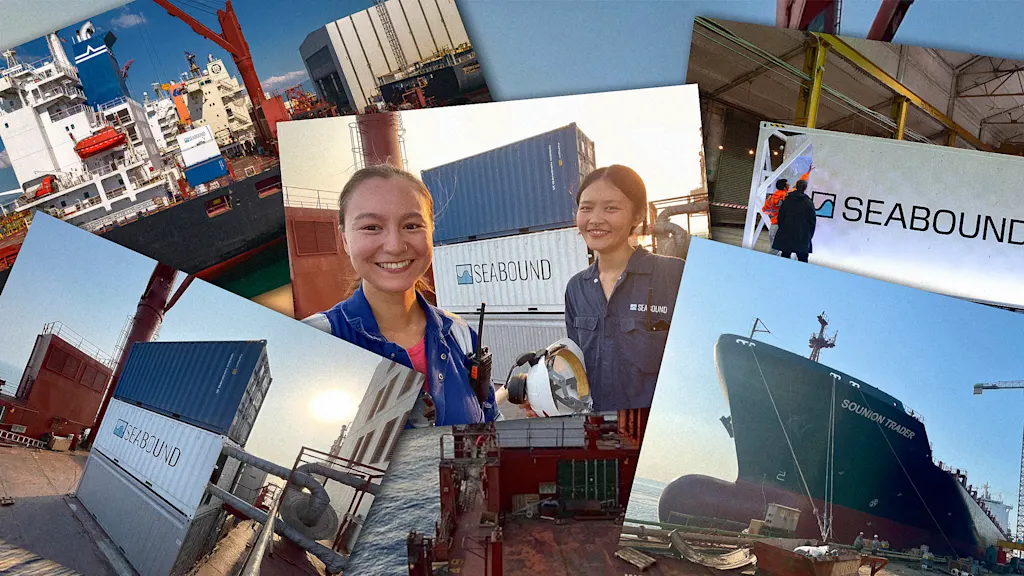
Seabound produces modular metal containers that capture up to 95% of CO2 from ship exhaust by passing emissions through millions of calcium hydroxide (lime) pellets that chemically convert CO2 into limestone. The boxes install near ship engines and filter exhaust; pellets visibly shift color as they absorb carbon and soot. One container can capture roughly a day's worth of emissions during a voyage. The company is preparing a first commercial deployment after development and pilot tests. The technology targets existing vessels that cannot easily switch to scarce, costly clean fuels and aims to reduce maritime emissions, a sector responsible for roughly 973 million metric tons of CO2 in 2024, about 2.5% of global emissions.
"The tech, from a startup called Seabound, can capture as much as 95% of the CO2 emissions from the exhaust on ship. The company is now preparing to install a set of the containers on a cargo ship in its first commercial deployment after years of development and pilot tests. "The shipping industry is one of the last hard-to-abate sectors," says 30-year-old CEO Alisha Fredriksson, who cofounded the company in 2021"
"Inside the company's modular containers, there are millions of marble-size pellets of calcium hydroxide, also known as lime. The box sits near the engine and connects to the ship's exhaust. As the exhaust flows through the lime, the CO2 reacts with the material to make limestone. Each pellet slightly changes color, from white to off-white, as it captures carbon and soot from the exhaust. One container can capture roughly a day's worth of pollution as the ship travels,"
Read at Fast Company
Unable to calculate read time
Collection
[
|
...
]