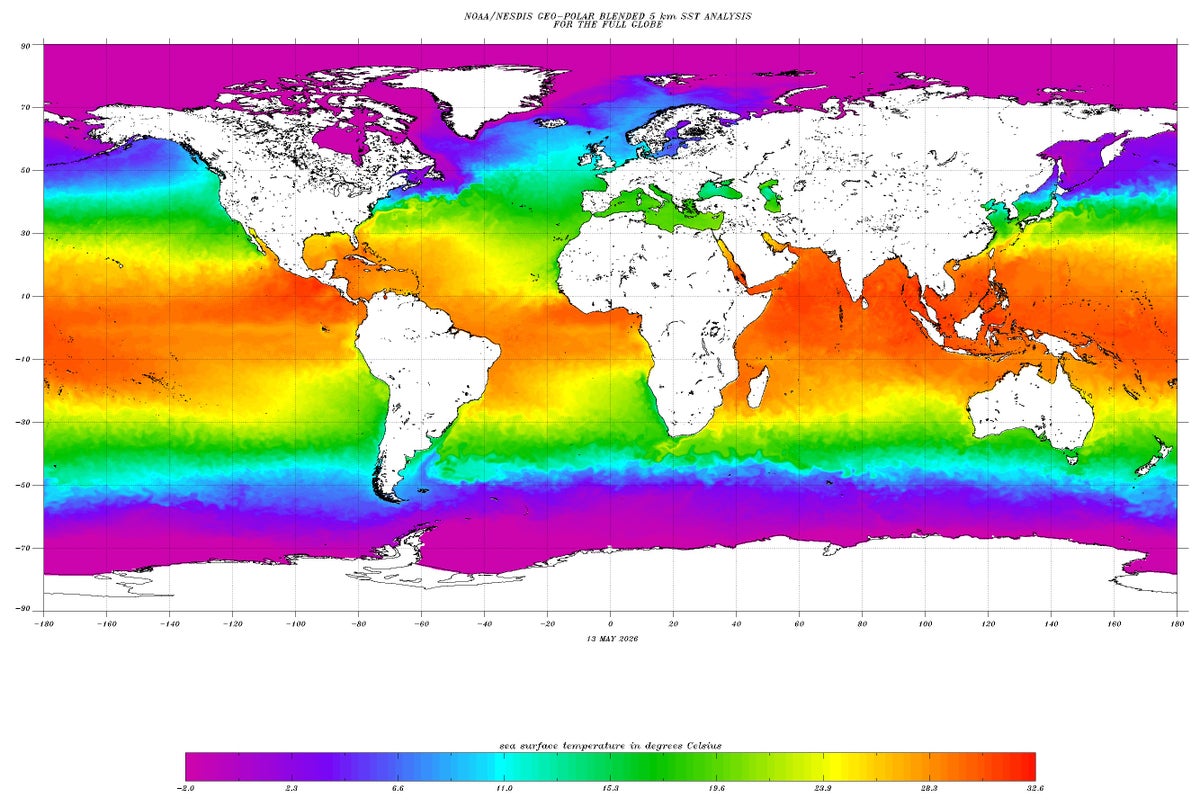
"El Niño is almost certain to make its return this year, and it may stick around through the Northern Hemisphere winter, the National Weather Service (NWS) announced on Thursday. There's an 82 percent chance that El Nino will emerge between May and July, and it is expected to continue through this winter. There's a 96 percent chance it will be occurring in December through February 2027. It's still unclear, however, how long or how strong this El Nino might be."
"El Nino is a cyclic climate event that is fueled by ocean temperatures and wind. It can throw off weather patterns and drive up global temperatures, so preparation is key. In 2023 and 2024 the planet saw record-high temperatures in part because of an El Nino event that amplified the effects of climate change."
"Federal forecasters rely on a combination of measurementssea surface temperatures and changes in wind patternsto predict when El Nino will come back. To be an official El Nino year, surface temperatures in a section of the Pacific Ocean must rise and stay about 0.5 degree Celsius higher than normal, according to the National Oceanic and Atmospheric Administration, which houses the National Weather Service."
El Niño is expected to return this year and may persist through the Northern Hemisphere winter. U.S. forecasters report an 82 percent chance of El Niño emerging between May and July, and a 96 percent chance of it occurring between December and February 2027. The event’s timing is based on ocean and atmospheric measurements, including sea surface temperatures and wind pattern changes. El Niño is defined by Pacific Ocean surface temperatures rising and staying about 0.5°C above normal. El Niño can disrupt weather patterns and raise global temperatures, making preparation important. Past El Niño years contributed to record-high temperatures alongside climate change.
Read at www.scientificamerican.com
Unable to calculate read time
Collection
[
|
...
]