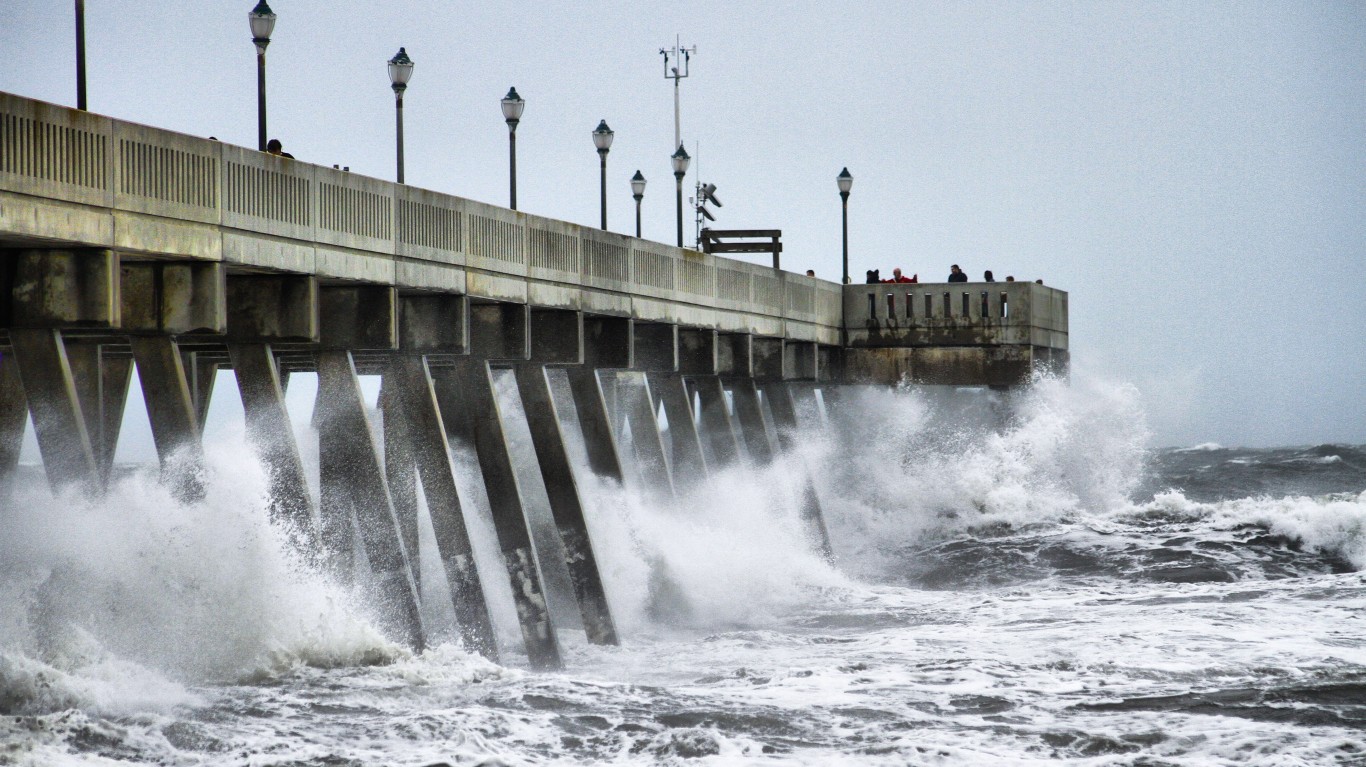
Powerful hurricanes have reconfigured coastlines, altered communities, and expanded understanding of extreme weather. Measurement criteria include wind speed, central pressure, size, and total destruction. Historical data from NOAA's HURDAT2 Best Track Data dating to 1851 enable ranking by estimated central pressure at landfall. Hurricanes are ordered by minimum pressure in millibars; average sea-level pressure is about 1013 millibars. The identified set of 57 storms had minimum pressures of 942 millibars or lower. Studying these storms informs forecasting, community resilience, and emergency preparedness, and underscores increased frequency and cost of severe storms.
"These storms were so powerful and destructive that they reconfigured coastlines, altered communities, and greatly informed our understanding of extreme weather. These record-breaking hurricanes can be measured based on a variety of criteria, like wind speed, central pressure, size, or total devastation. All the storms on this list pushed the limits of natural disasters. From the Atlantic to the Pacific, the most intense hurricanes of all time remain humbling reminders of nature's strength and the urgent need for preparedness, as severe storms grow more frequent"
"We ranked tropical cyclones that formed in the Atlantic and the Pacific based on estimated central pressure at the time of landfall for all hurricanes. Hurricanes are listed in descending order according to their minimum pressure in millibars. For context, the average sea level air pressure is about 1013 millibars, but the 57 storms on the list had a minimum pressure of 942 millibars or lower."
Read at 24/7 Wall St.
Unable to calculate read time
Collection
[
|
...
]