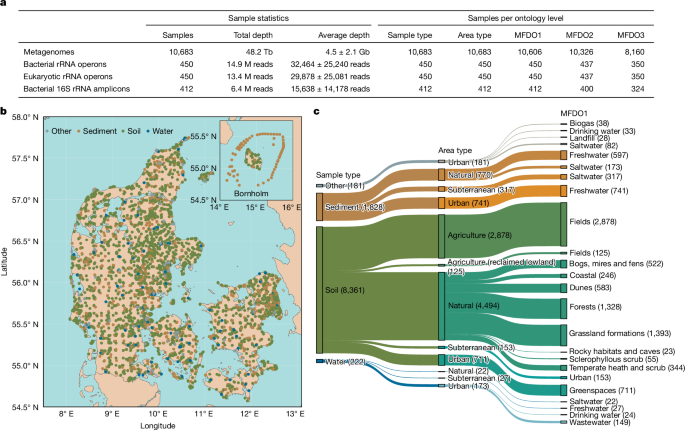
"The MFD sample collection includes samples collected as part of the MFD sampling campaign, as well as samples contributed by members of the MFD consortium. The samples taken as part of the MFD sampling campaign were registered and associated with the appropriate metadata using codeREADr ( https://www.codereadr.com) using a linear barcode attached to sterile 100 ml sample containers. After collection, the samples were stored between 4 °C and 10 °C for up to 48 h before being deposited at −20 °C for later processing."
"As we wanted to cover as much of the Danish environmental landscape as possible, we requested expert collaborators send existing samples from interesting environments or environments that are not easily sampled. These include samples from existing publications, samples collected as part of governmental monitoring, but also samples from collaborators with no current publication. If not otherwise stated, these samples were acquired as frozen sample material."
Environmental samples across Denmark originated from a centralized sampling campaign and from collaborators covering diverse or hard-to-sample environments. Samples were registered with metadata using codeREADr and linear barcodes on sterile 100 ml containers. After collection, samples were refrigerated at 4–10°C for up to 48 hours, then stored at −20°C. Contributed samples were largely received frozen and organized into projects by sample type (soil, sediment, water) for consistent processing. Summary tables of sampling and DNA-extraction protocols were created and treatment differences were addressed through filtering. Topsoil samples comprised up to five subsamples (0–20 cm) taken within ~80 m2 using a weed extractor cleaned with 70% ethanol, and samples were visually inspected.
Read at Nature
Unable to calculate read time
Collection
[
|
...
]