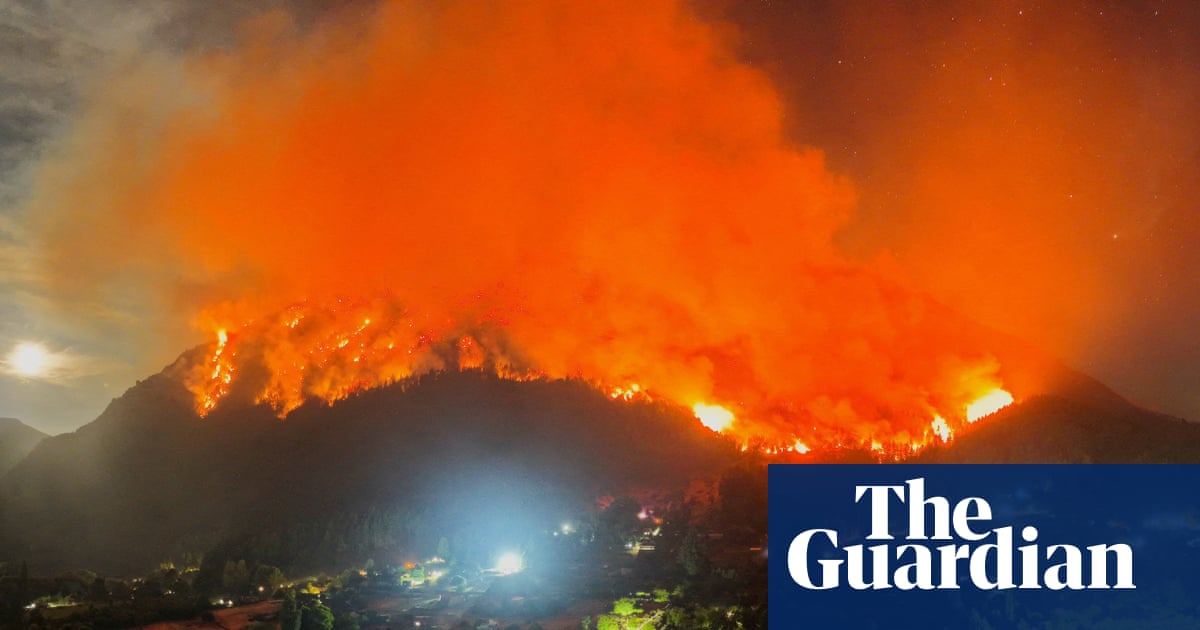
"Lucas Chiappe had known for a long time that the fire was coming. For decades, the environmentalist had warned that replacing native trees in the Andes mountain range with highly flammable foreign pine was a recipe for disaster. In early January, flames raced down the Pirque hill and edged closer to his home in the Patagonian town of Epuyen, Argentina, where he had lived since the 1970s."
"Thirty people with six motor pumps fought for hours, hoses stretched for kilometres, but there was no way. We had to throw all our equipment into the stream and get the hell out of there, he says as he recalls fleeing as the inferno engulfed his house. The dragon chased us until we crossed the river, and we had to speed between two fire columns along a trail barely a kilometre wide."
"Environmental groups and workers blame extreme weather, which scientists link to the climate crisis and cuts to national fire-prevention budgets. There was a confluence of many climatic factors, says Andres Napoli, director of the Environment and Natural Resources Foundation (Farn). This year has not had enough snowfall; there are low humidity levels and a high accumulation of combustible elements in the forest a reference to monoculture pine plantations, which act as powder kegs."
Decades of replacing native Andean forests with fast-growing, highly flammable non-native pine monocultures created extensive fuel loads that accelerated wildfire spread. Since 5 January more than 36,000 hectares in Patagonia, mainly in Chubut province, were ravaged; Greenpeace estimates exceed 40,000 hectares. Residents, volunteers and firefighting teams with motor pumps and long hoses fought fires that engulfed homes and forced evacuations. Wildfires also killed at least 18 people in Chile. Environmental groups and workers link the blazes to extreme weather tied to the climate crisis, low snowfall, low humidity and cuts to fire-prevention budgets.
Read at www.theguardian.com
Unable to calculate read time
Collection
[
|
...
]