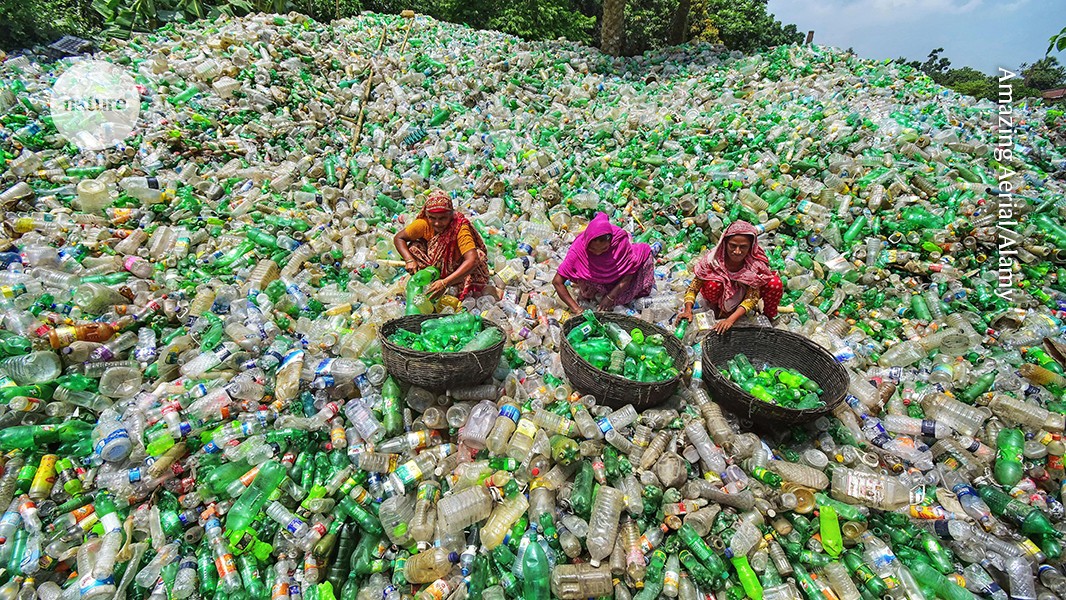
"Plastic pollution is a scourge of land and seas, and has reached Earth's remotest regions. Failure to deal with it could mean exposing ecosystems and people to harmful microplastics, nanoplastics and chemicals for centuries. Transported globally, including by rivers and the wind, plastics are intertwined with issues around equity and justice. Many of the communities that are most harmed by plastic pollution, for instance, are those that are least responsible for producing it (see 'A giant problem')."
"Plastics' persistence over time, ability to cross borders and impacts on climate change demand international regulation. Production alone is responsible for around 5% (2.24 gigatonnes of carbon dioxide equivalent) of global greenhouse-gas emissions, compared with the 1.4% (0.6 GtCO 2) of emissions that stem from aviation. In recognition of this, in March 2022, the United Nations Environment Assembly (UNEA), the organization's highest environmental decision-making body, established the Intergovernmental Negotiating Committee (INC) to develop a global treaty to end plastic pollution, including in the ocean."
"As official observers of the INC process (P.E. and L.D.S.) and advisers among the roughly 20-person German delegation (M.B. and A.J.), we have become convinced that the INC process - as currently designed - won't succeed. But on 7 February, a new INC chair will be elected. Several key procedural changes, if implemented and overseen by the new chair, could break the impasse and pave the way for an effective global plastics treaty."
Plastic pollution pervades land and sea, reaching the remotest regions and persisting for centuries as microplastics, nanoplastics and associated chemicals. Plastics travel globally via rivers and wind and disproportionately harms communities least responsible for producing it, creating equity and justice concerns. Plastics contribute significant greenhouse-gas emissions—production accounts for about 5% of global emissions versus 1.4% from aviation—prompting calls for international regulation. The United Nations Environment Assembly established the Intergovernmental Negotiating Committee in March 2022 to negotiate a global treaty, but six negotiation rounds over three years have produced deadlock and no treaty agreement. A new INC chair and procedural reforms are proposed to overcome the impasse.
Read at Nature
Unable to calculate read time
Collection
[
|
...
]