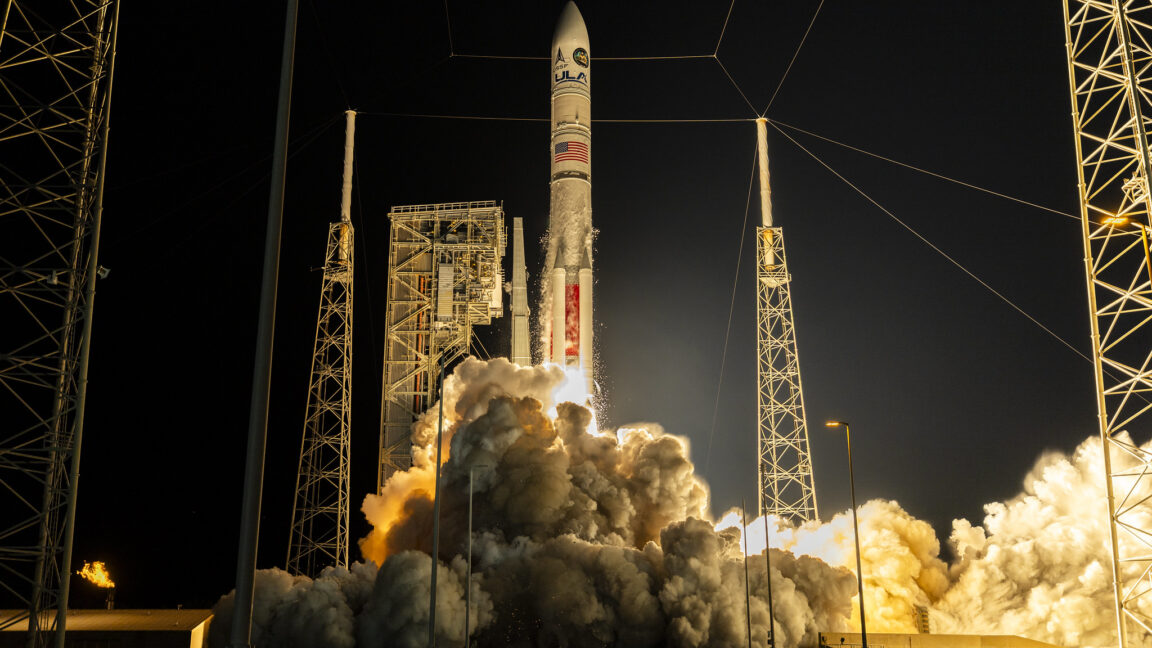
Rocket exhaust and re‑entry debris are increasingly affecting the upper atmosphere. Modeling indicates that in a high‑growth launch scenario of up to 2,000 launches per year, ozone loss could reach about 3 percent, comparable to a severe wildfire season. Most ozone damage arises from chlorine‑rich solid rocket fuels and black carbon in exhaust plumes. Black carbon can absorb sunlight and warm parts of the stratosphere by roughly 0.5°C, altering winds that steer storms and precipitation. The mass of human‑made material injected by re‑entries has doubled over five years to nearly a kiloton annually, with some metals like lithium now exceeding meteoric contributions. Orbital space and near‑space require treatment as components of the global environment as expanding commercial use shifts real costs onto others.
"In a high-growth scenario for the space industry, there could be as many as 2,000 launches per year, which her modeling shows could result in about 3 percent ozone loss, equal to the atmospheric impacts of a bad wildfire season in Australia. She said most of the damage comes from chlorine-rich solid rocket fuels and black carbon in the plumes. The black carbon could also warm parts of the stratosphere by about half-a-degree Celsius as it absorbs sunlight."
"Researchers at the conference estimated that in the past five years, the mass of human‑made material injected into the upper atmosphere by re‑entries has doubled to nearly a kiloton a year. For some metals like lithium, the amount is already much larger than that contributed by disintegrating meteors. In the emerging field of space sustainability science, researchers say orbital space and near-space should be considered part of the global environment."
Read at Ars Technica
Unable to calculate read time
Collection
[
|
...
]