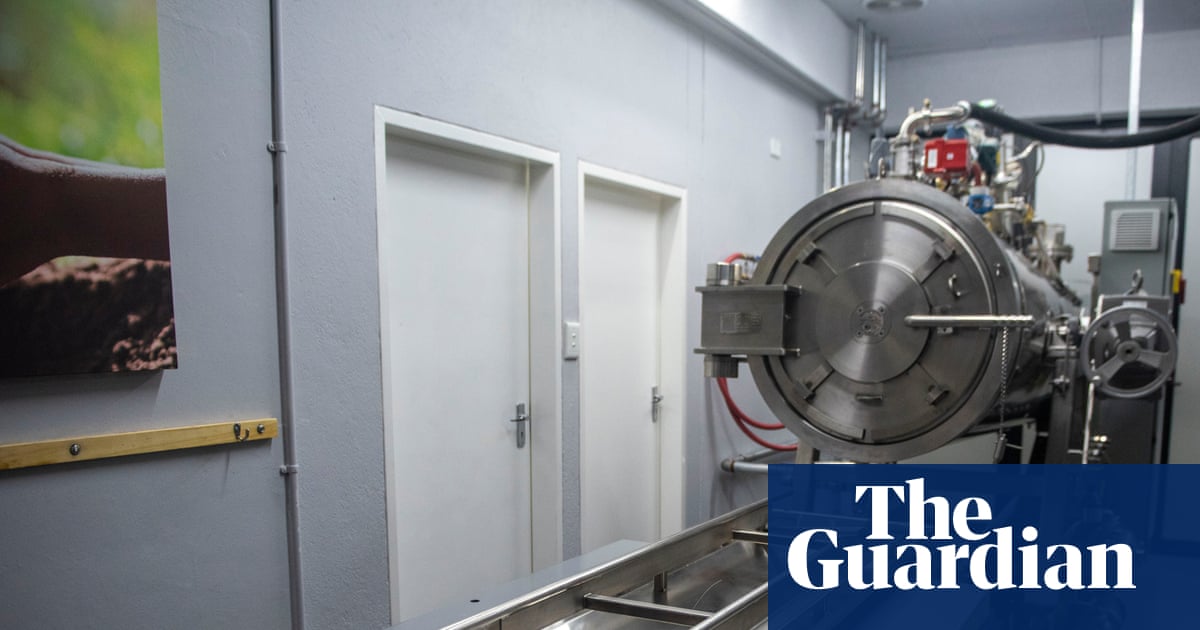
"Hydrolysis uses a strong alkaline solution to break down the body of the deceased person. The body is immersed in water and 5% alkaline, such as potassium chloride, for three to four hours in a pressurised metal cylinder and heated to around 150C. This dissolves the body tissue, leaving only bones, which are then dried and pulverised into white dust."
"The choices people make about their remains prior to death are deeply personal, shaped by individual values, beliefs and the wishes of their families. Hydrolysis offers a new, environmentally friendly alternative to burial or cremation, responding to significant public support for greater choice, and it will be the first new option available for over 120 years."
"Kindly Earth, which holds exclusive rights to manufacture hydrolysis equipment in the UK, said it could take up to nine months before the first Scottish facility was operational, as a funeral director would need to secure planning permission as well as a permit from the local water authority."
Scotland has approved hydrolysis as a legal funeral option, marking the first significant change to funeral law since cremation's introduction in 1902. Hydrolysis, also called water cremation or aquamation, uses a strong alkaline solution to break down the deceased's body over three to four hours in a pressurized heated cylinder at approximately 150°C. The process dissolves body tissue, leaving only bones that are dried, pulverized into white dust, and placed in an urn for relatives to keep, scatter, or bury. This environmentally friendly alternative responds to public demand for sustainable funeral choices and will be subject to the same regulatory requirements as existing methods. Implementation may take up to nine months as facilities require planning permission and permits from local water authorities.
#sustainable-funeral-practices #hydrolysis-legalization #environmental-alternatives #funeral-law-reform #scotland
Read at www.theguardian.com
Unable to calculate read time
Collection
[
|
...
]