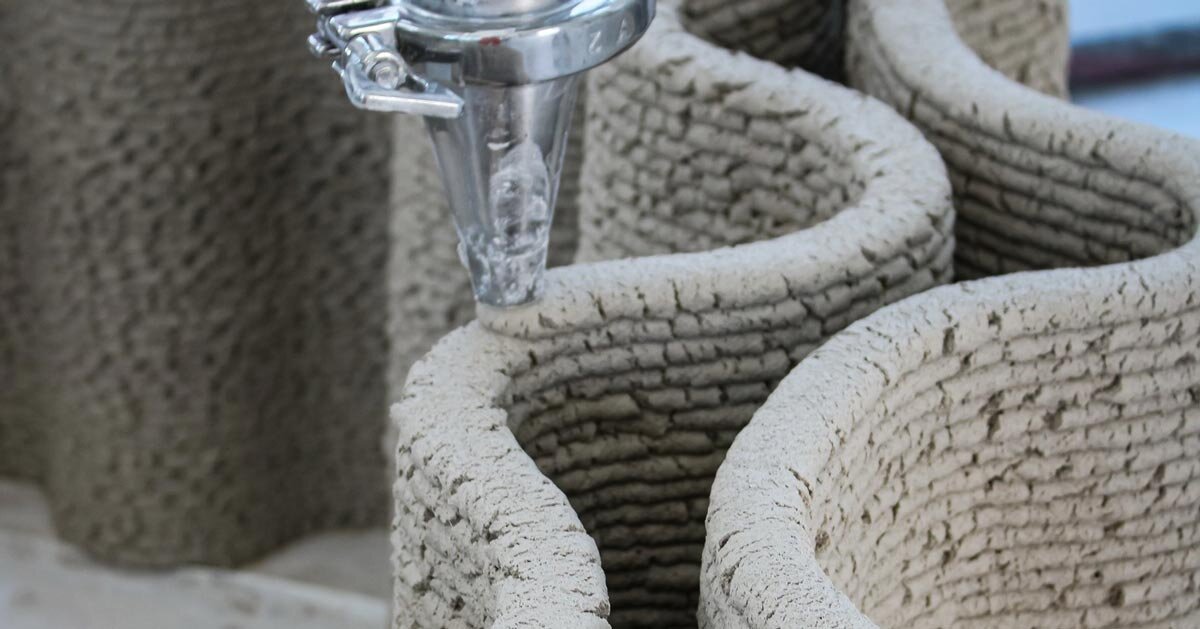
"Mexico's construction sector faces significant environmental and social challenges. The widespread use of carbon-intensive materials has positioned the industry as a major contributor to national CO₂ emissions. At the same time, construction labor conditions remain unstable, with limited access to technical training and high occupational risk. CORNCRETL, developed by MANUFACTURA, proposes a circular material strategy that addresses both environmental impact and production models within the building industry."
"CORNCRETL is a bio-based construction material derived from limestone aggregates, corn residues, and recycled nejayote, the calcium-rich wastewater produced during the nixtamalization of corn. The research combines references to pre-Hispanic Mayan construction techniques with 3D printing technologies. Compared to conventional concrete, the material achieves up to a 70 percent reduction in carbon emissions while operating within a circular economy framework."
"Corn has shaped Mexican society for more than 7,000 years, influencing agricultural systems, settlement patterns, and cultural identity. Archaeological findings in Tehuacán, Puebla, trace its early domestication, and numerous Mesoamerican civilizations integrated corn into their economic and spiritual structures. Today, Mexico remains one of the world's leading corn producers. However, food waste represents a significant issue, with approximately 38 percent of production lost annually. Tortillas account for nearly 30 percent of this waste. The valorization of corn byproducts, including nejayote, presents both environmental and economi"
CORNCRETL is a bio-based construction material formulated from limestone aggregates, corn residues, and recycled nejayote, a calcium-rich wastewater from nixtamalization. The material achieves up to a 70 percent reduction in carbon emissions compared with conventional concrete while integrating circular economy principles and valorizing food-system byproducts. The development links pre-Hispanic Mayan lime construction techniques with contemporary 3D printing technologies to adapt production. The approach addresses environmental impacts of Mexico's construction sector and high corn food-waste rates, and aims to create alternative production models and safer, more technical employment opportunities.
Read at designboom | architecture & design magazine
Unable to calculate read time
Collection
[
|
...
]